

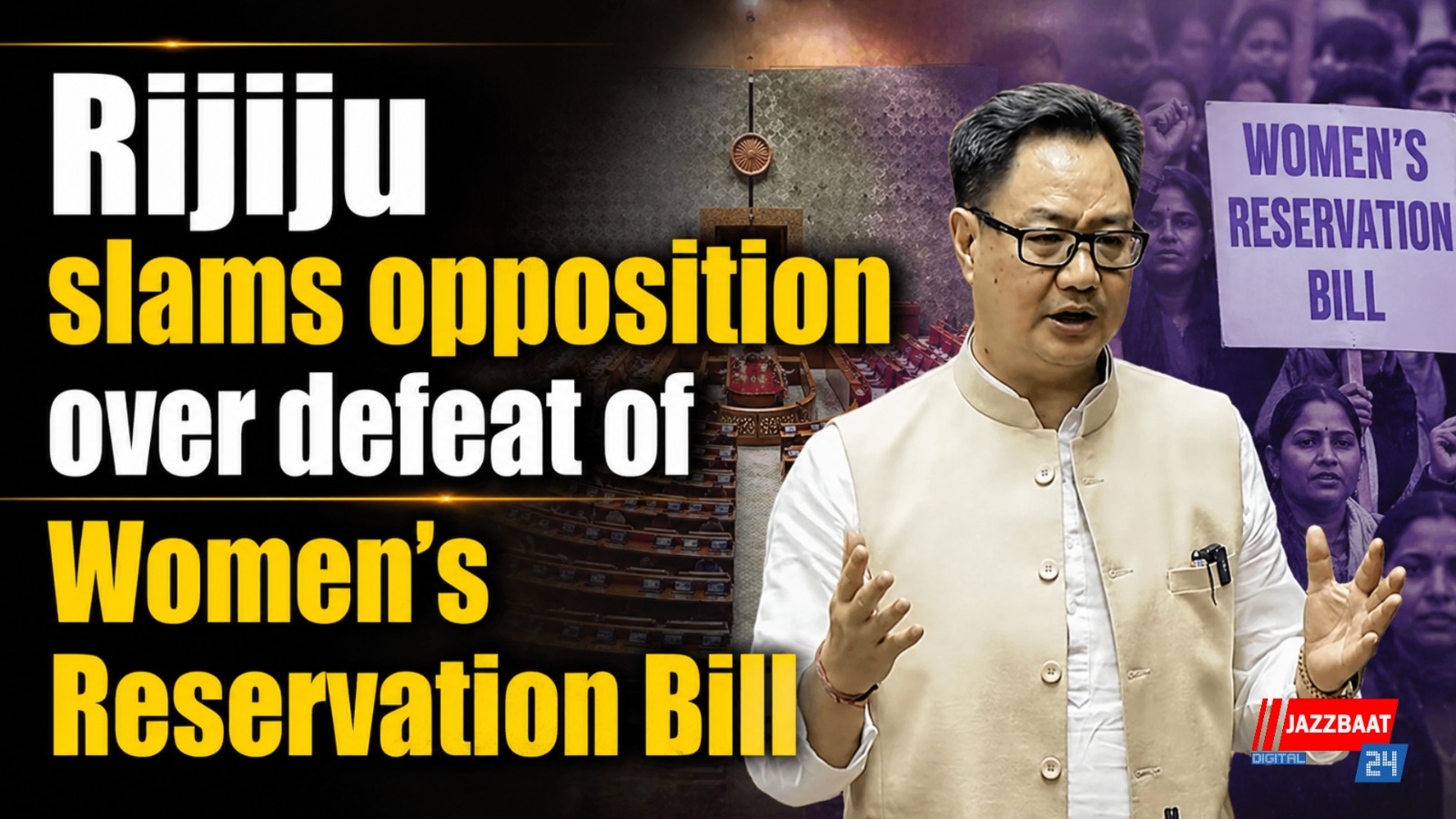
Union Parliamentary Affairs Minister Kiren Rijiju has sharply criticised opposition parties following the defeat of the Constitution (131st Amendment) Bill, 2026, aimed at expediting the implementation of women’s reservation in Parliament and state assemblies.
The proposed amendment sought to operationalise 33% reservation for women by linking it with delimitation based on earlier census data, instead of waiting for a fresh census. However, despite securing a simple majority, the bill failed to pass in the Lok Sabha as it did not achieve the required two-thirds majority needed for constitutional amendments. It received 298 votes in favour and 230 against.
Reacting strongly, Rijiju termed the development a “historic opportunity lost” and accused opposition parties of blocking a crucial reform for women’s empowerment. He said it was surprising that some parties would oppose a measure intended to enhance women’s representation in governance.
The minister also alleged that the Congress and its allies deliberately obstructed the bill for political reasons, despite the government’s efforts to build consensus. He warned that the opposition would have to face the consequences of its stand, claiming that women across the country were disappointed with the outcome.
Rijiju further defended the government’s approach of linking women’s reservation with delimitation, arguing that it was necessary to correct imbalances in constituency sizes and ensure fair representation. He maintained that the amendment was intended to accelerate implementation of the already enacted Women’s Reservation law (Nari Shakti Vandan Adhiniyam), which currently depends on a future census and delimitation process.
On the other hand, opposition parties justified their resistance by raising concerns over the linkage between reservation and delimitation. Several leaders argued that the move could delay implementation and disproportionately affect representation across states.
The defeat of the bill has intensified the political confrontation between the ruling BJP and opposition blocs, with both sides accusing each other of undermining women’s empowerment. While the government has projected the amendment as a step toward faster implementation, critics maintain that structural concerns and political motivations remain unresolved.