
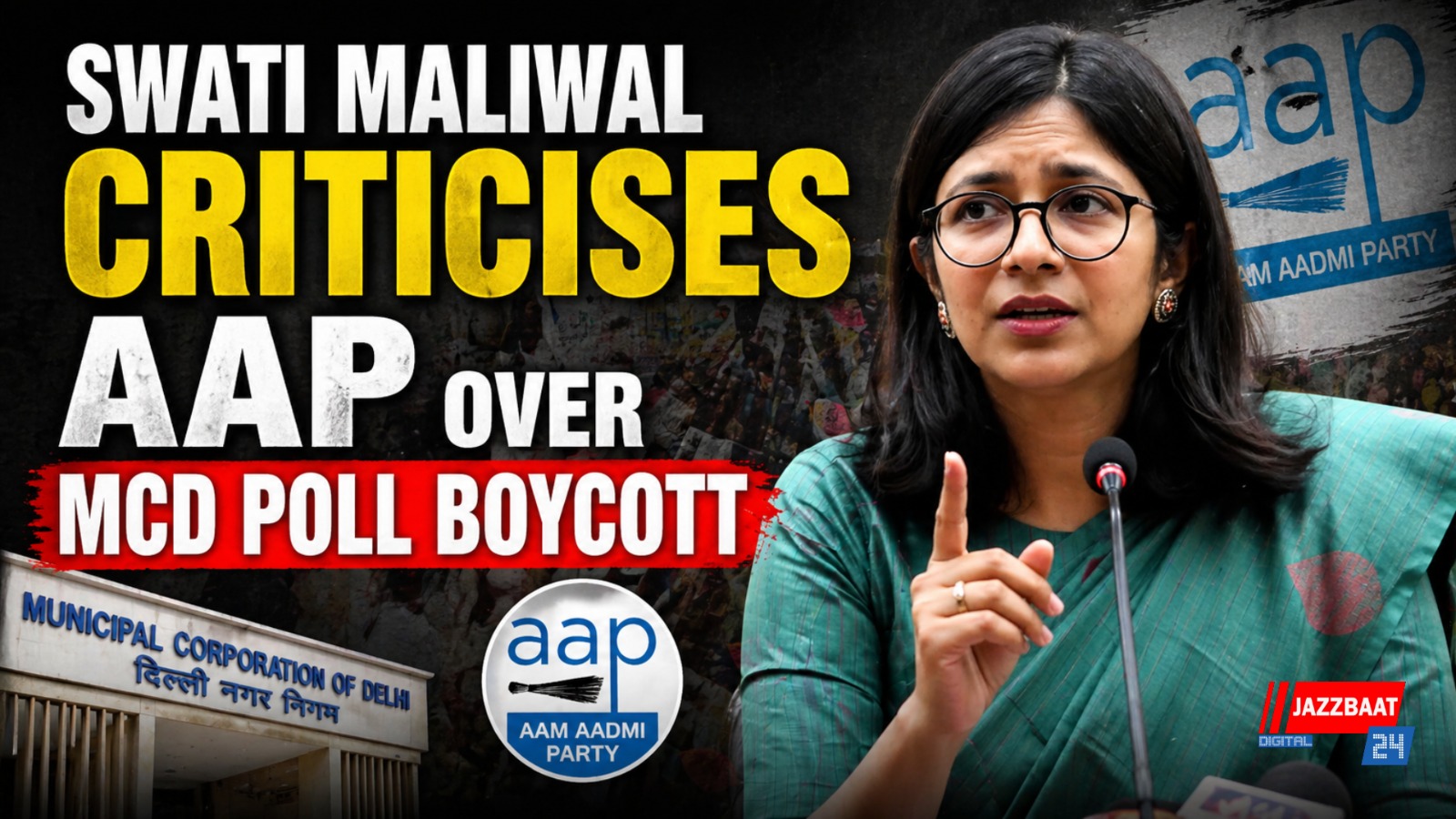
Rajya Sabha MP Swati Maliwal has taken a sharp dig at the Aam Aadmi Party (AAP) for deciding to skip the upcoming Municipal Corporation of Delhi (MCD) polls, saying that even defeat is no excuse to stay away from the democratic process.
Reacting to the party’s decision, Maliwal remarked that “they will lose, but they should still contest,” suggesting that political parties must remain accountable to voters regardless of their chances of winning. Her comments highlight growing unease around AAP’s strategy, as the party opts out of a key civic election in the national capital.
The MCD elections are seen as an important battleground in Delhi’s local governance, shaping control over municipal services, infrastructure, and civic administration. Traditionally, the polls have witnessed intense contests between major parties, including AAP and the Bharatiya Janata Party (BJP), which has held significant influence in the civic body over the years.
Maliwal’s remarks come at a time when questions are being raised about AAP’s political positioning and electoral priorities. Critics argue that opting out of elections may weaken the party’s grassroots connect and reduce its visibility among voters. On the other hand, some within AAP circles have suggested that the decision could be part of a broader strategic recalibration, though no detailed explanation has been officially outlined.
The BJP has also targeted AAP over the move, accusing it of avoiding electoral accountability and lacking confidence in its performance. Political observers note that such criticism could shape public perception ahead of future elections, including those at the state and national levels.
While AAP has yet to respond in detail to Maliwal’s specific comment, the debate underscores a larger question about the role of political parties in democratic contests. Participation, even in the face of likely defeat, is often seen as essential to maintaining voter engagement and ensuring a competitive political landscape.
As the MCD polls approach, Maliwal’s statement has added a fresh dimension to the political discourse, drawing attention to the importance of contesting elections not just to win, but to remain connected with the electorate and uphold democratic norms.