
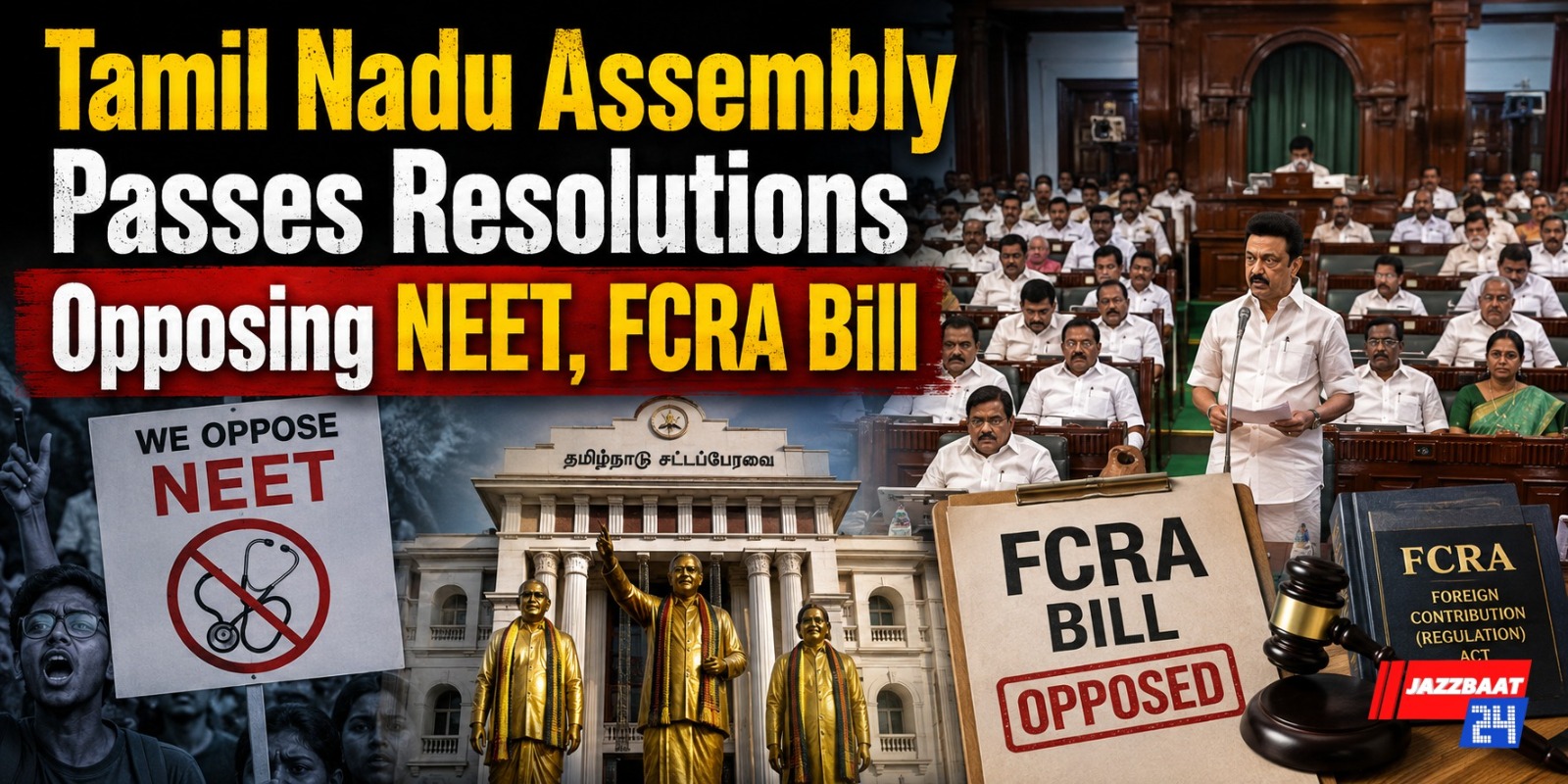
The Tamil Nadu Legislative Assembly on Tuesday passed resolutions opposing the National Eligibility cum Entrance Test (NEET) and the proposed Foreign Contribution (Regulation) Amendment Bill, 2026, putting the state government at odds with the Centre on two major issues.
The resolution against NEET seeks the exemption of Tamil Nadu from the national medical entrance examination. The state government argued that NEET places students from rural, Tamil-medium and economically weaker backgrounds at a disadvantage, as many are unable to afford expensive private coaching. It also pointed to concerns over examination irregularities and the pressure faced by medical aspirants.
The issue has remained politically sensitive in Tamil Nadu for years, with successive state governments arguing that medical admissions should take greater account of students' performance in the state board examination. Supporters of the resolution say the current system increases dependence on coaching centres and creates an unequal playing field between students from different socio-economic backgrounds.
The Assembly's action comes amid renewed debate over the future of NEET following concerns over examination integrity and the impact of the test on students. The resolution reflects Tamil Nadu's continued demand for greater autonomy in determining its medical admission process.
The House also took up a resolution opposing the Centre's proposed FCRA Amendment Bill, 2026. The measure has triggered concerns among opposition parties and several civil society groups over its possible impact on organisations receiving foreign contributions.
The Tamil Nadu government has argued that the proposed changes could create additional difficulties for institutions, including those run by minority communities. The resolution is expected to urge the Union government to reconsider provisions that the state believes could affect the functioning and financial autonomy of such organisations.
The twin resolutions underline the continuing differences between Tamil Nadu and the Centre over education policy, federal powers and regulation of civil society organisations.
The developments also come at a politically significant time, with the state government seeking to assert Tamil Nadu's position on issues that it says directly affect students, educational institutions and vulnerable communities.
The resolutions passed by the Assembly are not, by themselves, sufficient to change or repeal central legislation or NEET. However, they put the state's political position formally on record and increase pressure on the Union government to consider Tamil Nadu's demands.