

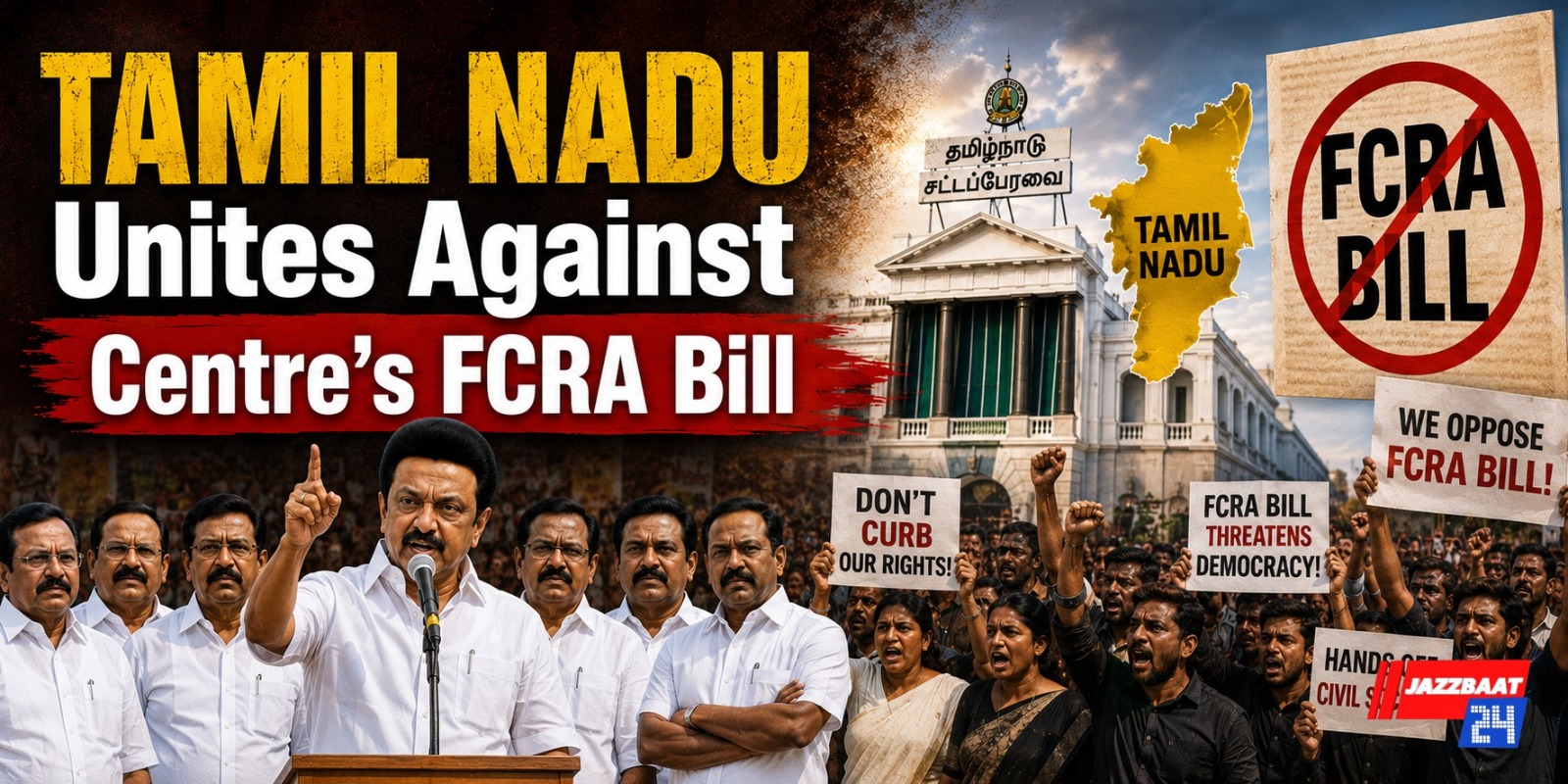
The Tamil Nadu Legislative Assembly on Tuesday unanimously passed a resolution opposing the Centre’s proposed Foreign Contribution (Regulation) Amendment Bill, 2026, and urged the Union government to withdraw it in its present form. The resolution adds to a series of recent political disagreements between Tamil Nadu and the Centre over issues concerning state rights and the functioning of institutions.
The resolution was moved in the Assembly amid concerns that the proposed changes to the Foreign Contribution (Regulation) Act could have a significant impact on organisations receiving foreign contributions, particularly institutions run by minorities and non-governmental organisations.
Members supporting the resolution argued that the proposed amendments could increase government control over the assets and functioning of organisations whose foreign-funding registrations are cancelled, expire or are not renewed. Supporters also expressed concern that the changes could affect educational, social and charitable institutions that depend on foreign contributions for their activities.
The Assembly’s unanimous stand means that members across the political spectrum supported the demand for the Bill to be withdrawn. The resolution was moved by Education Minister Raj Mohan, according to reports.
The BJP opposed the resolution. The party has defended the proposed FCRA changes, while critics have argued that the amendments could give the Centre greater powers over organisations receiving foreign funding. The debate has therefore emerged as another point of confrontation between the state and the Union government.
The Foreign Contribution (Regulation) Act regulates the acceptance and use of foreign contributions by individuals, associations and organisations in India. The government has maintained that changes to the law are intended to strengthen oversight and ensure that foreign funds are used for legitimate purposes.
Tamil Nadu’s latest resolution, however, reflects the state’s concern that the proposed amendments could have wider consequences for institutions working in education, social welfare and charitable activities. A report by The New Indian Express noted that the resolution was expected to highlight the potential impact of the Bill on minority-run institutions.
The resolution does not by itself block the proposed central legislation. The final decision on the Bill rests with Parliament. However, the unanimous vote gives Tamil Nadu’s opposition a strong political message and places the state among those seeking changes to the proposed legislation.
The Assembly also took up a separate resolution seeking the abolition of NEET in Tamil Nadu, making Tuesday a significant day of political debate over both education and foreign-funding regulations.