
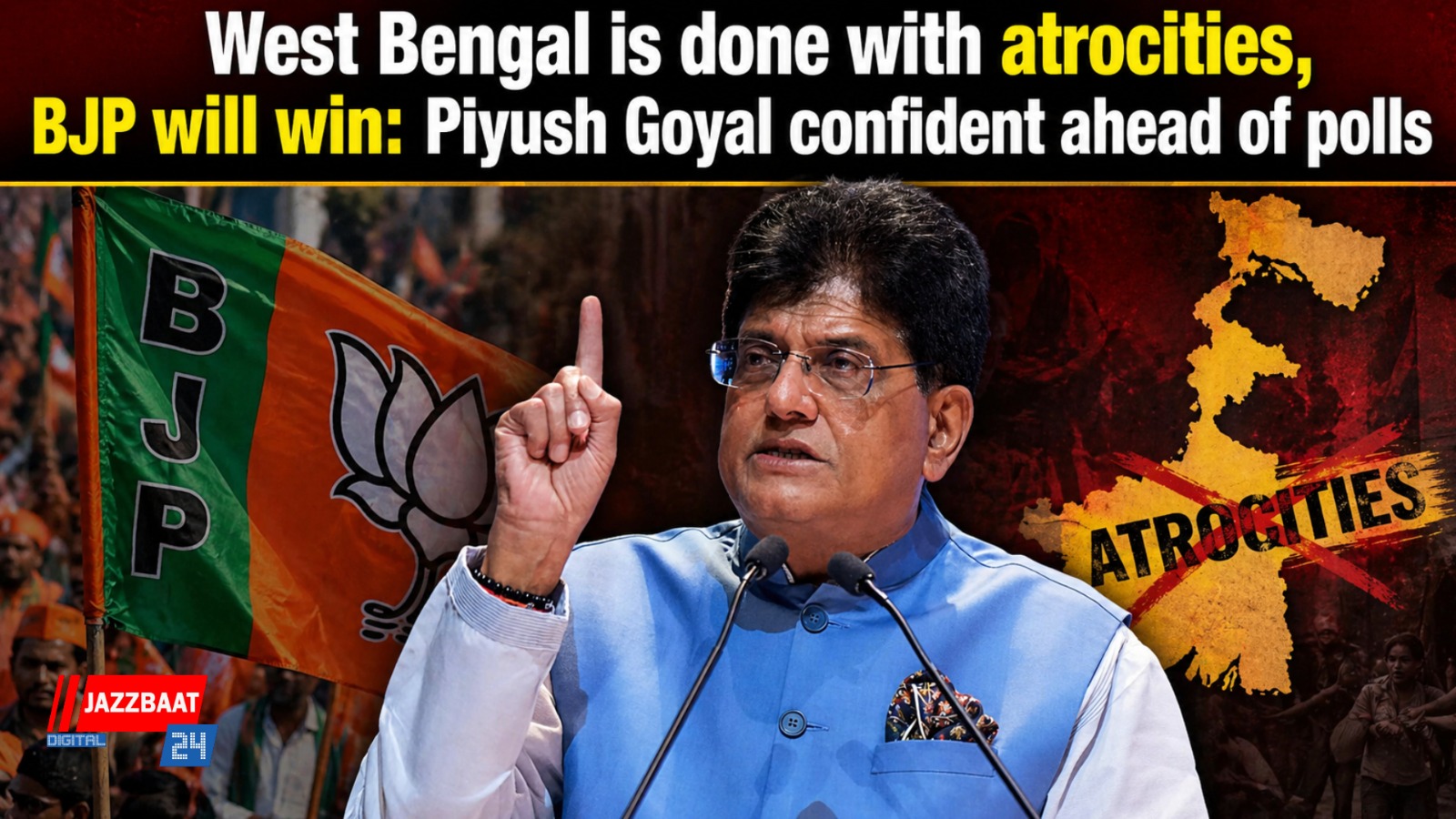
Union Minister Piyush Goyal on Sunday expressed strong confidence that the Bharatiya Janata Party (BJP) is heading towards victory in the ongoing West Bengal Assembly elections, saying that the state is “done with atrocities” and is ready for change.
Speaking at a campaign event ahead of the second phase of polling, Goyal launched a sharp attack on the ruling Trinamool Congress (TMC), alleging misgovernance and failure to ensure safety and development in the state. He claimed that people across West Bengal were seeking an end to what he described as “politics of violence and corruption.”
“West Bengal is done with atrocities. The people have made up their mind for change and BJP will form the government,” Goyal said, expressing confidence in the party’s performance in the polls.
He further said that the BJP’s focus would be on development, investment, job creation, and improving law and order if voted to power. According to him, the state has lagged behind in industrial growth and employment opportunities compared to other parts of the country, and it was time for a “new era of progress.”
The remarks come at a time when campaigning has intensified across constituencies going to the polls in the second phase. Senior leaders from both the BJP and TMC have been actively addressing rallies, with sharp exchanges dominating the political narrative.
The BJP leadership has repeatedly accused the state government of failing to maintain law and order and not allowing central schemes to reach beneficiaries properly. The TMC, however, has strongly rejected these claims, arguing that the state has made significant progress in welfare delivery, infrastructure, and social development under its governance.
Election officials have tightened security arrangements in sensitive areas to ensure peaceful voting. Central forces have been deployed across multiple districts, and surveillance has been increased to prevent any disturbances during polling.
Political analysts say that both major parties are treating the second phase as crucial, as early trends often influence momentum in multi-phase elections. Voter turnout and ground-level response are expected to play a key role in shaping the outcome.
As the campaign enters its final stretch for this phase, leaders continue to make strong statements aimed at mobilising support and consolidating voter bases in their favour.