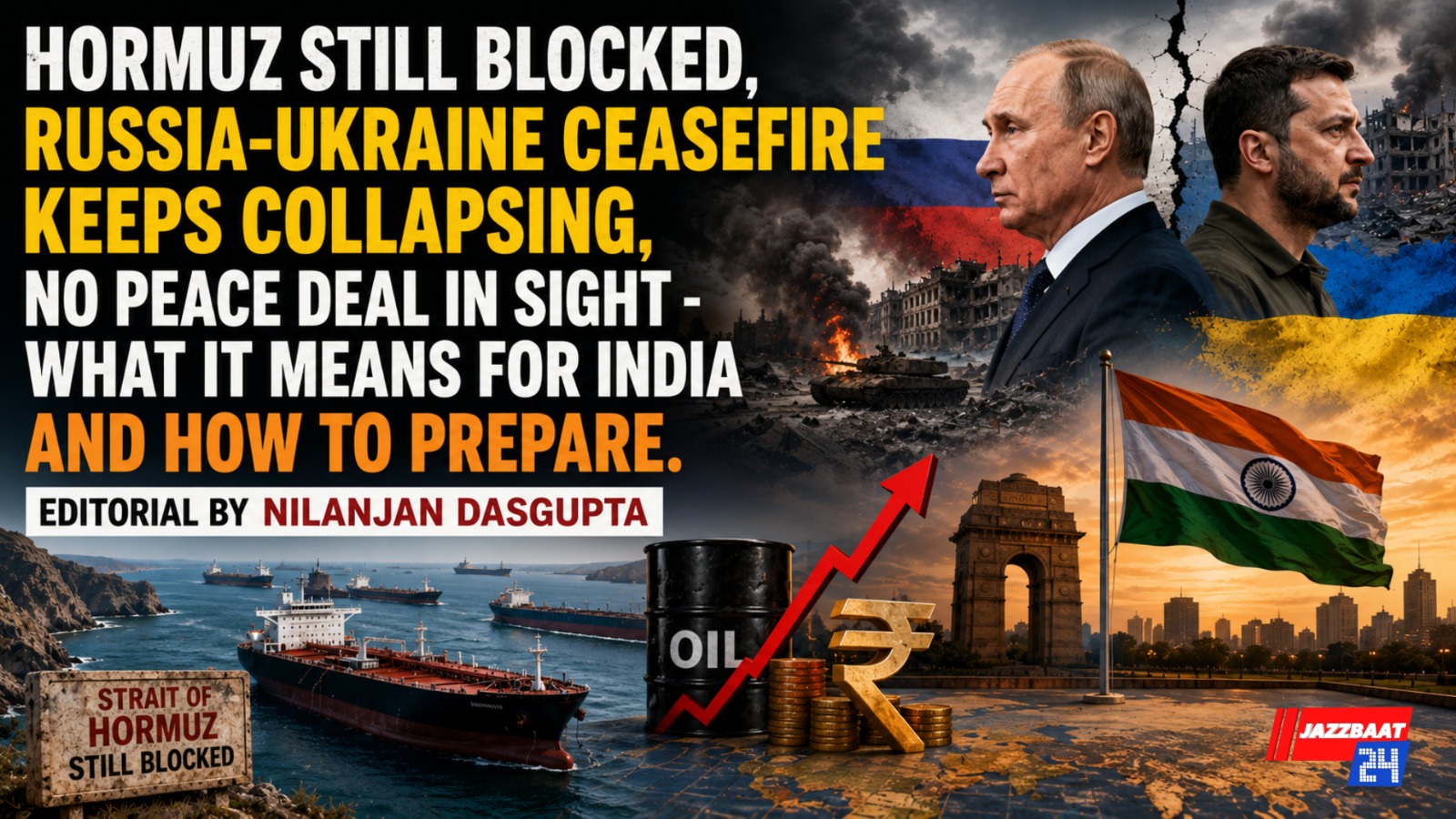
The global geopolitical landscape continues to remain unstable as two of the world’s most sensitive conflicts show no sign of resolution. The ongoing blockade in the Strait of Hormuz and the repeated collapse of Russia–Ukraine ceasefire efforts are keeping international markets and diplomatic channels under severe strain.
In West Asia, the Strait of Hormuz one of the world’s most crucial oil transit routes, remains largely restricted amid continuing tensions between Iran and Western powers. Despite intermittent diplomatic talks and claims of progress, shipping through the narrow waterway has not fully normalized. Reports suggest that naval escorts and alternative export routes have only partially eased the disruption, while insurance costs and shipping risks remain elevated. Analysts warn that even small escalations could again push global oil prices upward, intensifying inflationary pressure worldwide.
Meanwhile, efforts to stabilise the Russia–Ukraine conflict continue to falter. Multiple rounds of proposed ceasefires have failed to hold, with both sides accusing each other of violations. Diplomatic efforts involving global intermediaries have not produced a durable agreement, and frontline tensions remain active in several regions. The prolonged war is continuing to strain global food and energy supply chains, especially in Europe and parts of Asia.
For India, the twin crises carry significant economic and strategic implications. The Hormuz blockade has already forced Indian refiners to diversify crude imports toward Africa and Latin America, increasing logistical complexity and costs. At the same time, uncertainty in Eastern Europe continues to affect fertiliser supply, wheat markets, and defence procurement planning.
Experts suggest that India will need to strengthen energy diversification, expand strategic reserves, and deepen trade partnerships beyond conflict-prone regions. Maritime security cooperation and alternative shipping corridors are also gaining importance in policy discussions.
With no immediate breakthrough in either crisis, global markets are expected to remain volatile, and countries like India will likely continue adapting to a fragmented and unpredictable geopolitical environment.