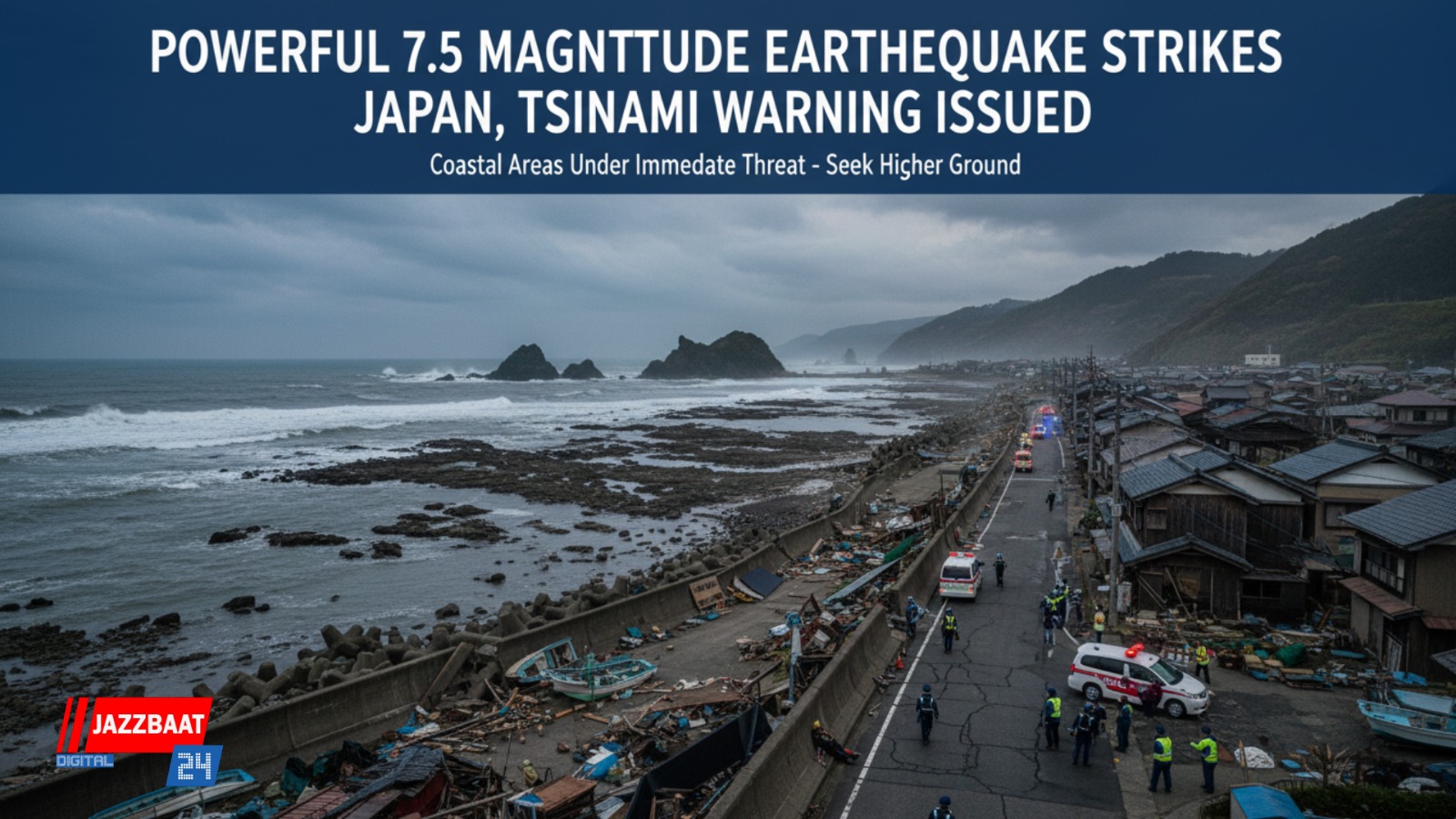
A powerful earthquake measuring 7.5 on the Richter scale struck Japan on Monday, triggering a tsunami warning and prompting emergency responses across coastal regions. The strong tremors were felt across several parts of the country, causing panic among residents and leading authorities to issue immediate evacuation advisories in vulnerable coastal zones.
According to early reports from Japan’s meteorological and disaster management agencies, the earthquake originated offshore at a shallow depth, which intensified the shaking on land. The tremors were strong enough to rattle buildings, disrupt transport systems, and force people to rush out of homes and offices in fear.
Following the quake, tsunami warnings were issued for parts of Japan’s Pacific coastline. Authorities warned that tsunami waves could reach certain coastal areas within a short period and urged residents to move to higher ground immediately. Emergency sirens were activated in several regions as a precautionary measure.
Rail services, including bullet trains in some affected areas, were temporarily halted or delayed to ensure passenger safety. Airports also reported minor disruptions as precautionary checks were carried out. Electricity and communication networks remained largely functional, although some localized outages were reported.
Japan’s disaster response teams were quickly mobilized, with police, fire services, and coast guard units deployed to monitor coastal activity and assist evacuations. Emergency shelters were opened in multiple prefectures to accommodate residents moving away from low-lying areas.
Authorities have not yet confirmed any major casualties or widespread structural damage, though assessment teams are continuing inspections in the affected regions. Officials have urged people to stay alert for possible aftershocks, which are common following strong earthquakes in the region.
Japan, located along the Pacific “Ring of Fire,” is one of the most earthquake-prone countries in the world and maintains advanced early warning systems. These systems helped provide immediate alerts following the quake, allowing residents crucial time to respond.
Meteorological agencies continue to monitor sea levels for potential tsunami wave activity, while warning that the situation remains dynamic and evolving. Residents in coastal areas have been advised to remain in safe zones until all clear signals are issued.
Further updates are expected as authorities gather more information about the impact of the earthquake and the possible extent of tsunami activity.