

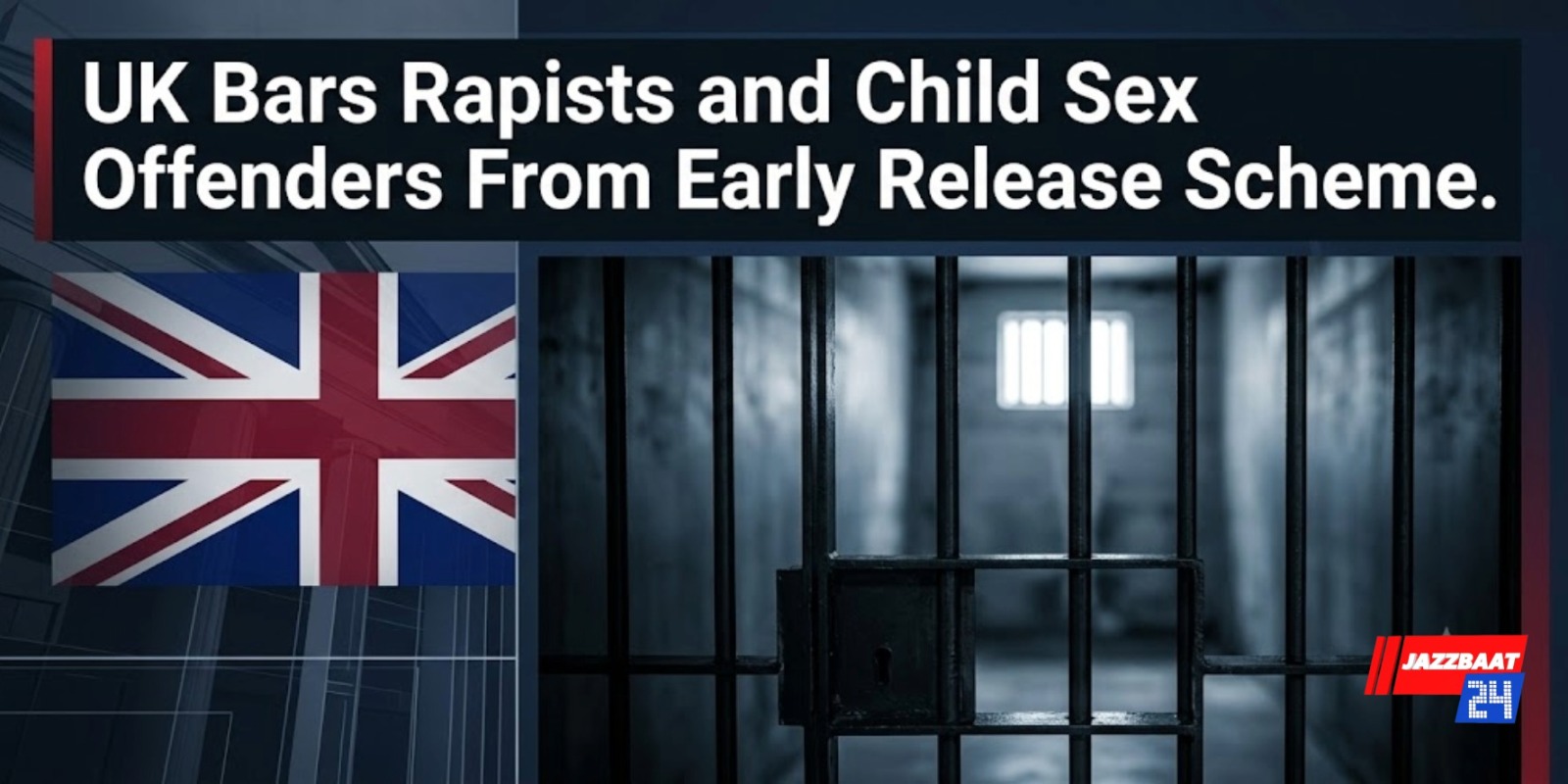
The United Kingdom government has tightened its controversial early prisoner release plans, announcing that rapists, serious child sex offenders and grooming offenders will be excluded from the scheme.
The decision, announced this week, comes amid growing public and political pressure over plans to release prisoners early to tackle severe overcrowding in prisons across England and Wales. The revised policy is expected to keep around 1,000 additional offenders behind bars, reducing the number of prisoners due for early release to about 5,000 over the next 10 months.
Under the earlier plan, prisoners serving standard determinate sentences could become eligible for release at an earlier stage of their sentences. The government has argued that the measures are necessary because the prison system is under intense pressure and could run out of capacity. The revised arrangements are now expected to begin in October rather than September, giving authorities more time to prepare supervision and monitoring arrangements.
Prime Minister Andy Burnham has defended the changes, saying the government must balance public safety with the urgent capacity crisis facing prisons. The government has also promised stronger monitoring of offenders released into the community, additional support for victims and thousands of new prison places over the coming years.
The decision has nevertheless attracted criticism from victims' groups, police representatives and opposition politicians. Critics argue that excluding rapists and child sex offenders is necessary, but say other serious offenders, including some people convicted of killing or domestic abuse, could still qualify for early release.
The controversy has been highlighted by the case of PC Andrew Harper, who was killed in 2019. Two men convicted in connection with his death may still be eligible for early release under the revised arrangements, prompting strong criticism from Harper's widow and supporters.
The issue has also been debated in the UK Parliament. In July, MPs voted unanimously for a motion calling for sexual offenders, including those convicted of rape and grooming, to be excluded from automatic early release under the new sentencing framework.
The UK's decision is likely to fuel debate in India as well, particularly over prisoner-release policies, prison overcrowding and the protection of women and children. Any comparison, however, needs to account for differences between the two countries' criminal justice systems and sentencing laws.
For many campaigners, the central message from the UK debate is straightforward: tackling prison overcrowding should not come at the cost of public safety, particularly when dealing with the most serious sexual offences.