

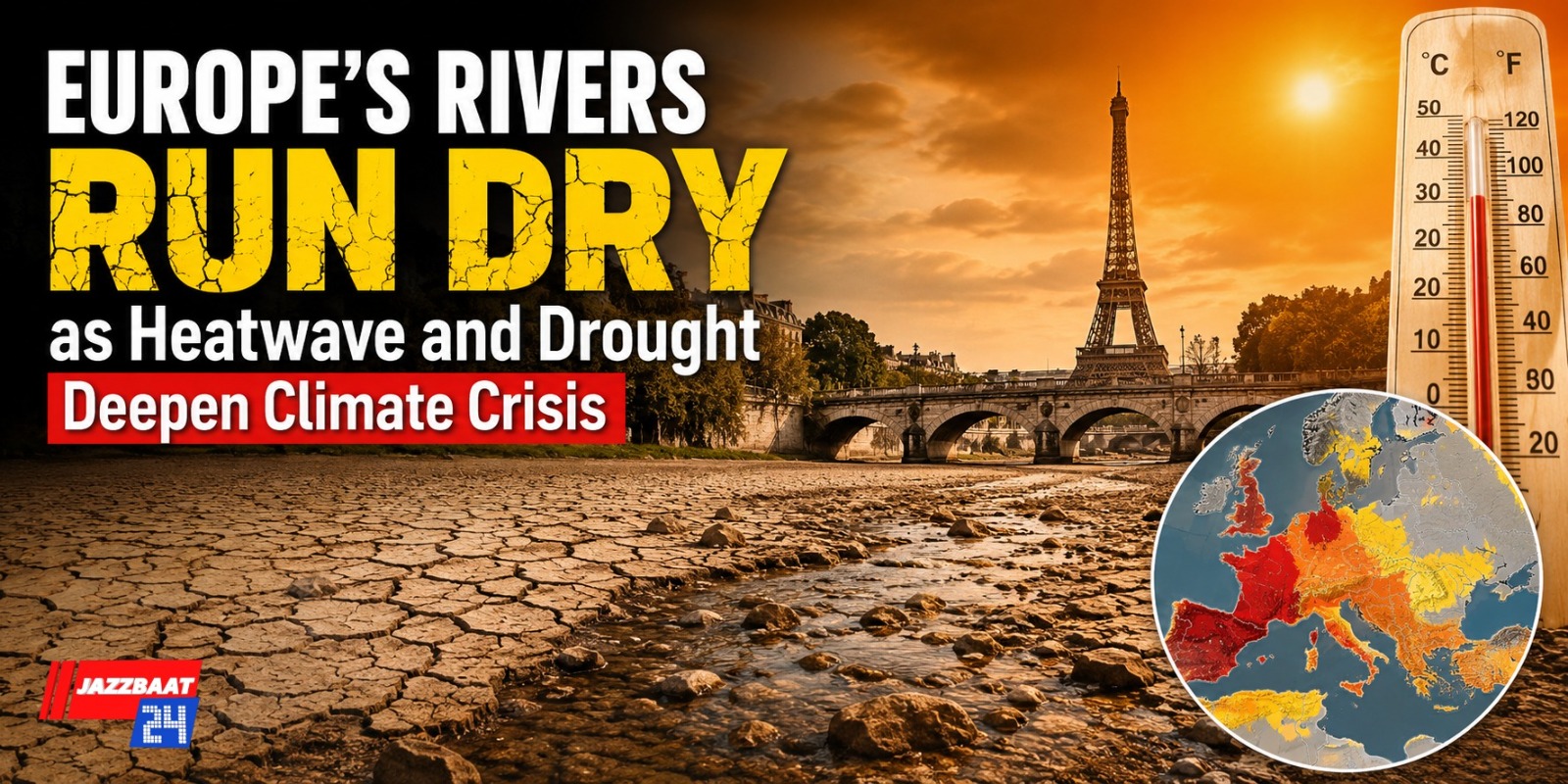
An unrelenting heatwave coupled with a severe lack of rainfall is pushing several of Europe’s most important rivers to critically low levels, disrupting transport, energy production, agriculture, and tourism across the continent. Authorities in multiple countries have warned that the prolonged dry spell is becoming one of the most serious environmental and economic challenges of the summer.
Major waterways, including the Danube, Rhine, and Po rivers, have witnessed dramatic declines in water levels after weeks of scorching temperatures and below-average rainfall. In Hungary, the Danube has dropped to historic lows, forcing the country to reduce electricity production at its nuclear power plant due to insufficient cooling water. The government has urged households and industries to conserve energy as power supplies come under increasing pressure.
Germany’s Rhine River, one of Europe’s busiest commercial waterways, is also facing severe navigation problems. Cargo vessels are carrying significantly lighter loads to avoid running aground, leading to higher transportation costs and supply chain disruptions. Similar issues are being reported along stretches of the Danube, affecting trade across Central and Eastern Europe.
The drought is also taking a heavy toll on agriculture. Farmers across Italy, Hungary, Romania, and other countries are struggling with drying fields, shrinking irrigation supplies, and reduced crop yields. In Italy, the Po River basin remains under severe water stress, raising concerns about food production and livestock farming. Authorities have imposed water-saving measures in several regions as reservoirs continue to shrink.
Tourism has not escaped the impact either. River cruise operators on the Rhine and Danube have been forced to alter routes, suspend services, or evacuate passengers after vessels became stranded in shallow waters. Several travel companies have warned customers that further itinerary changes or cancellations may occur if water levels continue to fall.
Scientists say Europe is warming faster than any other continent, making prolonged heatwaves and droughts more frequent and intense. The combination of rising temperatures and declining rainfall accelerates evaporation, reducing river flows and placing enormous pressure on ecosystems, drinking water supplies, and critical infrastructure.
Meteorologists predict that unless widespread rainfall arrives soon, the crisis could worsen in the coming weeks. Governments across Europe are strengthening drought-response measures while urging citizens to conserve water and electricity as the continent braces for an extended period of extreme weather.