
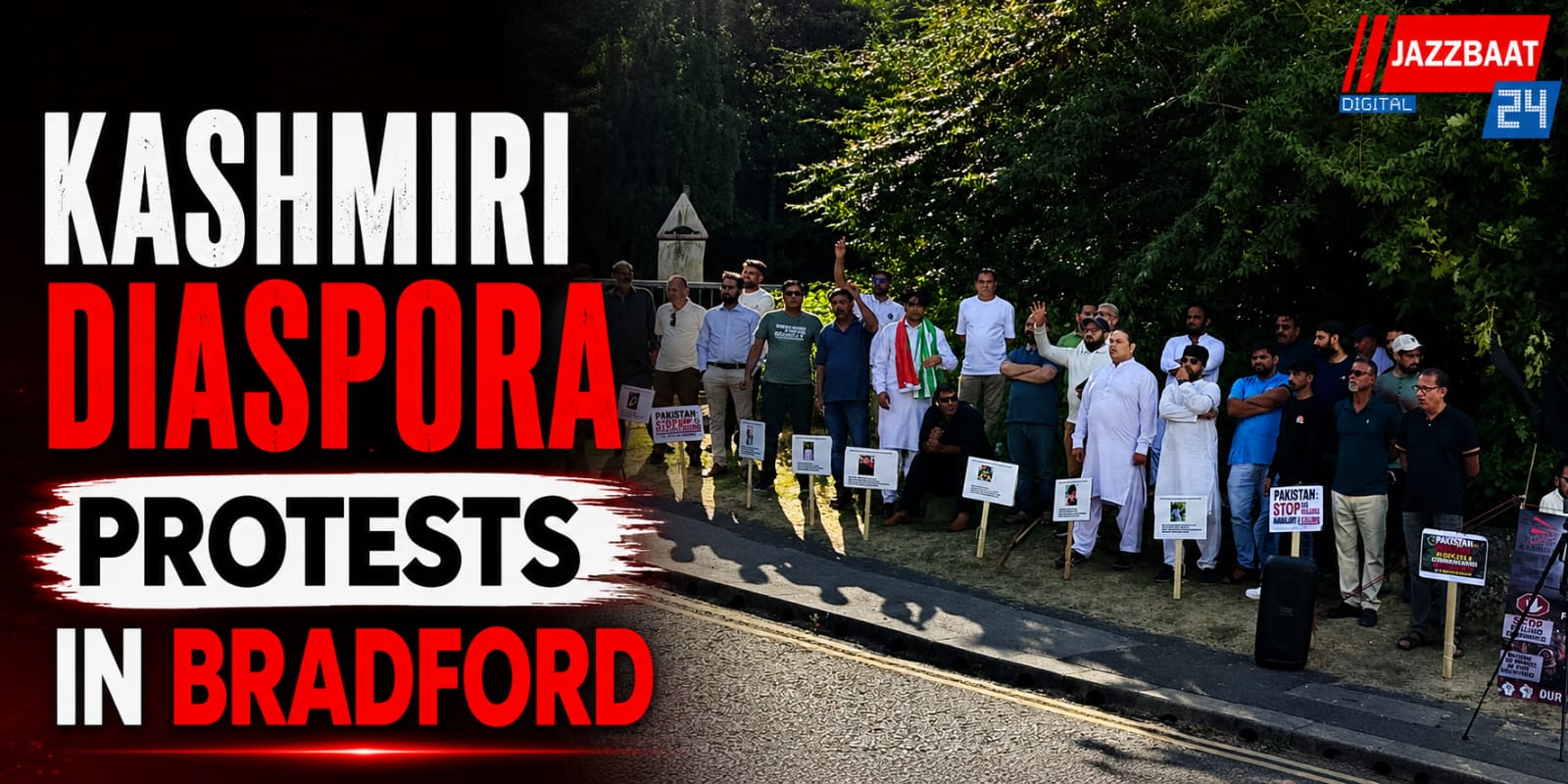
Members of the British Kashmiri diaspora held a protest outside the Pakistani Consulate in Bradford on Friday, raising concerns over the situation in Pakistan-occupied Jammu and Kashmir (PoJK) and demanding an end to what they described as Pakistani control over the region. The protest came as India celebrated its 80th Independence Day.
According to reports, demonstrators gathered in Bradford carrying banners and raising slogans against Pakistan’s presence in PoJK. Protesters expressed solidarity with people living in the region and called for greater attention to their political and civil rights.
The demonstration was also linked to recent unrest in PoJK, where protests over governance, economic conditions and political rights have drawn international attention. The diaspora groups said they wanted to highlight concerns about the treatment of local residents and demand greater accountability from authorities.
The Bradford protest follows another demonstration held by members of the British Kashmiri community earlier this month. On that occasion, protesters voiced support for the demands of the Joint Awami Action Committee (JAAC) and called for the protection of fundamental rights, civil liberties and human dignity in PoJK.
The latest gathering was held outside Pakistan’s diplomatic premises, making it a direct expression of opposition to Islamabad’s role in the region. Protesters sought to use the occasion to draw international attention to developments in PoJK and to press for political and social change.
The issue has gained renewed attention following reports of clashes and a security crackdown during protests in Pakistan-administered Kashmir. International media have also reported concerns surrounding the treatment of protesters and allegations of excessive use of force. Pakistan has rejected allegations of wrongdoing in relation to the violence.
The Bradford demonstration reflects the continuing political debate among sections of the Kashmiri diaspora in the United Kingdom over the future of the region. Different Kashmiri groups hold competing views on Kashmir’s political status, while some organisations have increasingly focused on human rights and local governance issues in PoJK.
The protest remained peaceful, with participants using placards and slogans to communicate their demands. The gathering also demonstrated how developments in Kashmir continue to resonate among Kashmiri communities living abroad.
As tensions and political debates surrounding PoJK continue, diaspora groups in the UK are expected to remain active in raising awareness and seeking international attention to their respective positions.