

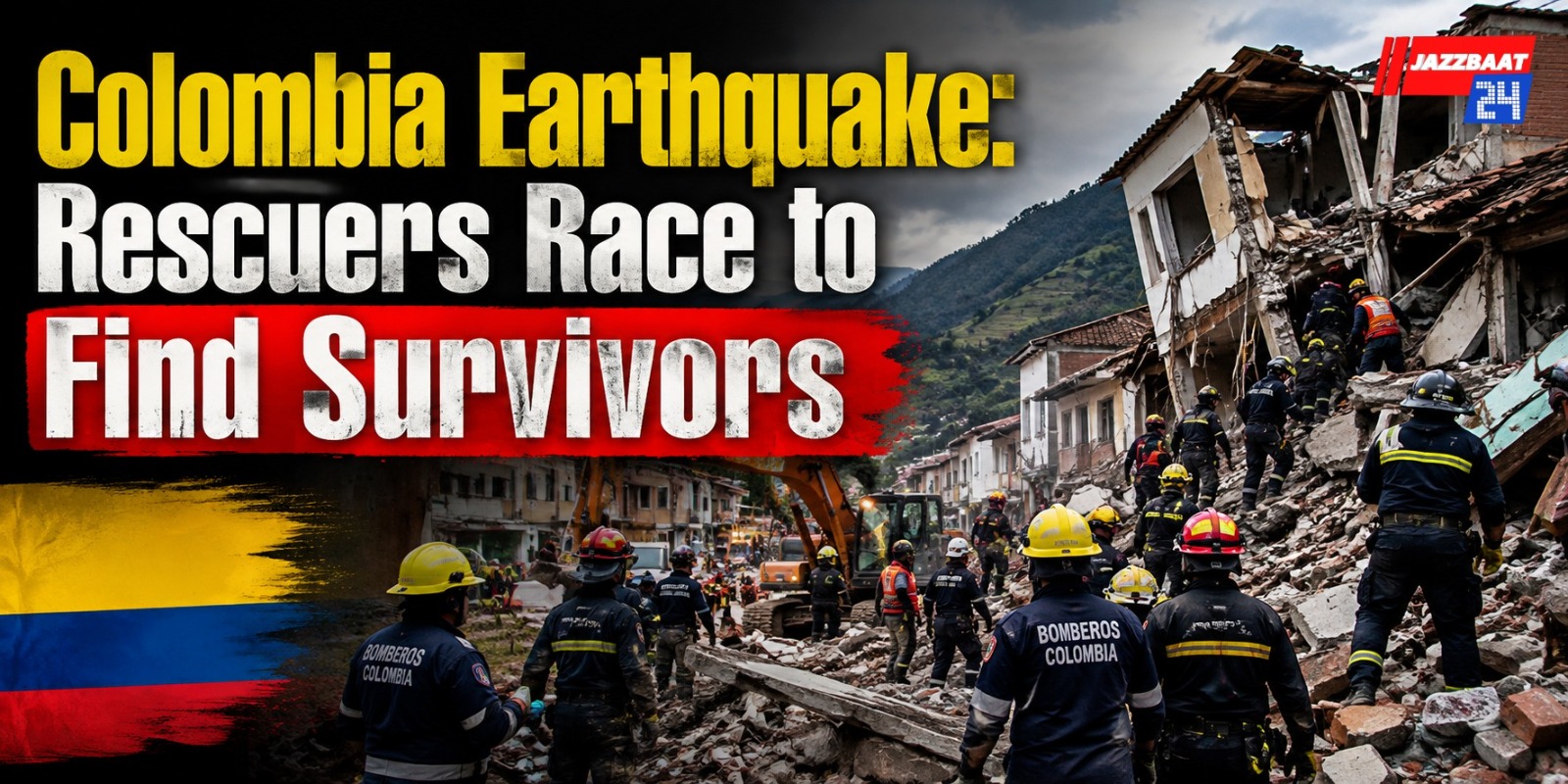
Cali/Pereira: Colombian rescue teams are racing against time to find survivors trapped beneath collapsed buildings, two days after a powerful earthquake struck western Colombia and killed at least 250 people.
The 7.4-magnitude earthquake hit the country on Monday, causing widespread destruction across parts of the coffee-growing region. Cali and Pereira were among the worst-affected areas, with homes, buildings and other infrastructure collapsing during the powerful tremors.
Rescue workers, supported by volunteers and emergency personnel, have been searching through piles of concrete and twisted metal in the hope of finding people still alive. The operation has entered a critical phase as the 72-hour window following the earthquake approaches, although rescuers say people can sometimes survive for much longer under favourable conditions.
In Cali, rescue teams have been working at the badly damaged Torres del Limonar complex, where people are believed to remain trapped beneath the rubble. Heavy machinery is being used alongside teams searching manually through unstable structures.
The disaster has left hundreds of people missing and thousands injured. Updated figures reported by Reuters said the death toll had reached 265, with nearly 500 people still missing and more than 3,770 injured. More than 9,550 homes have also been destroyed.
The scale of the destruction has made the rescue operation extremely difficult. Aftershocks have continued to shake affected areas, raising concerns about the safety of rescuers working around damaged buildings. Authorities have restricted access to some rescue sites to prevent volunteers and bystanders from interfering with emergency operations.
Despite the devastation, rescuers have already recorded remarkable successes. In one dramatic case, a 32-year-old woman named Daniela was pulled alive from the wreckage of a collapsed building in Pereira nearly 38 hours after the earthquake. She had been trapped with her arm pinned by a metal door, and rescuers spent around 10 hours freeing her.
International assistance has also begun arriving, with rescue teams from Mexico and Peru joining the response. The government is coordinating relief operations while authorities work to provide shelter, medical care and other essential support to survivors.
President Abelardo De La Espriella has announced plans for an emergency reconstruction fund to help rebuild homes, hospitals, schools and damaged infrastructure. Meanwhile, families across the affected region continue waiting anxiously for information about missing relatives.
As rescue crews continue digging through the rubble, every sound from beneath the collapsed structures is being treated as a possible sign of life. For families waiting nearby, the search remains a desperate race against time.