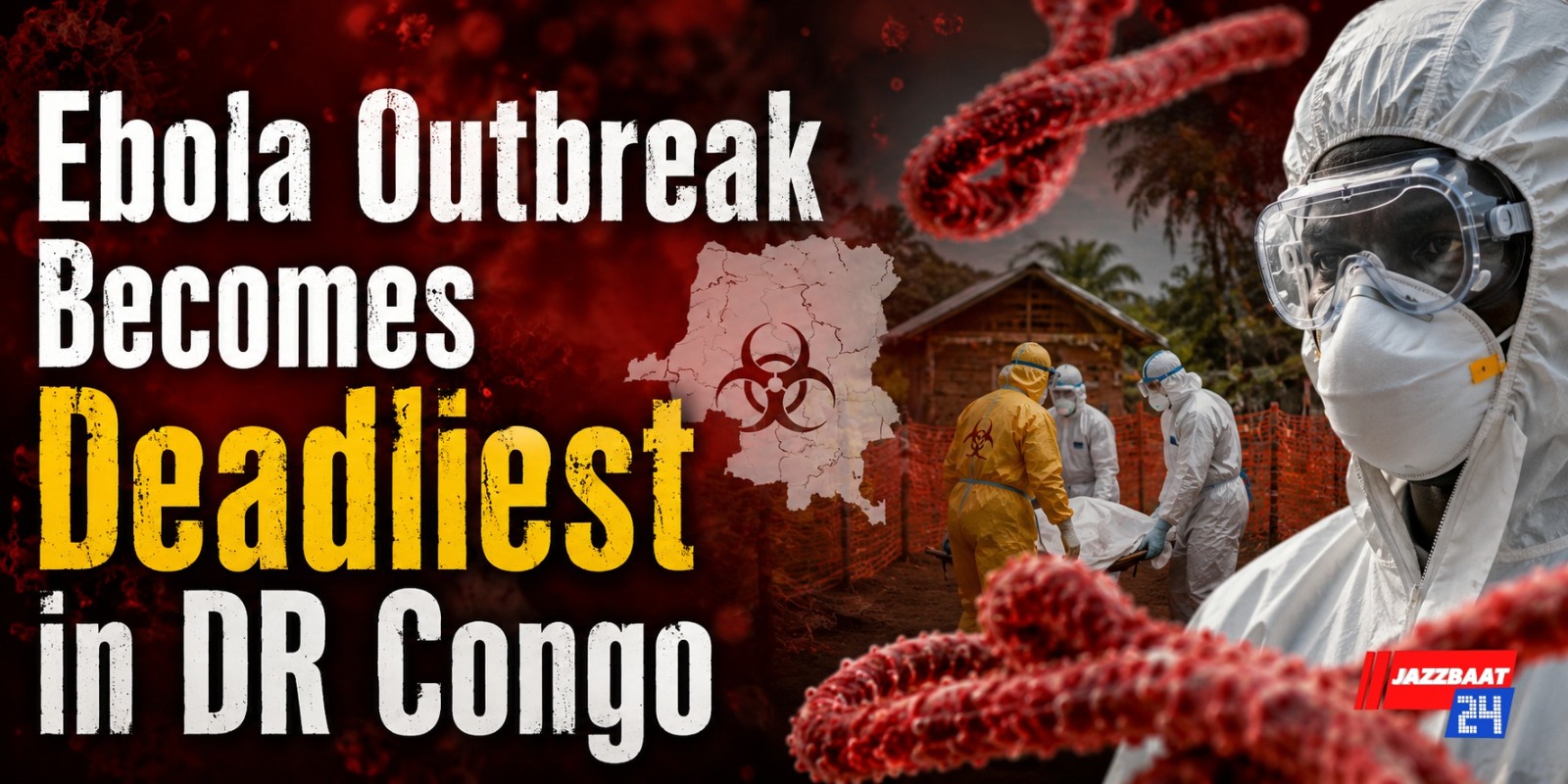
Kinshasa: The Ebola outbreak in the Democratic Republic of Congo (DRC) has become the deadliest in the country’s history, with the death toll reaching 2,325, according to the latest government data. The figure has surpassed the 2,299 deaths recorded during the previous worst outbreak between 2018 and 2020.
The DRC’s public health institute reported that confirmed Ebola cases have now risen to 4,945, including 101 new cases detected in the previous 24 hours. The current outbreak is the country’s 17th and has already become its largest outbreak in terms of confirmed infections.
The outbreak was officially declared on May 15, although health officials and experts believe the virus had been circulating for months before it was detected. Most cases have been reported in the northeastern province of Ituri, but the virus has now spread to six provinces, making containment increasingly difficult.
The outbreak is being driven by the Bundibugyo strain of Ebola, a relatively rare strain for which there is currently no approved vaccine or specific treatment. Researchers are testing potential vaccines and treatments in clinical trials, while health workers continue to rely heavily on supportive medical care for patients.
The situation has become particularly worrying because of the speed at which the virus is spreading. The World Health Organization and United Nations have described the current outbreak as exceptionally fast-moving. More than 2,000 people have died in less than three months, a pace that has raised fears that the outbreak could become even larger.
Health authorities are also facing major challenges on the ground. Conflict and insecurity in parts of eastern Congo, weak infrastructure, delayed diagnosis and mistrust among some communities have complicated efforts to identify cases and trace contacts.
The current outbreak is now the second-deadliest Ebola outbreak ever recorded globally, behind the 2014–2016 West African epidemic, which killed more than 11,000 people across Guinea, Liberia and Sierra Leone.
Officials and international health organisations are calling for faster detection, treatment and contact tracing to slow transmission. With cases continuing to rise, health experts warn that the coming weeks will be critical in determining whether the outbreak can be brought under control