
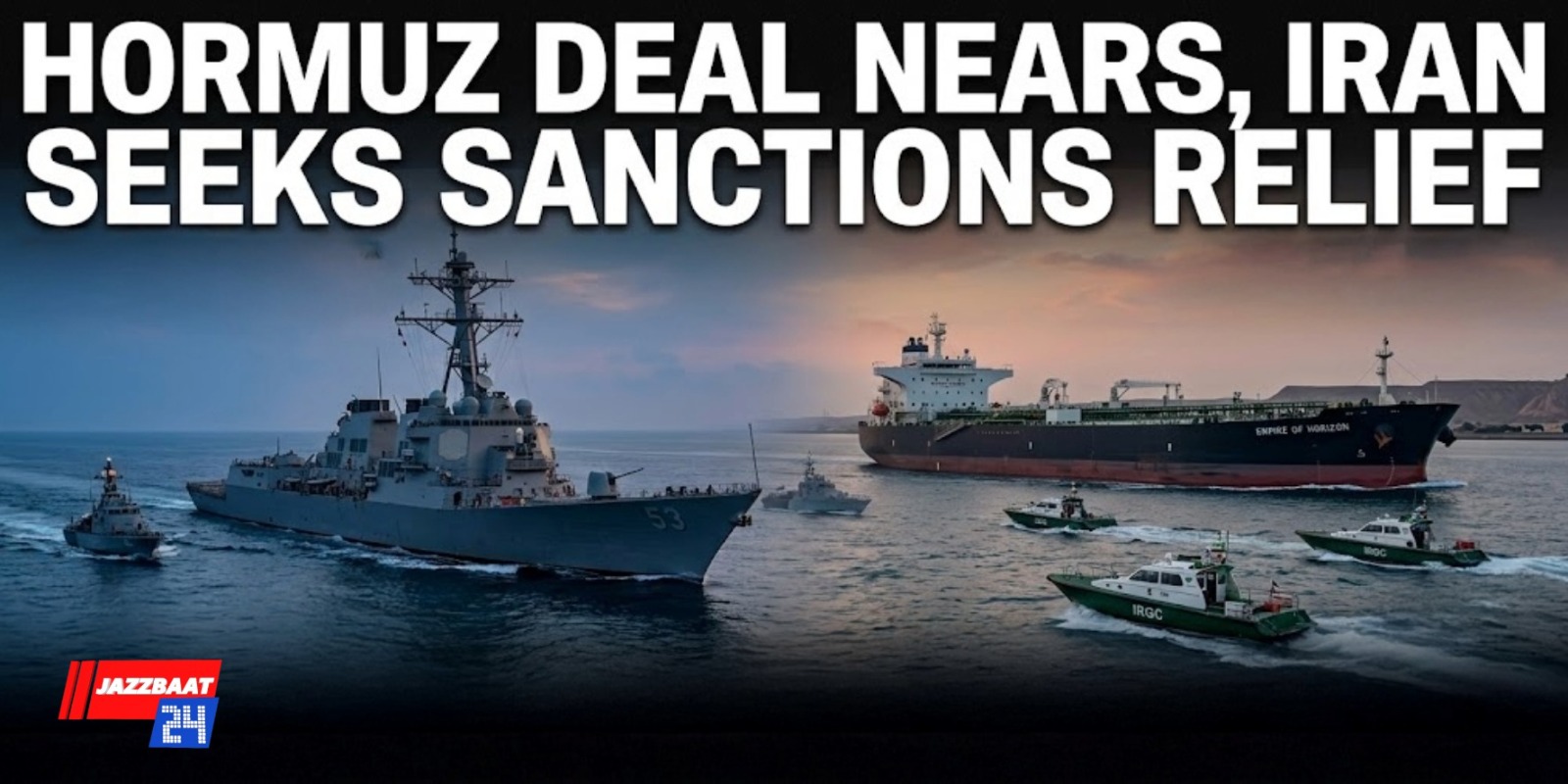
Iran and Oman are reportedly close to reaching an agreement on new shipping lanes through the strategically important Strait of Hormuz, but Tehran has made clear that reopening the waterway will depend on concessions from the United States.
According to Reuters, Iran said the talks with Oman are nearing a final agreement aimed at establishing routes that would allow commercial vessels to move through the strait. However, Iranian officials insist that the United States must first meet several conditions, including lifting sanctions and ending military pressure on Tehran.
The Strait of Hormuz is one of the world's most important maritime trade routes, particularly for oil and gas shipments. Any prolonged disruption to shipping through the narrow waterway can quickly affect global energy markets, freight costs and the economies of major importing countries.
Iran's demands reportedly go beyond sanctions relief. Tehran is seeking compensation for damage caused by previous attacks, an end to what it describes as US aggression and threats, the removal of the US naval blockade around Iranian ports, and the release of frozen Iranian assets. Iranian officials have also indicated that the final decision on reopening the waterway rests with the country's leadership.
The proposed arrangement with Oman is significant because Oman has traditionally played a mediating role between Iran and the United States. The two sides are discussing how shipping lanes can be defined and how commercial vessels could safely pass through the strategic waterway.
Washington has also indicated that it expects an agreement soon. A US official said last week that once a deal is reached to restore commercial shipping without impediments, the United States would lift its blockade of Iranian ports.
However, differences remain over the conditions for reopening the strait. Iran wants US concessions before normal shipping resumes, while Washington has focused on ensuring unrestricted commercial passage.
The uncertainty is already being closely watched by global energy markets. Oil prices rose on Monday as traders remained uncertain about when shipping through Hormuz could return to normal.
For now, the talks between Iran and Oman offer a possible route towards restoring maritime traffic, but the dispute over US sanctions and military measures remains the biggest obstacle. A final agreement could ease pressure on global shipping and energy markets, while failure to reach a deal could prolong uncertainty around one of the world's most critical trade chokepoints.