

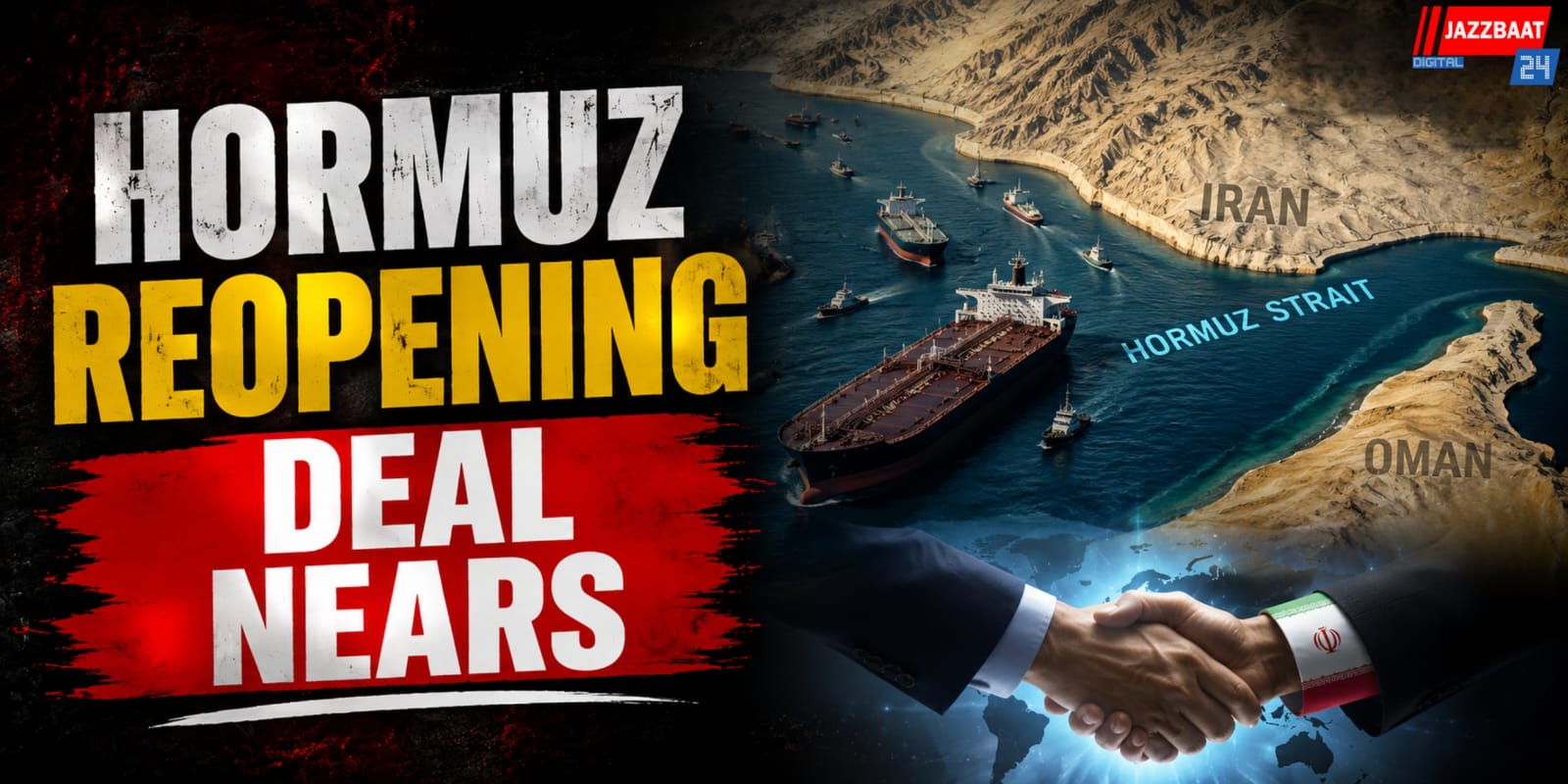
Washington: The United States expects Iran and Oman to reach an agreement soon that could allow the Strait of Hormuz to reopen to unrestricted commercial shipping, according to a US official, raising hopes of easing a major disruption to global energy supplies.
The development comes after months of conflict and tensions around the strategic waterway, which connects the Persian Gulf with the Gulf of Oman. The strait is one of the world’s most important energy routes, carrying a significant share of global oil and gas shipments.
According to Reuters, Washington believes progress has been made in discussions between Iran and Oman over arrangements for reopening the waterway. The emerging understanding could allow commercial vessels to resume normal passage through the strait. The negotiations are being closely watched by international energy markets because prolonged restrictions on shipping through Hormuz have disrupted oil supplies and contributed to higher energy prices.
The proposed arrangement, however, remains sensitive. Reports indicate that Iran has sought a role in managing or controlling shipping routes through parts of the strait, while the United States has opposed restrictions that would give Tehran the power to approve vessels or impose tolls.
Iranian officials have also indicated that reaching an agreement on shipping arrangements does not automatically mean the waterway will be fully reopened. The reopening remains linked to broader political and security issues, including US actions in the region.
The Strait of Hormuz is particularly important because of its geography. At its narrowest, the waterway is only around 29 nautical miles wide and lies between Iranian and Omani waters. A relatively small disruption can therefore have major consequences for international shipping and energy markets.
The latest diplomatic movement comes amid wider efforts to reduce tensions in the region. The United States has been pushing for an arrangement that would restore commercial traffic while Iran and Oman have been negotiating the practical details of vessel movements.
Any agreement would also have implications for Gulf oil exporters, many of which depend heavily on uninterrupted maritime access. A sustained reopening could ease pressure on global oil markets and improve confidence among shipping companies and energy traders.
Still, significant questions remain over the exact terms of the proposed arrangement and whether all sides will accept them. The US expectation of a deal represents a positive signal, but officials have not indicated that a final agreement has already been concluded.
For now, attention is focused on the Iran-Oman negotiations and whether they can produce a workable framework that allows commercial vessels to safely return to one of the world's most critical maritime routes. A successful reopening would mark an important step towards easing the wider regional crisis and could provide much-needed relief to global energy markets.