

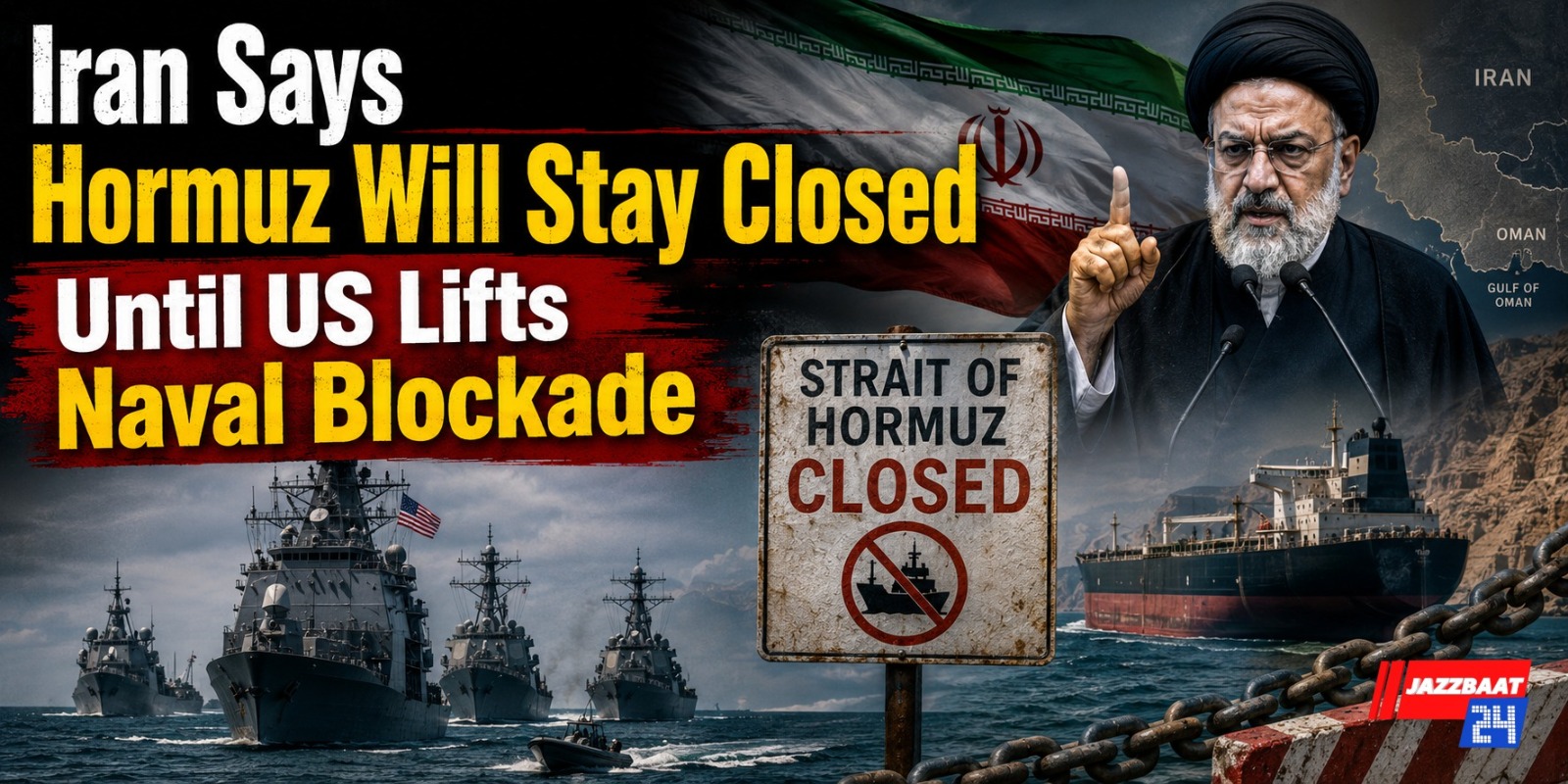
Iran has said the Strait of Hormuz will not be fully reopened as long as the United States maintains its naval blockade, adding another obstacle to efforts to restore shipping through the strategically important waterway.
Iranian Foreign Ministry spokesperson Esmaeil Baghaei said Monday that any arrangement for the safe passage of ships through the strait would be separate from the question of fully reopening the waterway. He said Tehran’s position was linked to the conditions imposed on Iran by Washington.
Baghaei said Iran’s ongoing discussions with Oman were focused on finding an understanding that could allow shipping to pass safely. However, he stressed that those discussions should not be interpreted as an agreement to reopen the Strait of Hormuz completely.
The comments come as diplomatic efforts continue to ease the wider US-Iran confrontation. Iranian Foreign Minister Abbas Araghchi also held talks with his German counterpart Johann Wadephul on the crisis and the security situation around the strait. Tehran has been conducting consultations with Oman as it seeks to address the dispute.
The Strait of Hormuz is one of the world's most important energy corridors, connecting the Persian Gulf with the Gulf of Oman. Prolonged disruption to shipping through the waterway has raised concerns over global oil and gas supplies and pushed energy prices higher.
The latest Iranian position has already affected markets. Oil prices remained near a one-week high on Tuesday, with Brent crude trading around $87.80 a barrel and US West Texas Intermediate near $82.22, as uncertainty over the reopening of the waterway continued.
Iran has also demanded that the United States meet wider conditions before the strait can return to normal. Reports indicate that Tehran wants Washington to lift its naval blockade and fulfil commitments that Iran says were agreed earlier.
The United States, meanwhile, has continued maritime pressure on Iran. The blockade has become a central point of disagreement in negotiations, with Tehran arguing that Washington's actions must change before it can guarantee normal shipping.
The dispute has broader implications because the Strait of Hormuz is a crucial route for international energy trade. Any prolonged restrictions could affect crude oil and gas prices, shipping costs and economies that depend heavily on Gulf energy supplies.
For now, there appears to be no immediate breakthrough. Iran's latest statement makes clear that a return to unrestricted shipping will depend on progress in the wider confrontation with the United States, leaving the future of one of the world's busiest energy chokepoints uncertain.