
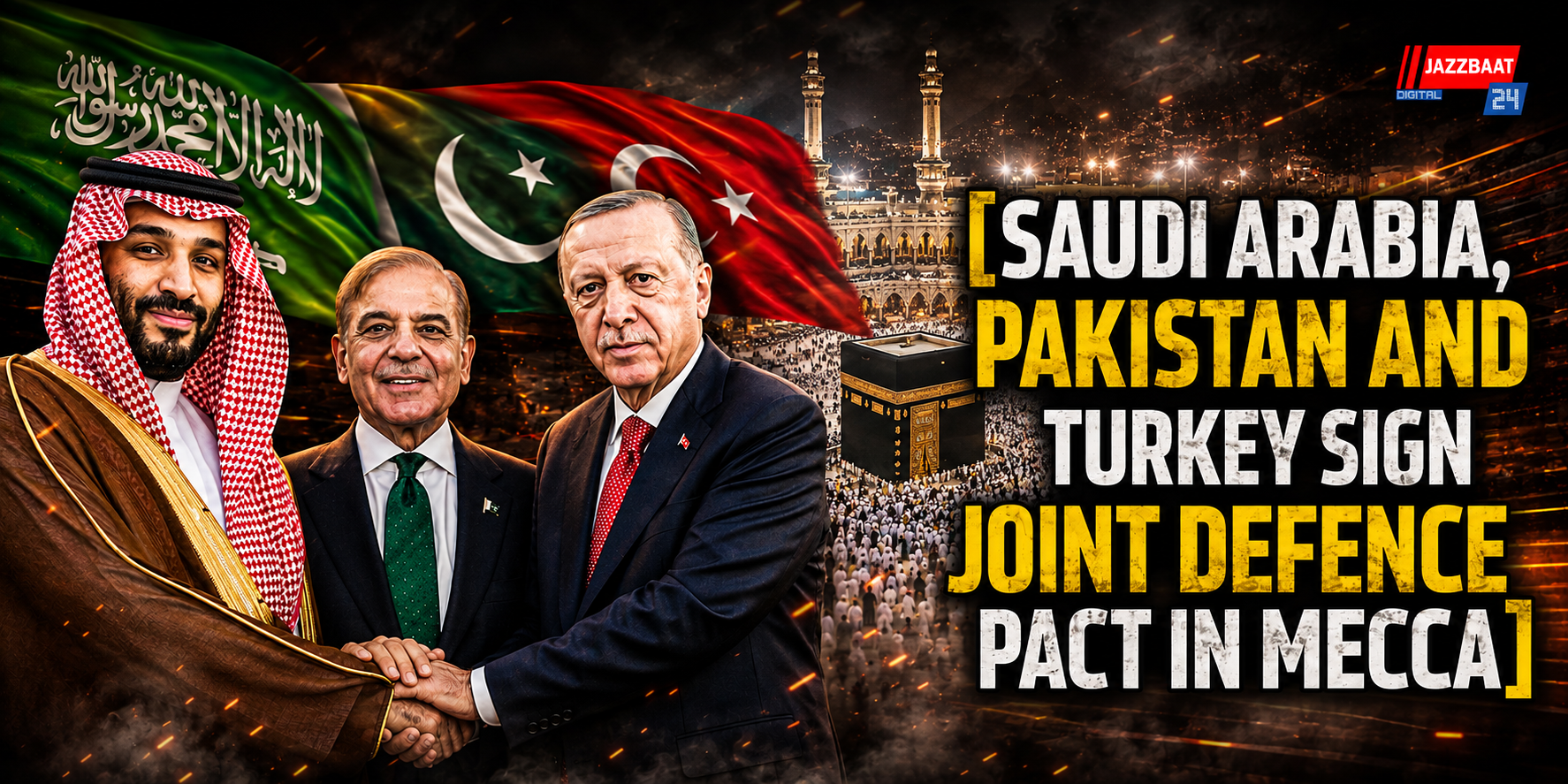
Mecca: Saudi Arabia, Pakistan and Turkey have signed a landmark joint defence agreement in Mecca, committing the three countries to treat an armed attack against any one of them as an attack against all three.
The agreement, signed on Friday by Saudi Crown Prince Mohammed bin Salman, Pakistani Prime Minister Shehbaz Sharif and Turkish President Recep Tayyip Erdogan, marks a significant step towards closer military and security cooperation among the three Sunni-majority nations.
The pact comes as tensions across the Middle East have sharply escalated, with missile attacks targeting Gulf states and growing fears that the wider regional conflict could spread further. The agreement is widely being viewed as a collective-security arrangement, although officials have stressed that it is defensive in nature and is not directed against any particular country.
Under the agreement, the three countries will deepen cooperation in defence and security, including coordination and military preparedness. However, the pact does not publicly set out detailed provisions on how each country would respond militarily if another member came under attack.
The deal brings together three countries with significant strategic capabilities. Turkey, a NATO member, has one of the largest militaries in the alliance. Pakistan is the only nuclear-armed Muslim-majority country, while Saudi Arabia has substantial financial resources and occupies a central position in the Muslim world.
The agreement builds on growing defence ties between the three countries. Pakistan and Saudi Arabia had already signed a bilateral strategic mutual defence agreement in 2025, under which aggression against one was to be treated as aggression against both. The new trilateral arrangement expands the framework by bringing Turkey into the collective security equation.
The pact also reflects growing anxiety among Gulf countries over the possibility of further missile attacks and instability affecting critical energy infrastructure and shipping routes. Saudi Arabia and other Gulf oil exporters have increasingly sought stronger regional security arrangements as the conflict has intensified.
Analysts say the agreement could reshape the regional security landscape by creating a new defence partnership linking the Gulf, South Asia and Turkey. At the same time, they caution that its practical strength will depend on how the three governments interpret and implement the mutual-defence commitment.
The United States remains an important security partner for both Saudi Arabia and Turkey, while Pakistan also maintains longstanding defence and diplomatic ties with Washington. The new agreement therefore does not necessarily signal a complete break from existing alliances.
Still, the Mecca pact sends a powerful political message at a time of heightened regional uncertainty. By declaring that an attack on one member will be considered an attack on all, Saudi Arabia, Pakistan and Turkey have placed collective defence at the centre of their emerging strategic partnership.