

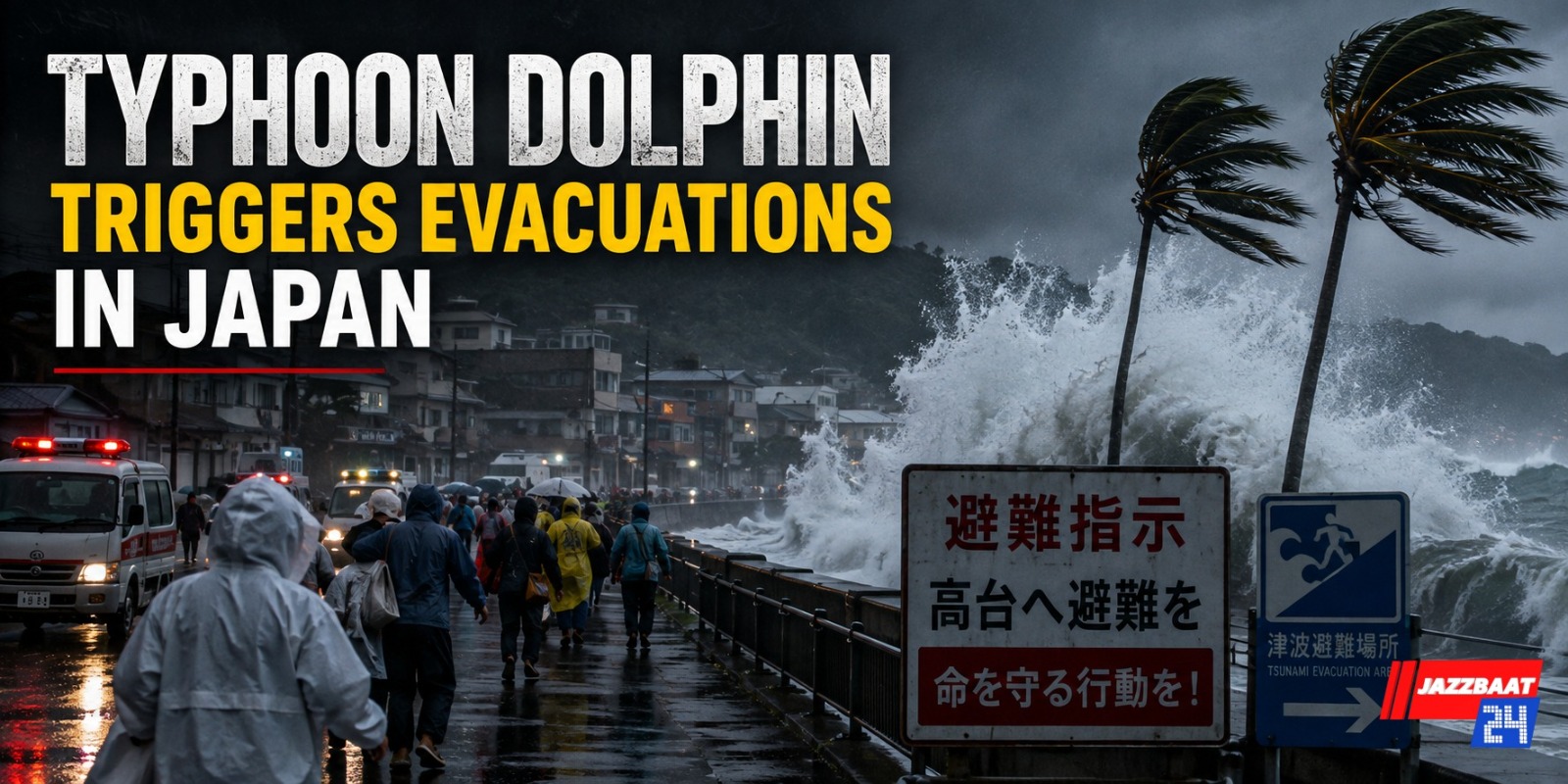
Tokyo: Japanese authorities have issued evacuation advisories for thousands of residents as slow-moving Typhoon Dolphin approaches the country, bringing the threat of violent winds, torrential rain and dangerously high waves. More than 500 domestic and international flights have been cancelled, while rail and ferry services have also been disrupted as officials prepare for the storm's impact. Heavy rain is expected over the next 24 to 48 hours, increasing the risk of flooding and landslides.
The Japan Meteorological Agency (JMA) has warned that Typhoon Dolphin is moving slowly, allowing intense rain bands to remain over the same areas for prolonged periods. Forecasters said the storm could dump exceptionally high amounts of rainfall, causing rivers to overflow and triggering flash floods and landslides in vulnerable regions. Coastal and mountainous areas are expected to face the greatest impact.
Local governments have opened emergency shelters for residents living in low-lying and landslide-prone areas. Authorities have urged people to evacuate immediately if instructed and avoid unnecessary travel. Disaster response teams have been deployed across affected prefectures, while emergency services remain on standby to respond to incidents caused by strong winds, flooding and possible infrastructure damage.
The severe weather has significantly disrupted transportation across the country. More than 500 flights have been cancelled, affecting thousands of passengers. Several high-speed train services have either been suspended or are operating with delays, while ferry operations have been halted in many coastal regions due to rough sea conditions. Airlines and transport operators have advised travellers to check the latest schedules before leaving for airports or stations.
Officials have also warned fishermen and commercial vessels not to venture into the sea as high waves and strong winds are expected to batter Japan's Pacific coastline. Port operations in several areas have been suspended as a precaution, and residents have been advised to stay away from beaches, riverbanks and coastal areas until weather conditions improve.
The Prime Minister's Office said all relevant ministries, local governments and disaster management agencies are working together to minimise the impact of the storm. Rescue teams, firefighters and the Japan Self-Defense Forces have been placed on high alert and are ready to assist in evacuation and relief operations if required.
Meteorologists cautioned that the typhoon's slow movement could prolong dangerous weather conditions even after landfall. Residents have been urged to closely follow official weather advisories, keep emergency supplies ready and comply with evacuation orders. Authorities also warned that the risk of flooding, landslides and river overflows may continue even after the heaviest rainfall subsides, making caution essential in the coming days.