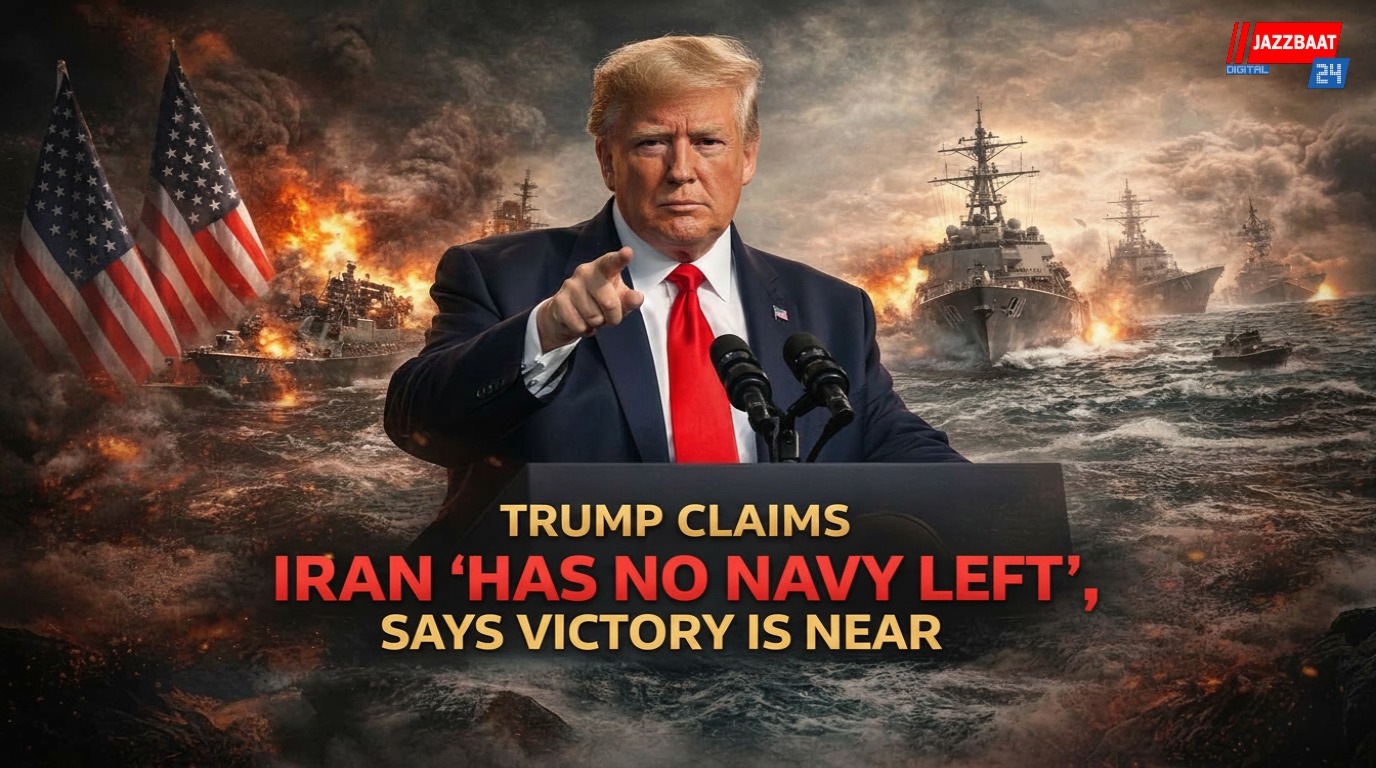
U.S. President Donald Trump has declared that the ongoing conflict with Iran is nearing its end, asserting that American forces are on the verge of “victory very shortly” and claiming that Iran’s naval capabilities have been effectively destroyed.
Speaking amid escalating tensions in West Asia, Trump said Iran has “no navy left,” echoing earlier statements in which he argued that U.S. and allied strikes had severely weakened Tehran’s military infrastructure, including its air force, communications systems, and missile capabilities.
The remarks come as the United States intensifies its military pressure through a large-scale naval blockade in the Strait of Hormuz a critical global oil route. The operation, led by U.S. naval forces, aims to restrict maritime access to Iranian ports and has significantly disrupted regional trade and energy flows.
Despite Trump’s claims of overwhelming success, the situation on the ground remains complex. Reports indicate that while Iran has suffered losses, it still retains significant asymmetric capabilities, including small boats and sea mines, which continue to pose threats in the region. These tactics have allowed Iran to maintain strategic leverage, particularly in controlling shipping routes.
At the same time, tensions remain high, with Iranian officials issuing strong warnings. A senior military adviser recently stated that Iranian missiles are “locked on” to U.S. warships, signalling that the risk of further escalation remains significant despite ongoing diplomatic efforts.
Diplomatically, there are signs of movement. According to reports, backchannel talks between Washington and Tehran reportedly mediated by Pakistan are ongoing, with both sides exploring the possibility of a temporary agreement to de-escalate the conflict. Trump himself has expressed optimism that the war could end soon, though no formal ceasefire has been finalised.
The conflict, which began in early 2026 following coordinated U.S.-Israeli strikes on Iranian targets, has had wide-ranging global consequences. Oil prices surged amid fears of prolonged disruption in the Strait of Hormuz, while geopolitical tensions have drawn in multiple regional actors, including groups in Lebanon and the Gulf.
While Trump’s statements project confidence and imminent victory, analysts caution that such claims may be overstated. Iran’s ability to continue asymmetric warfare and the fragile nature of ongoing negotiations suggest that the conflict is far from conclusively resolved.
As the situation evolves, the West Asia crisis remains a volatile geopolitical flashpoint, where military assertions, strategic realities, and diplomatic efforts continue to intersect.