
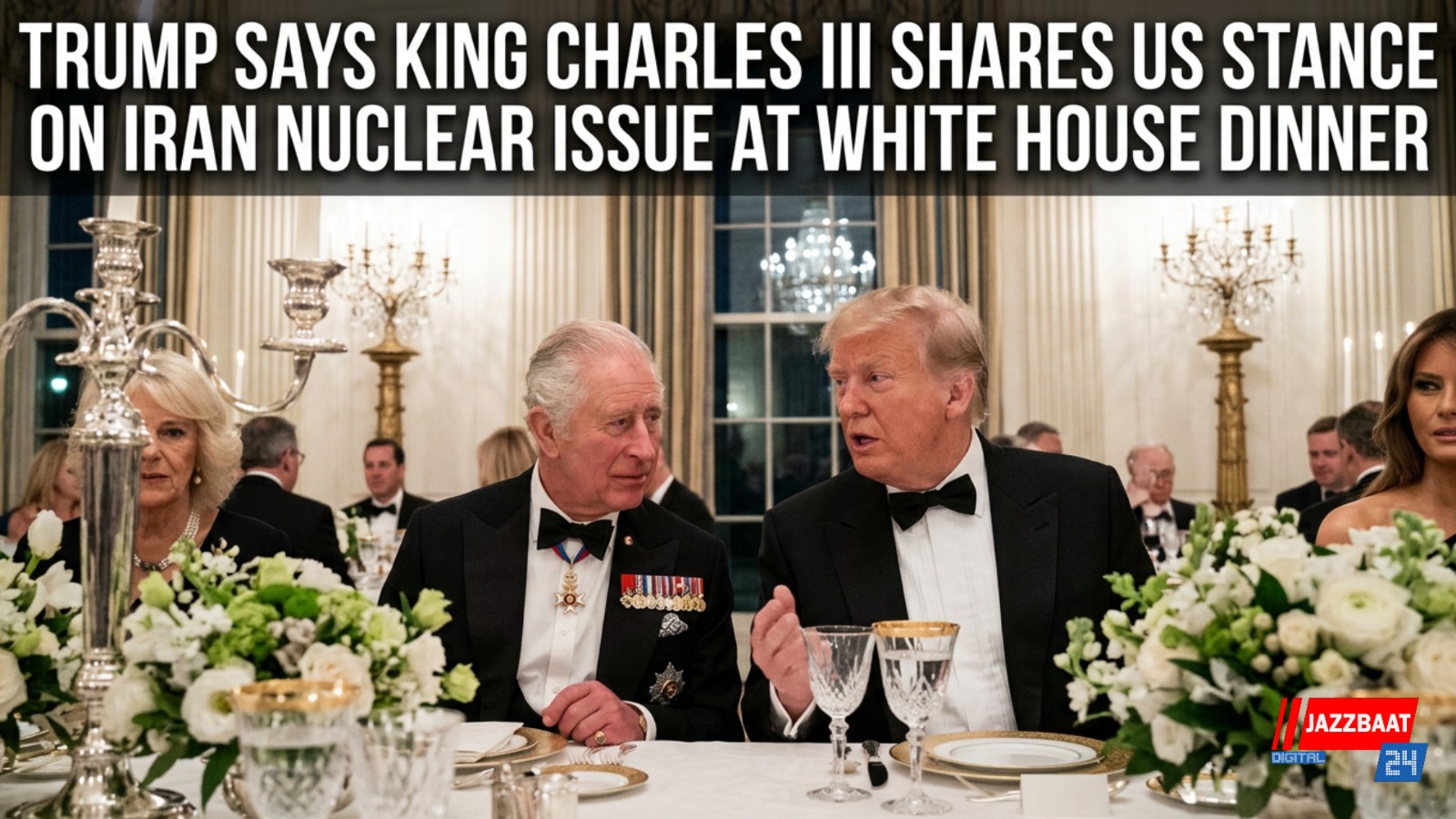
Former US President Donald Trump has claimed that King Charles III shares the United States’ position on preventing Iran from developing nuclear weapons, making the remark during a high-profile state dinner at the White House.
Speaking at the event, Trump suggested that there was strong alignment between the United States and the United Kingdom on key global security concerns, particularly regarding Iran’s nuclear programme. He said the shared view reflected a broader commitment to preventing nuclear escalation in the Middle East.
The comments came during a formal state dinner hosted in Washington, where diplomatic ties and international cooperation were highlighted. Trump emphasized that allied nations were “on the same page” when it comes to addressing nuclear proliferation risks and maintaining global stability.
According to his remarks, King Charles III supports efforts aimed at limiting Iran’s nuclear ambitions, aligning with long-standing US policy on the issue. However, no official public statement from Buckingham Palace confirming such a position was immediately available.
The statement comes amid continued international concern over Iran’s nuclear programme and ongoing tensions between Tehran and Western powers. The United States has repeatedly pushed for stricter controls and diplomatic pressure to prevent nuclear escalation, while allied countries have often played supportive roles in negotiations and monitoring efforts.
The White House dinner also underscored broader US–UK relations, with both sides historically maintaining close coordination on defence, intelligence sharing, and foreign policy issues.
Trump’s remarks have drawn attention due to the sensitive nature of constitutional roles of the British monarchy, which traditionally does not engage in direct political alignment or public foreign policy positions. Despite this, his statement highlighted perceived diplomatic convergence on global security priorities.
The event concluded with reaffirmations of transatlantic cooperation, even as discussions around Iran’s nuclear programme remain a key point of international debate and diplomatic engagement.