

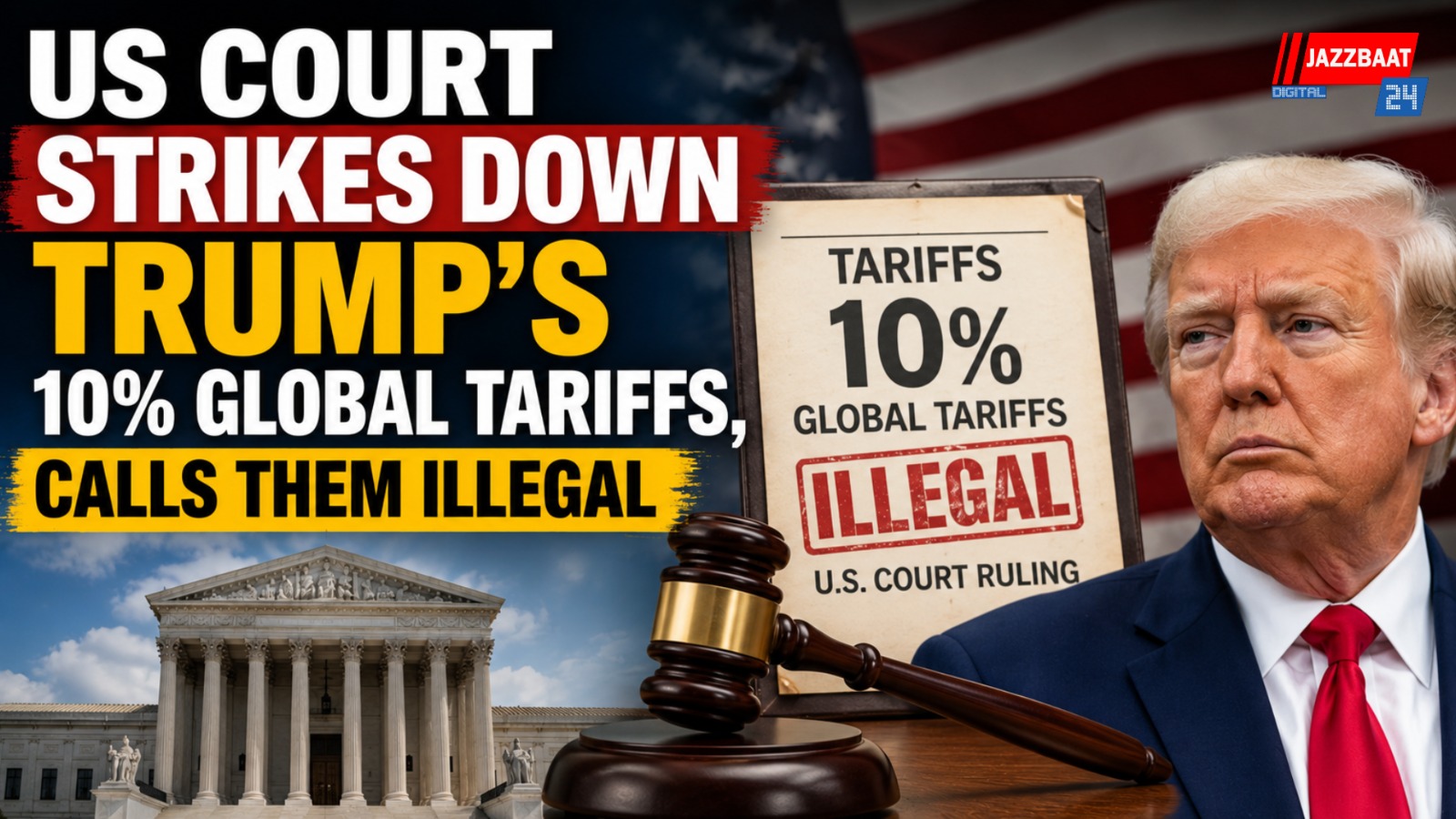
Washington: In a significant legal setback, a US federal court has struck down former President Donald Trump’s 10 per cent blanket tariffs on global imports, ruling them unlawful under existing trade and constitutional provisions, according to court documents and media reports.
The judgment comes after years of legal challenges questioning the authority used to impose the broad import duties. The court reportedly held that the tariffs exceeded executive powers and did not meet the legal standards required for such wide-ranging trade measures.
The 10 per cent global tariff policy had originally been introduced during Trump’s presidency as part of his broader “America First” trade strategy, aimed at protecting domestic industries and reducing trade deficits. However, the move sparked immediate retaliation from several trading partners and triggered widespread debates over global trade stability.
In its ruling, the court observed that while the executive branch has authority to regulate aspects of international trade, imposing universal tariffs without clear congressional backing was not permissible under law. The decision effectively nullifies the legality of the tariff structure, though it leaves room for the government to explore alternative trade remedies through legislative channels.
Legal experts say the ruling could have far-reaching implications for future trade policy, particularly regarding the limits of presidential power in economic decision-making. It may also prompt a reassessment of other tariff actions taken under similar executive interpretations.
The decision has already generated political reactions in Washington. Supporters of the ruling argue it restores balance between the executive and legislative branches, while critics say it could weaken the US’s negotiating position in global trade disputes.
Markets reacted cautiously to the news, with analysts noting that the removal of tariff uncertainty could ease tensions with trading partners, though broader trade policy direction remains unclear ahead of future elections.
The case is expected to continue through possible appeals, and legal observers suggest the final outcome could ultimately be decided at a higher judicial level.
For now, the ruling marks a major turning point in the long-running debate over aggressive tariff policies and their legal boundaries in the United States.