

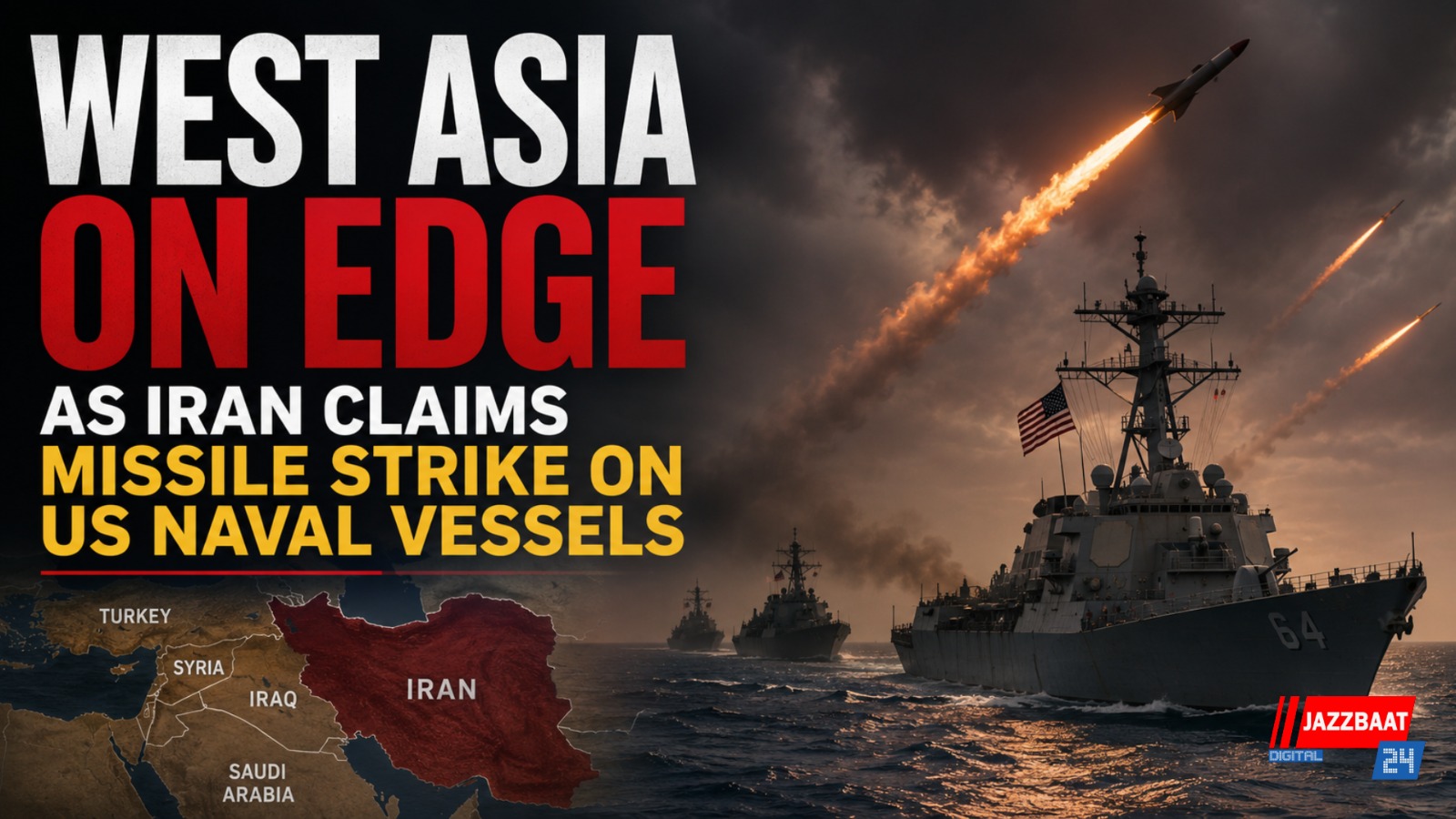
Tensions in West Asia have sharply escalated after Iran claimed it launched missile attacks on American naval vessels in the Strait of Hormuz following a US operation against an Iranian oil tanker. The latest confrontation has raised fears of a wider regional conflict involving the United States, Iran and several Gulf nations.
According to Iranian state media, Tehran targeted US naval units operating near the Strait of Hormuz after American forces allegedly attacked an Iranian-flagged tanker identified as M/T Hasna in the Gulf of Oman. Iranian military officials claimed the US ships suffered damage and were forced to retreat after coming under missile fire.
The United States, however, denied that any American vessel was hit. US Central Command (CENTCOM) said Iranian forces launched missiles, drones and small boats toward three US destroyers — USS Truxtun, USS Rafael Peralta and USS Mason — while they were transiting through the Strait of Hormuz. According to the Pentagon, all incoming threats were intercepted and no US assets were damaged.
The crisis intensified after Washington carried out retaliatory strikes on Iranian military targets. US forces reportedly attacked missile launch sites, drone facilities, command centres and surveillance infrastructure near Bandar Abbas and Qeshm Port in southern Iran. Iranian media described the strikes as a violation of the ceasefire understanding that had existed since April.
The present standoff is part of a broader escalation that has unfolded over recent months. Since March, repeated attacks on oil tankers, commercial ships and military assets in and around the Persian Gulf have increased instability in one of the world’s most important energy corridors. Iran and the US have repeatedly accused each other of provoking violence in the Strait of Hormuz, through which nearly one-fifth of global oil trade passes.
The United States had earlier imposed a naval blockade targeting vessels linked to Iranian ports, claiming it was necessary to curb Tehran’s military activities. Iran responded by warning that any foreign military presence near Hormuz would be considered hostile. Several commercial vessels have reportedly been intercepted or attacked since then.
Despite the latest exchange of fire, US President Donald Trump claimed that the ceasefire with Iran technically remains in effect. However, both sides continue to exchange threats, while regional powers including the UAE and Saudi Arabia remain on high alert.
Global oil markets have reacted nervously to the developments, with shipping activity in the Gulf facing disruptions and fears growing over possible further military escalation in West Asia.