
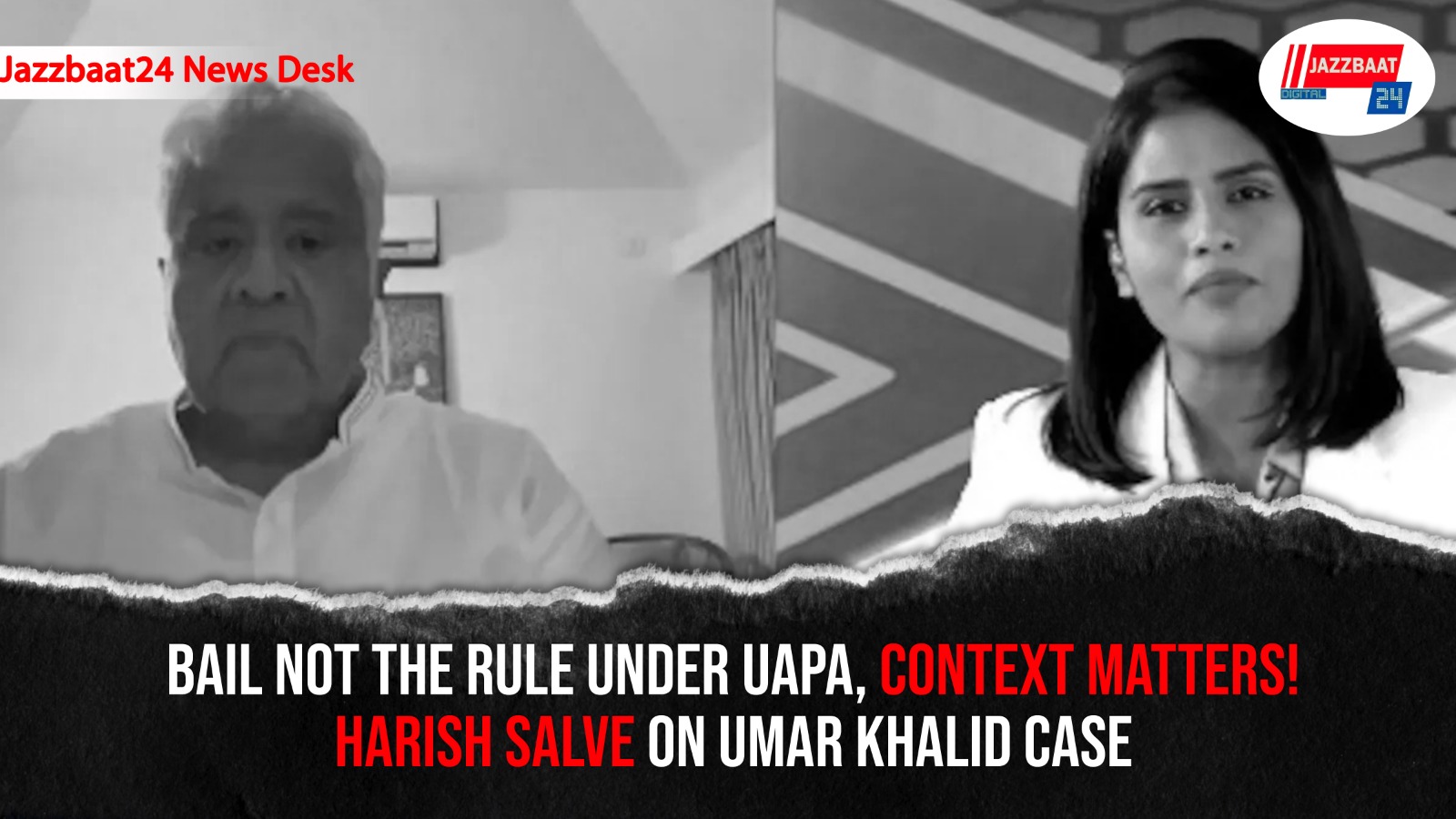
Former Solicitor General of India Harish Salve has said that the denial of bail to activists Umar Khalid and Sharjeel Imam in the 2020 Delhi riots conspiracy case cannot be compared with ordinary criminal cases, stressing that context is crucial in matters involving national security laws like the Unlawful Activities (Prevention) Act (UAPA).
In an exclusive interview with NDTV, Salve explained that while Indian criminal jurisprudence generally follows the principle of “bail, not jail,” there are clear statutory exceptions. “Under laws such as the UAPA and anti-drug statutes, bail is the exception and jail is the rule,” he said, adding that all accused cannot be treated as equal when allegations point to different degrees of involvement.
Addressing concerns over prolonged incarceration, both Khalid and Imam have spent nearly five years in jail without the trial commencing, Salve noted that delay alone does not automatically entitle an accused to bail. He pointed out that multiple courts have observed that the delay in this case was partly attributable to the accused themselves, referring to what he described as “forensic ploys” that often slow down proceedings.
Salve also echoed the Supreme Court’s view that those alleged to have conceived, directed or steered unlawful or terrorist activities stand on a different legal footing from those accused of limited participation. The court, he noted, has clearly stated that delay in trial cannot be used as a “trump card” to override statutory safeguards built into special laws.
Emphasising the balance between liberty and security, Salve said the Constitution does not treat personal freedom as an absolute right detached from societal safety. “Courts are concerned with evidence, not public opinion or political polarisation,” he said, warning against allowing India to slip into instability seen in “failed states” elsewhere.
The Supreme Court recently denied bail to Khalid and Imam while granting relief to several other accused, underscoring that context, conduct, and degree of involvement remain central to judicial decisions in terror-related cases.