
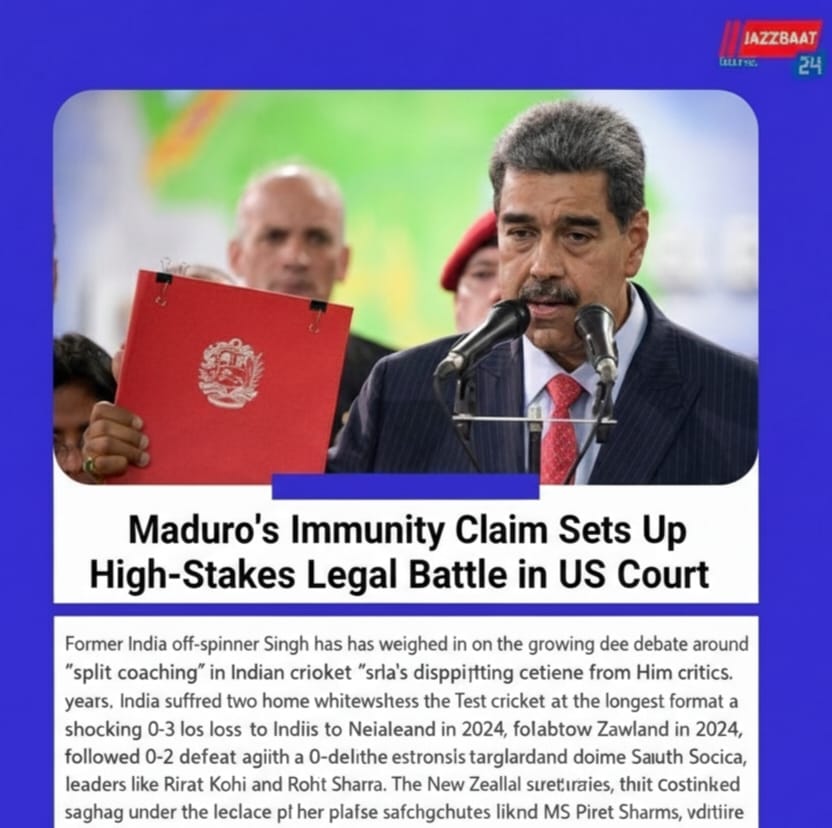
Former Venezuelan president Nicolás Maduro’s first appearance in a US courtroom has opened a complex legal fight that could test rarely used principles of international law. Maduro, 63, pleaded not guilty to charges of narco-terrorism and cocaine trafficking, while asserting that he remains Venezuela’s sitting president and is therefore immune from prosecution.
US prosecutors argue that Maduro is not entitled to head-of-state immunity because Washington does not recognize him as Venezuela’s legitimate leader following the disputed 2018 election. If the court accepts this position, Maduro could face a full criminal trial over allegations that he led or enabled a decades-long conspiracy involving drug trafficking and links to armed groups.
Maduro’s lawyer, Barry Pollack, has mounted a two-pronged defence. Alongside the immunity claim, he has promised extensive litigation challenging what he described as Maduro’s “military abduction” by US forces, arguing it may have violated international law. Legal scholars note, however, that US courts have historically rejected similar arguments, including those raised by former Panamanian ruler Manuel Noriega after his capture in 1989.
Experts say the immunity issue will likely hinge on whether Maduro’s alleged actions were part of his official duties as president. While courts have dismissed cases against leaders recognized by the US government, they have also allowed prosecutions and civil suits to proceed against former or unrecognized leaders accused of serious crimes.
Even if the immunity challenge fails, prosecutors may still face hurdles. Legal analysts point out that the indictment contains limited direct evidence tying Maduro personally to specific acts within the alleged conspiracy. Defence lawyers argue this could make it difficult to prove he knowingly agreed with others to commit crimes, a key requirement in conspiracy cases.
Most experts believe US prosecutors are likely to prevail, but the case is expected to be lengthy and closely watched, with potential implications for international law, US foreign policy, and how courts treat claims of presidential immunity in criminal prosecutions.