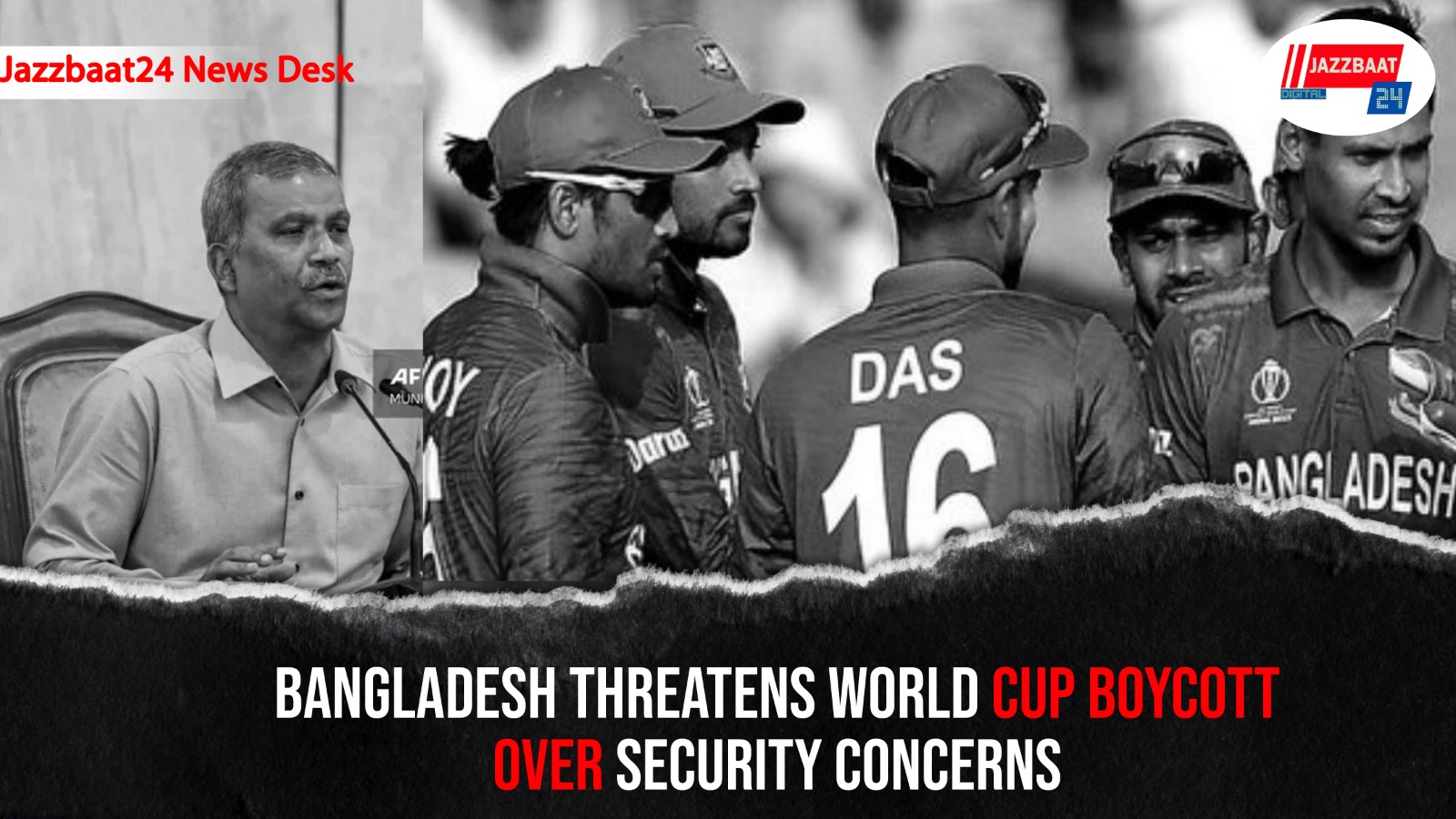
Bangladesh has already informed the ICC that it will not travel to India to play the T20 World Cup, a decision officially conveyed by the Bangladesh Cricket Board (BCB). Citing security concerns, the BCB has requested that its matches be shifted to another venue. However, it is alleged that Bangladesh is now searching for new arguments to put India under pressure.
According to Bangladeshi media reports, even if the team is provided security equivalent to that of heads of state, players like Mustafizur Rahman are unwilling to come to India. The T20 World Cup is scheduled to be held in India during February–March, and coincidentally Bangladesh’s matches are slated for Eden Gardens in Kolkata, the home ground of KKR. Despite this, the BCB is unwilling to play in India under the changed circumstances.
Reports suggest that the decision was taken under pressure from the Yunus government. Until the ICC makes an official announcement, uncertainty remains. The current ICC chairman is Jay Shah, son of India’s Home Minister Amit Shah, making the ICC’s stance crucial.
In response, the BCB has taken a counter-strategy. Bangladeshi daily Prothom Alo reported that Bangladesh does not want to travel to India even with top-level security, and that discussions on this issue have already taken place with the ICC. The report also claims that the BCCI, through the ICC, is willing to provide head-of-state-level security, but the BCB has rejected the proposal. A BCB official was quoted as saying that security concerns apply not just to players but to everyone traveling from Bangladesh, raising questions over who would be responsible for their safety.
This raises a key question: if India is willing to provide security, why is Bangladesh still unwilling to come? Many believe that “security” is being used as a shield to avoid playing in India and to exert pressure on the BCCI. There is speculation that Bangladesh’s matches could be shifted to Sri Lanka at the last moment. Overall, informed observers feel the issue has moved beyond cricket and turned into a matter of political pressure and diplomacy.