
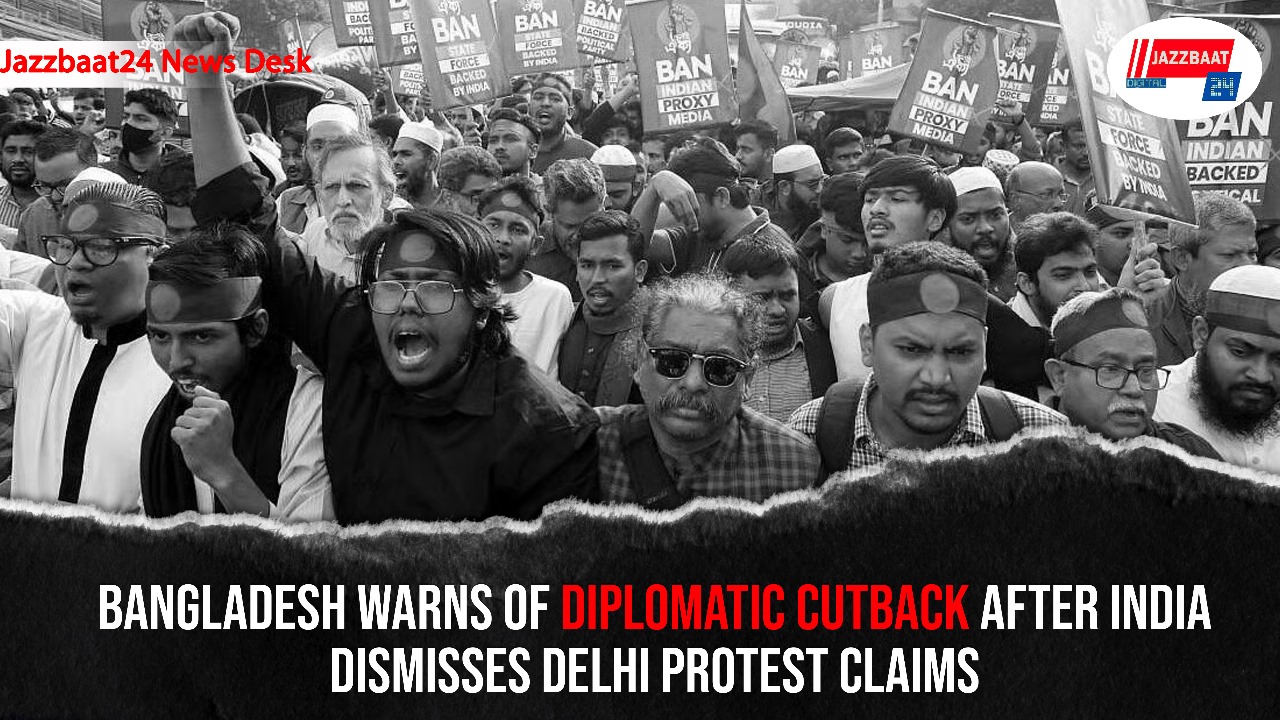
India and Bangladesh traded sharp diplomatic statements after New Delhi rejected what it called “misleading propaganda” in Bangladeshi media over a protest outside the Bangladesh High Commission in the Indian capital. The protest was held against the lynching of a Hindu man, Dipu Chandra Das, in Bangladesh.
India’s Ministry of External Affairs said only around 20–25 protesters gathered briefly outside the High Commission on December 20 to express anger over the killing in Bangladesh’s Mymensingh district and to demand protection for minorities. Foreign Ministry spokesperson Randhir Jaiswal categorically denied reports that protesters tried to breach security or storm the premises, stating that police dispersed the group within minutes and there was no threat to the diplomatic mission. He added that India remains fully committed to protecting foreign diplomats under the Vienna Convention.
However, Bangladesh strongly rejected India’s explanation. Hours after New Delhi’s statement, Dhaka questioned how protesters were able to reach such a sensitive diplomatic zone. Bangladesh’s foreign affairs adviser, M Touhid Hossain, termed India’s account “oversimplified” and said the issue was being portrayed as trivial when it was not.
Speaking to the media, Hossain suggested that access to the secure enclave should not have been possible unless permission was granted. He also claimed that the protesters made statements beyond condemning the killing, and asserted that reports in Bangladeshi newspapers were largely accurate. While he admitted there was no concrete proof of death threats to the Bangladeshi envoy in New Delhi, Hossain warned that Dhaka could scale back its diplomatic presence in India if the situation worsens.
The controversy follows the brutal lynching of Dipu Chandra Das during unrest in Bangladesh triggered by the death of youth leader Sharif Osman Hadi. Authorities in Bangladesh have so far arrested 12 people in connection with the killing. Despite the war of words, both countries said diplomatic channels remain open as they continue to convey their positions.