
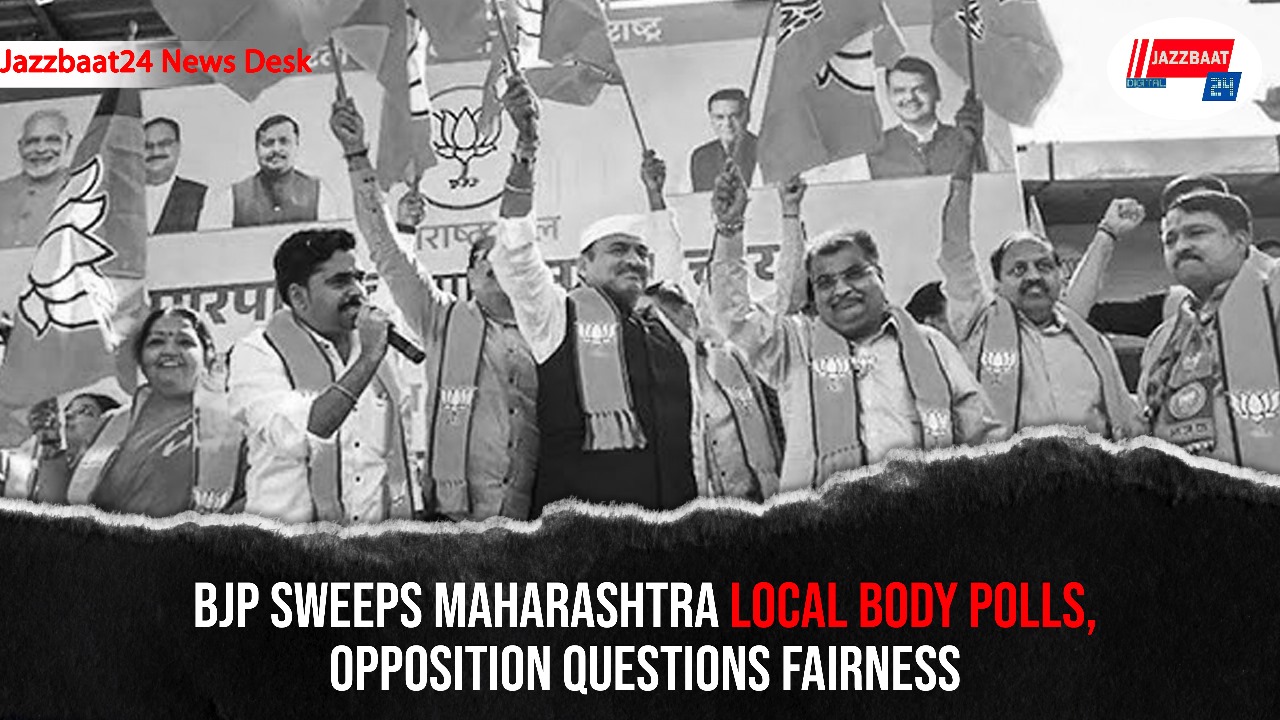
The Maharashtra local body elections have delivered a resounding victory for the BJP-led Mahayuti alliance, which secured a majority of municipal councils and nagar panchayats across the state. The alliance, comprising the BJP, Shiv Sena led by Eknath Shinde, and the NCP, won 207 of 288 municipal president posts, highlighting its organizational strength at the grassroots level. Within the alliance, the BJP emerged as the dominant force, claiming 117 municipal president posts and over 3,300 councillor seats, nearly 48% of the total. Chief Minister Devendra Fadnavis described the outcome as a “record-breaking” performance, noting that the party more than doubled its councillor tally from 2017.
Prime Minister Narendra Modi emphasized that the results reflected public trust in a “people-centric development” agenda. Both Modi and Fadnavis credited the win to a development-focused campaign that prioritized governance, infrastructure, and future city planning over personal attacks. Analysts see this victory as a morale booster for Mahayuti ahead of the upcoming municipal corporation elections in major cities like Mumbai, Pune, Thane, and Nagpur, often considered “mini Assembly polls.”
While the ruling alliance performed strongly across western Maharashtra, Marathwada, Konkan, and north Maharashtra, pockets of resistance emerged in Vidarbha, where Congress achieved notable wins in Chandrapur district. The Ajit Pawar-led NCP maintained its influence in Pune district and Baramati, holding onto key urban strongholds.
The opposition Maha Vikas Aghadi (MVA), consisting of Congress, Shiv Sena (UBT), and NCP (SP), acknowledged the setback but raised concerns over the election’s fairness. Leaders alleged money power and EVM manipulation, though these claims were dismissed by the ruling alliance.
Overall, the results underscore BJP’s dominance at the local level and suggest a strong head start for Mahayuti in Maharashtra’s political landscape heading into major civic elections.