
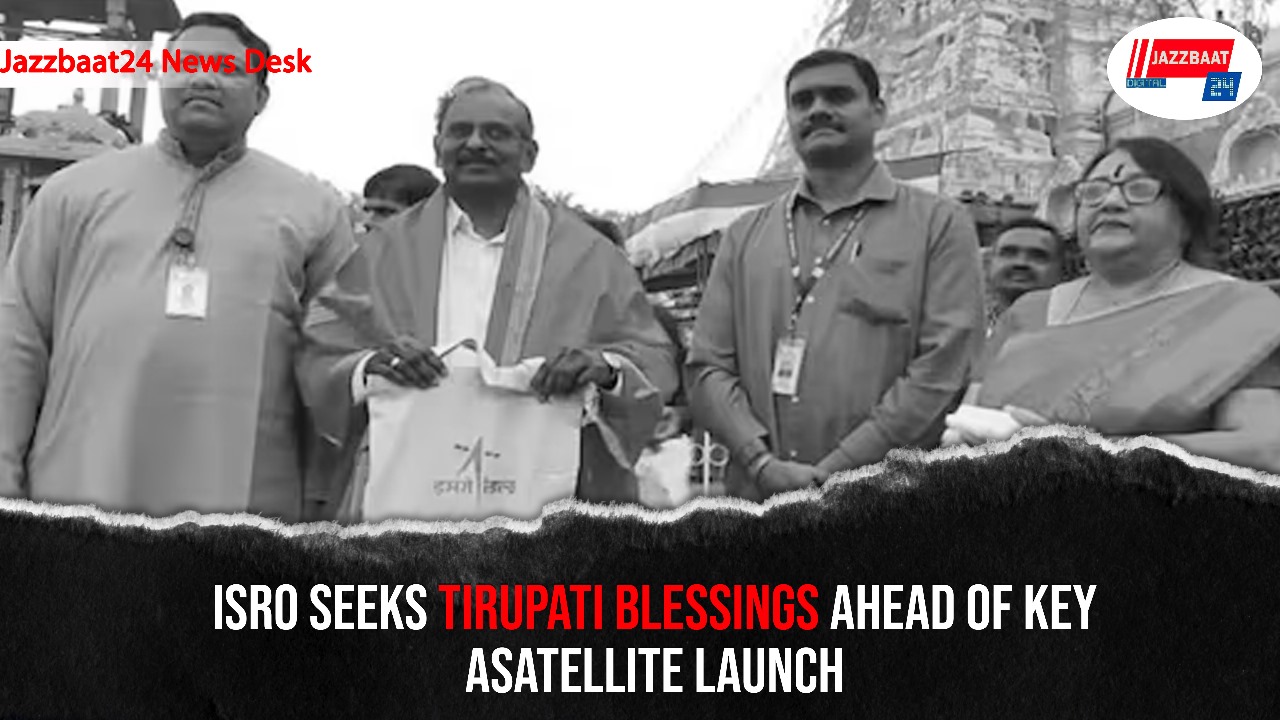
Ahead of an important space mission, the Indian Space Research Organisation (ISRO) on Monday blended science with tradition as its top leadership visited the Tirumala Tirupati temple to seek divine blessings. ISRO Chairman Dr V Narayanan, along with senior scientists and members of the launch team, offered prayers at the hill shrine of Lord Venkateswara in Andhra Pradesh, continuing a long-standing custom followed before major missions.
The visit comes days before the launch of a next-generation communication satellite scheduled for December 24 from the Satish Dhawan Space Centre in Sriharikota. According to officials, the ritual reflects the space agency’s belief in combining rigorous scientific preparation with cultural faith, a practice that has been part of ISRO’s work culture for decades.
The upcoming mission, designated LVM3-M6, will use India’s heavy-lift Launch Vehicle Mark-III (LVM3), also known as the “Baahubali” rocket. The vehicle will carry the BlueBird Block-2 satellite into Low Earth Orbit. Developed under a commercial agreement with US-based AST SpaceMobile, the satellite is expected to play a crucial role in the future of global communications.
BlueBird Block-2 is designed to provide high-speed cellular broadband connectivity directly to standard smartphones, without the need for specialised equipment. Once operational, it aims to support 4G and 5G voice calls, messaging, data services and video streaming across wide geographical areas, including remote and underserved regions.
Officials describe the mission as a significant milestone not only for ISRO but also for the global satellite communications industry. It highlights India’s growing role as a trusted launch partner for international commercial satellites and showcases the reliability of the LVM3 launch system.
As final preparations continue at Sriharikota, the successful completion of the mission is expected to further strengthen India’s position in the rapidly evolving space and telecommunications sector.