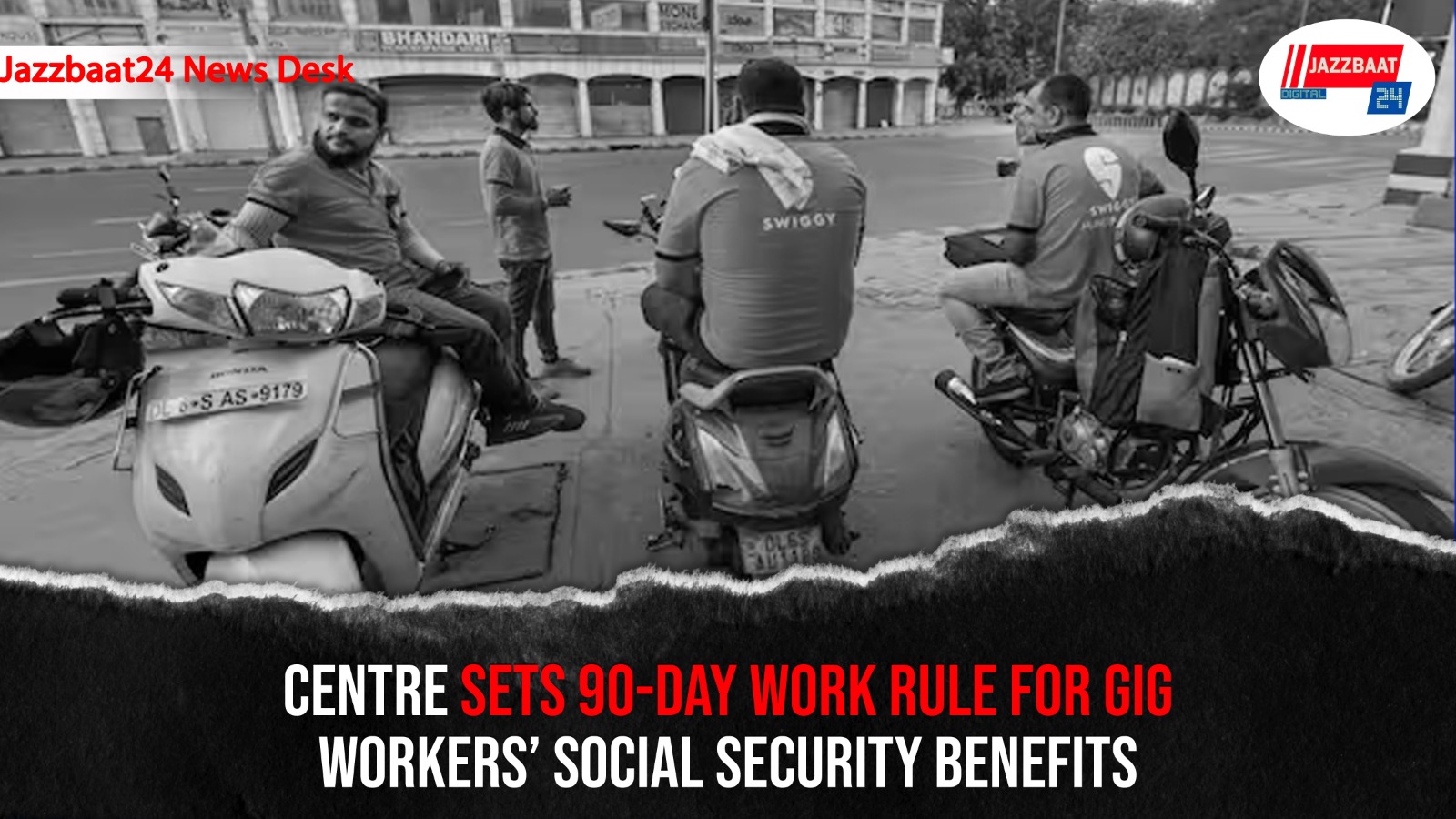
The Union government has proposed a minimum work requirement for gig and platform workers to qualify for social security benefits, according to draft rules released by the Ministry of Labour and Employment. The notification, dated December 30, 2025, has been opened for public comments and comes amid growing demands from gig workers for better pay, job security and working conditions.
As per the draft, gig and platform workers must be engaged for at least 90 days in a financial year with a single aggregator to become eligible for social security schemes notified by the Centre. In cases where a worker is associated with multiple aggregators, the minimum requirement rises to 120 days in a year.
The rules clearly define what counts as “engagement.” A worker will be considered engaged for one day if they earn any amount of income, irrespective of how small, for work done for an aggregator on that particular calendar day. Importantly, if a worker performs tasks for more than one aggregator on the same day, each engagement will be counted separately. For example, working with three aggregators on one day will be counted as three days of engagement.
The draft also clarifies that gig and platform workers engaged directly by an aggregator, or through associate companies, subsidiaries, holding companies, LLPs, or even third-party arrangements, will be considered eligible under these rules.
In addition to engagement criteria, the Centre has emphasised mandatory registration of unorganised workers on its designated portal. Registered workers will be issued a digital identity card carrying their photograph and other details. The registration process is already underway on the e-Shram portal, which serves as a national database for unorganised workers.
Workers will be required to regularly update personal and professional details such as address, occupation and mobile number. Failure to do so may result in ineligibility for social security benefits.
The proposed rules were notified just a day before gig workers across several cities held protests on New Year’s Eve, highlighting the growing focus on regulation and welfare in India’s expanding gig economy.