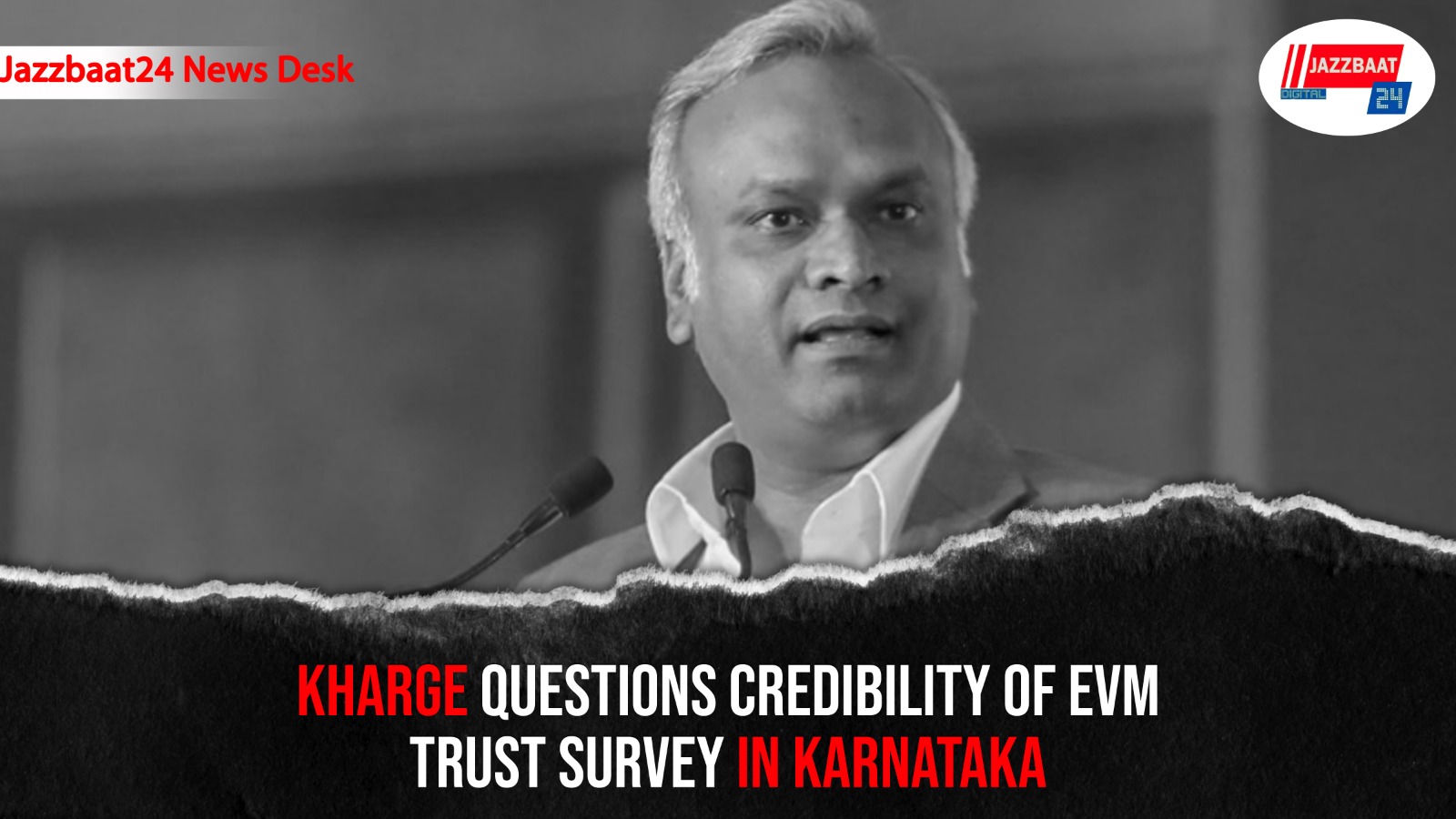
A fresh political face-off has erupted in Karnataka after a survey claimed that voters showed overwhelming confidence in Electronic Voting Machines (EVMs) during the 2024 Lok Sabha elections. The survey, conducted among 5,100 voters by the Karnataka Monitoring and Evaluation Authority, reported that nearly 84% respondents trusted EVMs and believed the elections were free and fair.
However, the Congress has strongly questioned both the intent and credibility of the exercise. Karnataka IT Minister Priyank Kharge dismissed the survey, saying it was neither sanctioned nor ordered by the state government. Speaking to NDTV, Kharge raised concerns over who designed and executed the survey, alleging that an NGO linked to individuals close to the Prime Minister’s Office was involved.
“What do you expect?” Kharge remarked, questioning the neutrality of the process. He also criticised the sample size, arguing that surveying around 5,000 voters across more than 110 constituencies could not conclusively reflect public opinion on such a sensitive issue.
The minister shifted focus to allegations of voter list manipulation in parts of north Karnataka, particularly Aland in Kalaburagi district. He referred to claims by Congress leaders, including Rahul Gandhi, that thousands of voters—mostly from marginalised communities—were wrongfully deleted from electoral rolls ahead of the 2023 Assembly elections and the 2024 general polls.
According to earlier police sources, a data entry team may have been paid to delete voter names, with reports suggesting around ₹80 was paid per deletion. Nearly 7,000 voter deletion requests were allegedly made. Kharge said these findings validate the Congress’ long-standing concerns about “vote theft”.
EVMs remain a contentious issue nationally, with opposition parties repeatedly accusing the BJP and the Election Commission of bias and manipulation. The BJP and the Election Commission have firmly rejected these allegations, calling them baseless and politically motivated.
The controversy has once again highlighted the deep mistrust between the ruling party and the opposition over electoral processes, just months after a high-stakes national election.