

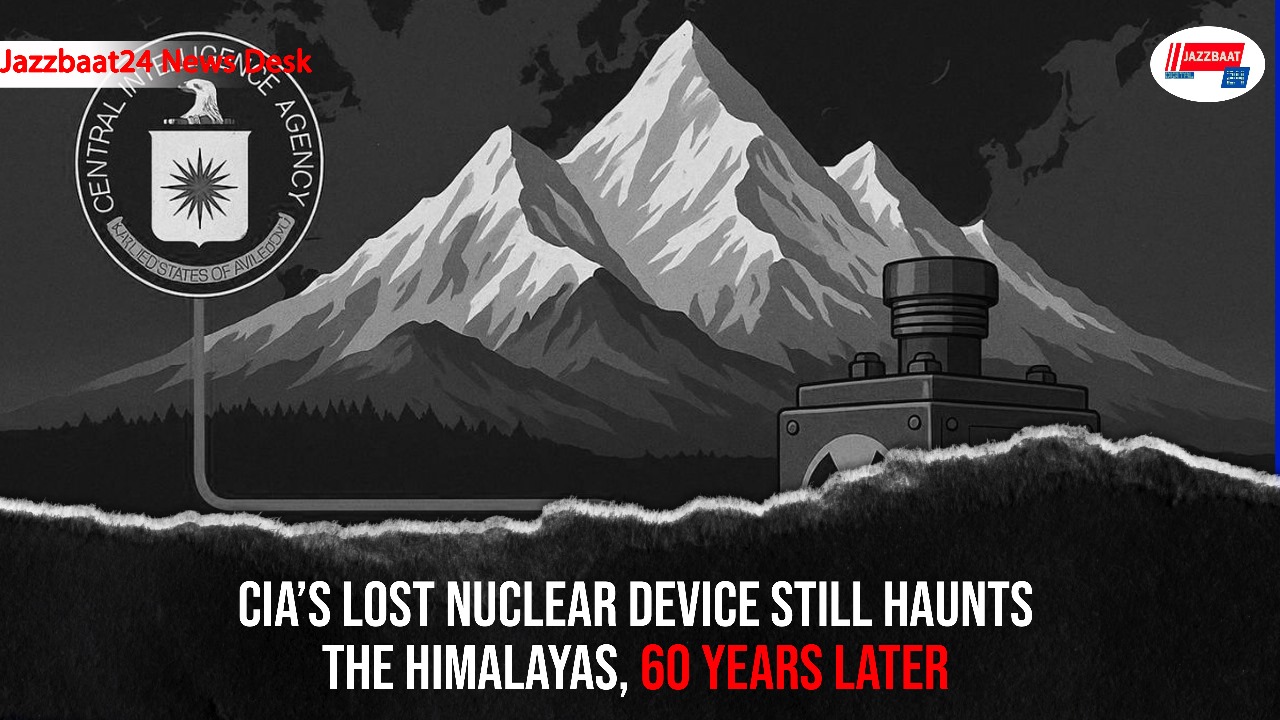
In the midst of the Cold War, a covert mission in the Indian Himalayas led to one of the strangest and most troubling espionage episodes in history. Sixty years ago, the US Central Intelligence Agency lost a plutonium-powered nuclear device on Nanda Devi, one of India’s highest peaks and it has never been recovered.
In 1965, following China’s first nuclear test, the CIA sought to monitor Chinese missile activity by installing a nuclear-powered antenna high in the Himalayas. Disguised as a scientific expedition, American and Indian climbers carried sensitive equipment, including a 13-kilogram generator known as SNAP-19C, fuelled by plutonium. The radioactive material inside contained nearly a third of the plutonium used in the Nagasaki atomic bomb.
The mission was led on the Indian side by renowned mountaineer Captain M.S. Kohli, though he later called the plan “foolish.” As the team neared the summit, a sudden blizzard struck, leaving the climbers exhausted, starving, and close to death. On Kohli’s orders, the team abandoned the equipment near Camp Four to save their lives.
When the climbers returned the following year to retrieve the device, it was gone. An avalanche had wiped out the ledge where the equipment was stored. Despite extensive search operations using radiation detectors and sensors, the nuclear generator was never found. Experts believe its heat may have caused it to melt through ice and sink deeper into the glacier.
The operation remained secret until 1978, when it was exposed by journalist Howard Kohn. Public outrage followed, with fears that radioactive material could contaminate glaciers feeding the Ganges river. Behind the scenes, US President Jimmy Carter and Indian Prime Minister Morarji Desai worked quietly to defuse diplomatic tensions.
Decades later, the incident remains a cautionary tale of Cold War recklessness. For those involved, it is remembered as a tragic mistake one that left a silent nuclear legacy buried deep in the Himalayas.