
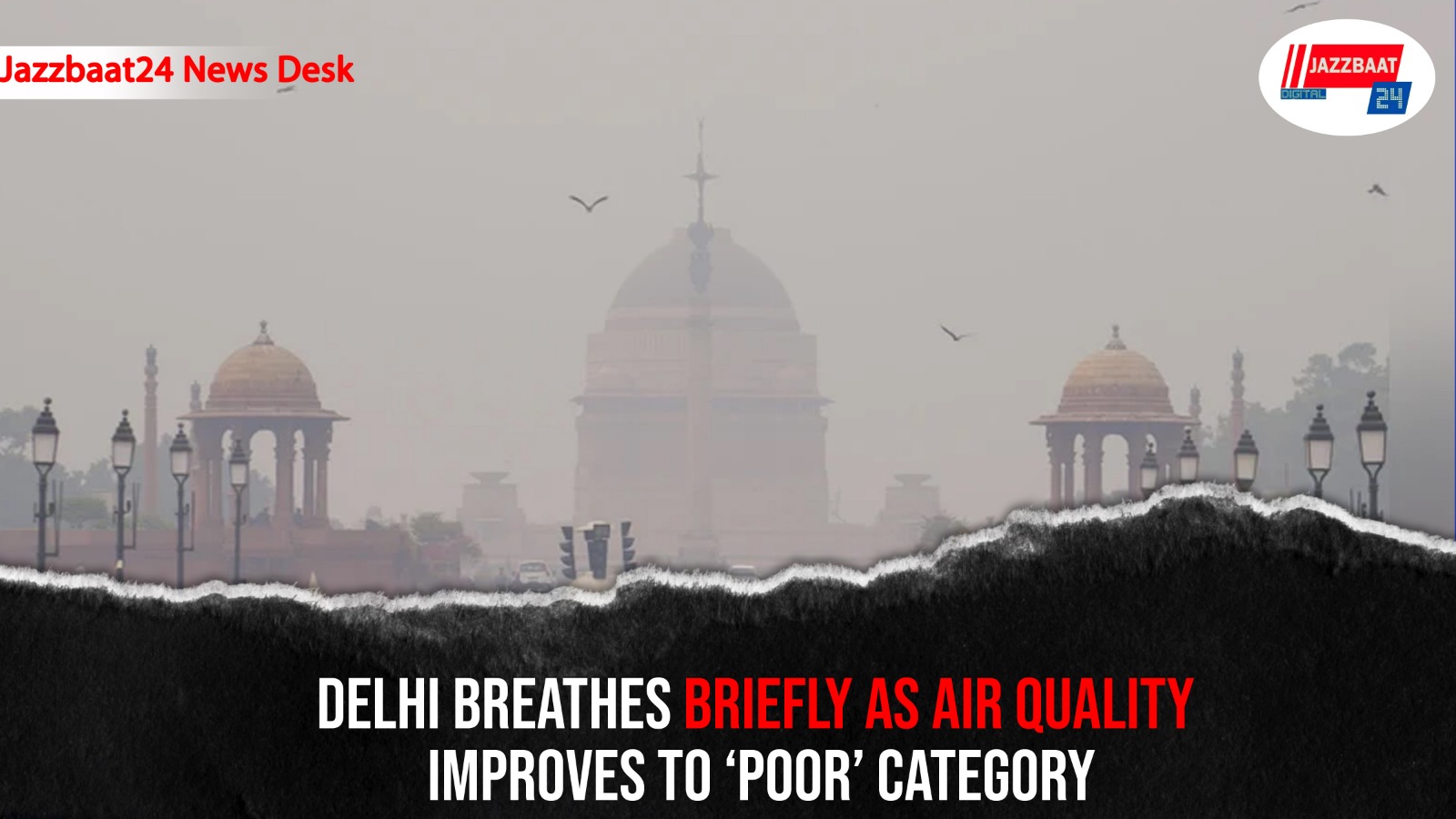
New Delhi experienced a short-lived relief from choking air pollution on Thursday morning, with the city’s Air Quality Index (AQI) improving to 220, placing it in the ‘poor’ category. The improvement brought some respite to residents who had been grappling with hazardous air over the past few days.
Data from the Central Pollution Control Board’s (CPCB) Sameer app showed that out of 29 air quality monitoring stations across the capital, most recorded ‘poor’ air quality. However, pollution levels varied across locations. Anand Vihar, one of Delhi’s known pollution hotspots, continued to struggle, registering an AQI of 308 in the ‘very poor’ category, while several other areas reported ‘moderate’ air quality.
The improvement marked a significant turnaround from earlier in the week. On Tuesday, Delhi’s air quality had plunged into the ‘severe’ category, with the AQI touching 412 by 4 pm. Wednesday also saw the city remain in the ‘poor’ range, indicating a gradual but noticeable decline in pollution levels.
According to the CPCB, favourable meteorological conditions played a key role in this temporary improvement. Surface wind speeds ranging between 15 and 25 kilometres per hour helped disperse pollutants, leading to cleaner air across large parts of the city.
Weather conditions remained cool, with the India Meteorological Department (IMD) reporting a minimum temperature of 6.5 degrees Celsius, slightly below normal for this time of year. Relative humidity stood at 63 per cent, while the maximum temperature is expected to hover around 22 degrees Celsius. A moderate level of fog has also been forecast.
Despite the improvement, experts have cautioned that the relief may not last long. Authorities warned that air quality is likely to deteriorate again in the coming days as weather conditions change and pollution sources continue to impact the capital.
Delhi’s air quality remains a major concern every winter, with residents urged to stay alert, follow health advisories, and limit outdoor activities during periods of high pollution.