
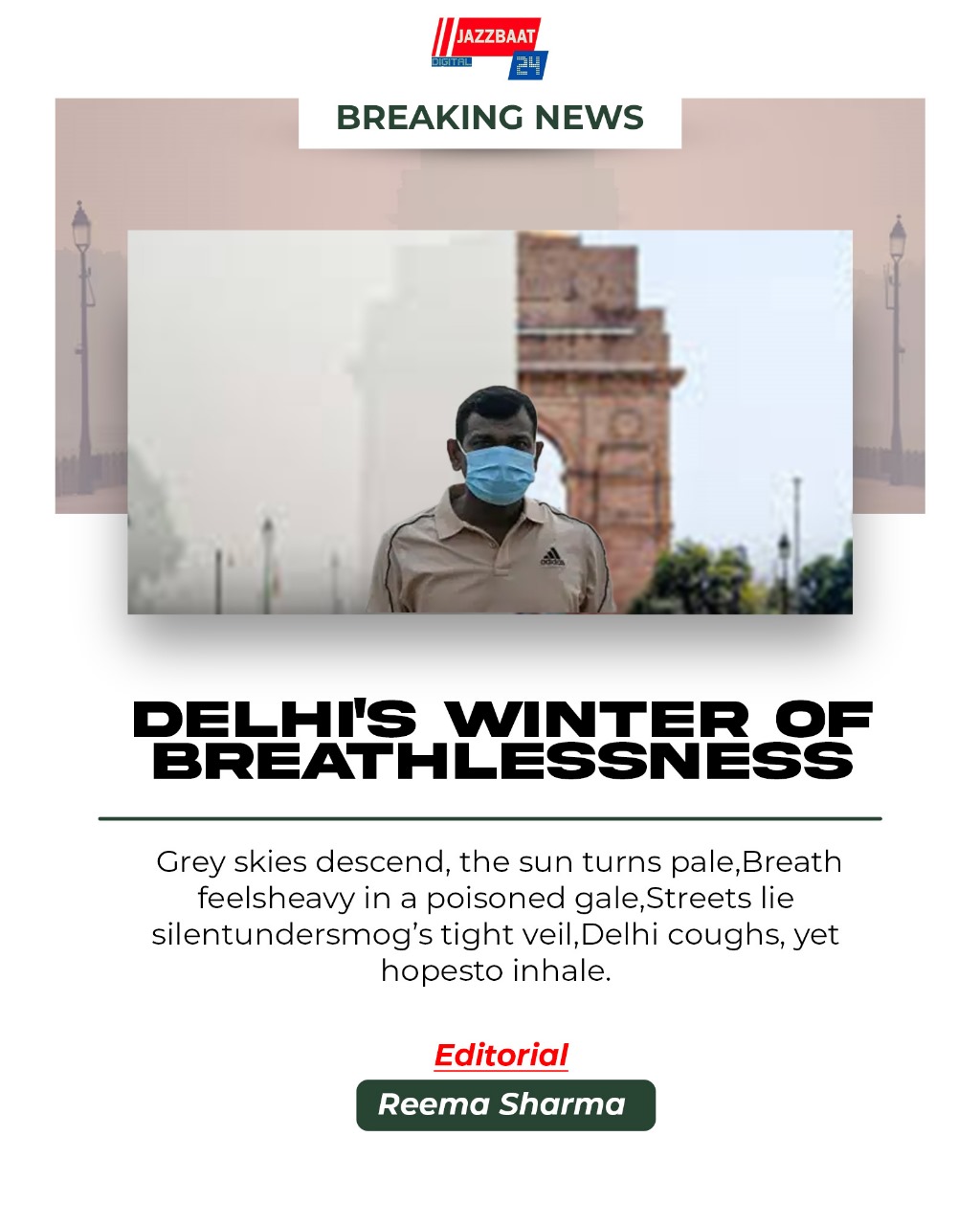
Grey skies descend, the sun turns pale,
Breath feels heavy in a poisoned gale,
Streets lie silent under smog’s tight veil,
Delhi coughs, yet hopes to inhale.
Delhi wakes each winter to a familiar dread, but this season the air has turned especially unforgiving. A dense, toxic haze now hangs over the capital like an unspoken warning, blurring skylines, grounding flights, delaying trains, and choking millions of lungs. With the Air Quality Index breaching 460, Delhi has once again crossed from discomfort into danger, reminding residents that clean air remains a distant promise rather than a lived reality.
The descent into the “Severe” zone did not happen overnight. Since the retreat of the monsoon, pollution levels have crept upward, day after day, until December pushed the city past the brink. Falling temperatures, sluggish winds, and relentless emissions from vehicles and industries have formed a deadly cocktail, trapping pollutants close to the ground. Winter, it seems, locks Delhi inside a gas chamber of its own making.
What makes this crisis more alarming is its scale. Out of 39 air monitoring stations in the city, nearly three-fourths reported “Severe” air quality, with industrial and residential hubs alike suffocating under particulate matter. From Wazirpur to Anand Vihar, the numbers tell a grim story one where even the “least polluted” areas remain firmly in the “Very Poor” category. This is not an isolated spike; it is a systemic failure playing out in real time.
Beyond Delhi’s borders, the National Capital Region mirrors the same distress. Noida, Ghaziabad, and Greater Noida all hover in hazardous territory, underscoring how pollution respects no administrative boundaries. The smog flows freely, indifferent to state lines, while governance remains fragmented and reactive. Meanwhile, a stark contrast emerges elsewhere in the country: cities in the South and East breathe comparatively cleaner air, and hill towns enjoy “Good” AQI levels. The divide is no longer subtle it is stark and unsettling.
The human cost of this polluted winter cannot be reduced to numbers alone. Doctors warn of rising respiratory ailments, aggravated asthma, cardiovascular stress, and long-term health damage, especially among children and the elderly. Schools shifting to online classes may reduce immediate exposure, but they also symbolize a deeper loss children growing up indoors because the outdoors has become unsafe. Staying inside is no solution; it is an admission of defeat.
Authorities have responded with familiar measures: construction bans, advisories, emergency restrictions. Yet these actions feel like temporary bandages on a chronic wound. Every winter, the city scrambles to contain the damage instead of preventing it. The cycle repeats because root causes unchecked vehicular growth, industrial emissions, poor public transport integration, and inadequate urban planning remain largely unaddressed.
Delhi’s toxic winter is not merely an environmental issue; it is a test of political will and public resolve. Clean air cannot remain a seasonal demand or a court-mandated obligation. It must become a year-round priority, backed by strict enforcement, sustainable transport, cleaner energy, and long-term planning. Until then, each winter will return with the same cruel question hanging in the air: how much more can the city breathe before it breaks?