
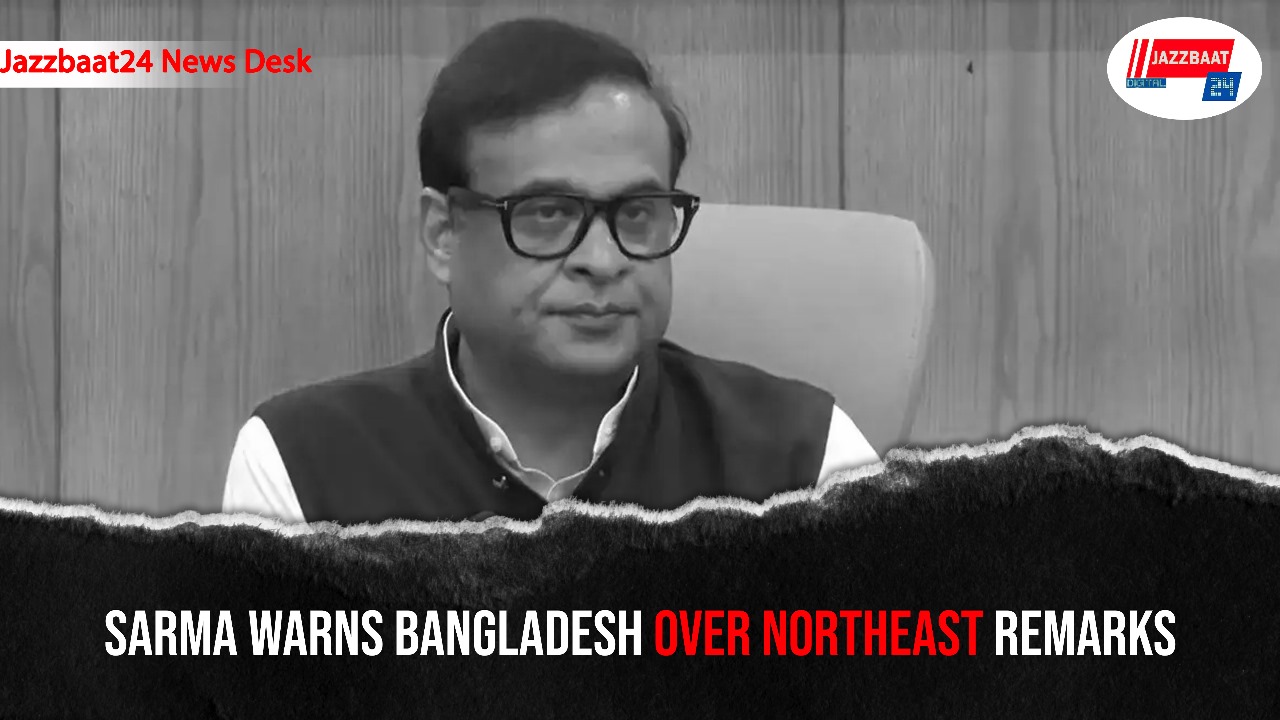
Assam chief minister Himanta Biswa Sarma on Tuesday issued a sharp warning following controversial remarks by a Bangladeshi political leader about India’s northeastern region, saying India would not remain silent in the face of such statements.
Reacting to comments made by Hasnat Abdullah, a senior leader of Bangladesh’s newly formed National Citizen Party (NCP), Sarma said there have been repeated discussions in Bangladesh about “separating the northeast from India and making it part of Bangladesh.” Abdullah had reportedly suggested that Dhaka should try to “isolate” India’s northeastern states if New Delhi attempts to destabilise Bangladesh, even claiming the region was geographically vulnerable due to its dependence on the narrow Siliguri Corridor.
Speaking to the media, Sarma dismissed these ideas as unrealistic and provocative. “India is the fourth-largest economy in the world and a nuclear nation. How can Bangladesh even think about such things?” he said. He added that such comments reflect a “bad mindset” and warned that India should reconsider extending excessive help to Bangladesh if this rhetoric continues.
The Assam chief minister stressed that India would “teach Bangladesh a lesson” diplomatically if it continued to tolerate or encourage statements threatening India’s territorial integrity. “We will not remain silent if they behave this way towards India,” Sarma asserted.
The Siliguri Corridor, often referred to as the ‘chicken’s neck’, is a narrow stretch of land that connects India’s northeastern states to the rest of the country. It has long been viewed as strategically sensitive. Earlier this year, Sarma had also cautioned Bangladesh against making threats related to this corridor, pointing out that Bangladesh itself has two similar narrow land corridors that are “far more vulnerable.”
In a post on X, he had highlighted the North Bangladesh Corridor and the Chittagong Corridor, warning that any disruption there could severely impact Bangladesh’s own connectivity and economy.
Sarma’s remarks underline rising tensions in political rhetoric, even as India and Bangladesh officially maintain diplomatic and economic ties.