
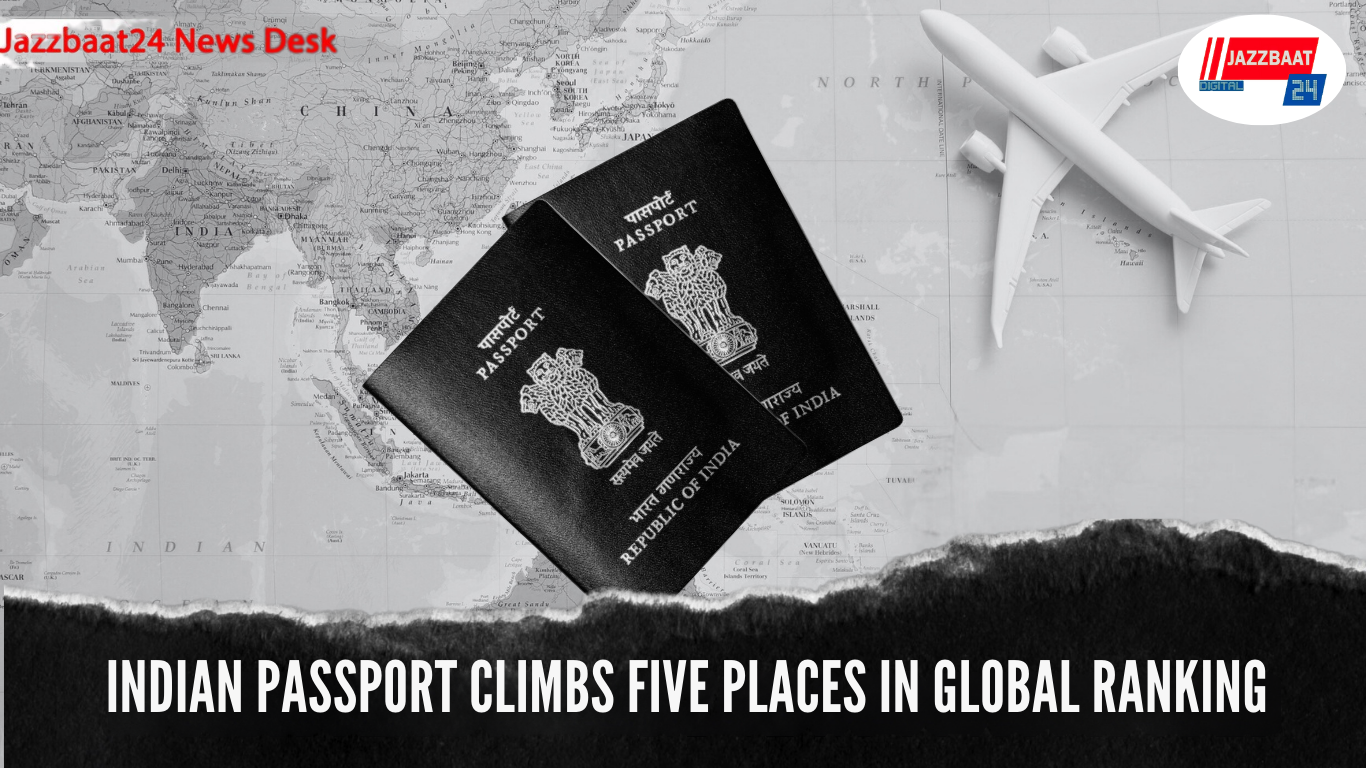
India’s passport has registered a notable improvement in global mobility, climbing to the 80th position in the 2026 Henley Passport Index from 85th last year. The rise marks a positive shift after a dip in 2025 and reflects India’s expanding diplomatic engagement across regions.
According to the latest index, Indian passport holders now enjoy visa-free or visa-on-arrival access to 55 countries and territories. The Henley Passport Index, regarded as one of the most authoritative rankings of passport strength, is based on data from the International Air Transport Association (IATA) and research by Henley & Partners. It ranks passports by the number of destinations their holders can enter without obtaining a prior visa.
While the numerical improvement is modest, experts see the five-place jump as an encouraging sign of gradual progress. It indicates stronger bilateral ties and improved travel agreements, even though India still lags far behind the world’s most powerful passports. In comparison, top-ranked countries offer access to nearly 190 destinations.
In 2025, India had slipped to 85th place despite having access to slightly more destinations, highlighting how competitive and fluid global mobility rankings can be. The 2026 recovery suggests renewed momentum in India’s efforts to enhance international travel freedom for its citizens.
At the top of the 2026 index, Singapore retained its position as the world’s most powerful passport, allowing visa-free entry to 192 destinations. Japan and South Korea followed closely with access to 188 destinations. Several European nations, including Denmark, Switzerland, France, and Germany, also ranked high, offering extensive global mobility to their citizens.
For Indian travellers, the improved ranking means slightly easier access to select countries, particularly in Asia, Africa, and island nations. However, significant visa barriers remain for travel to North America, most of Europe, and parts of East Asia.
Overall, India’s rise to the 80th spot signals steady progress, though experts note that sustained diplomatic efforts and reciprocal visa policies will be key to achieving a more substantial leap in the years ahead.