
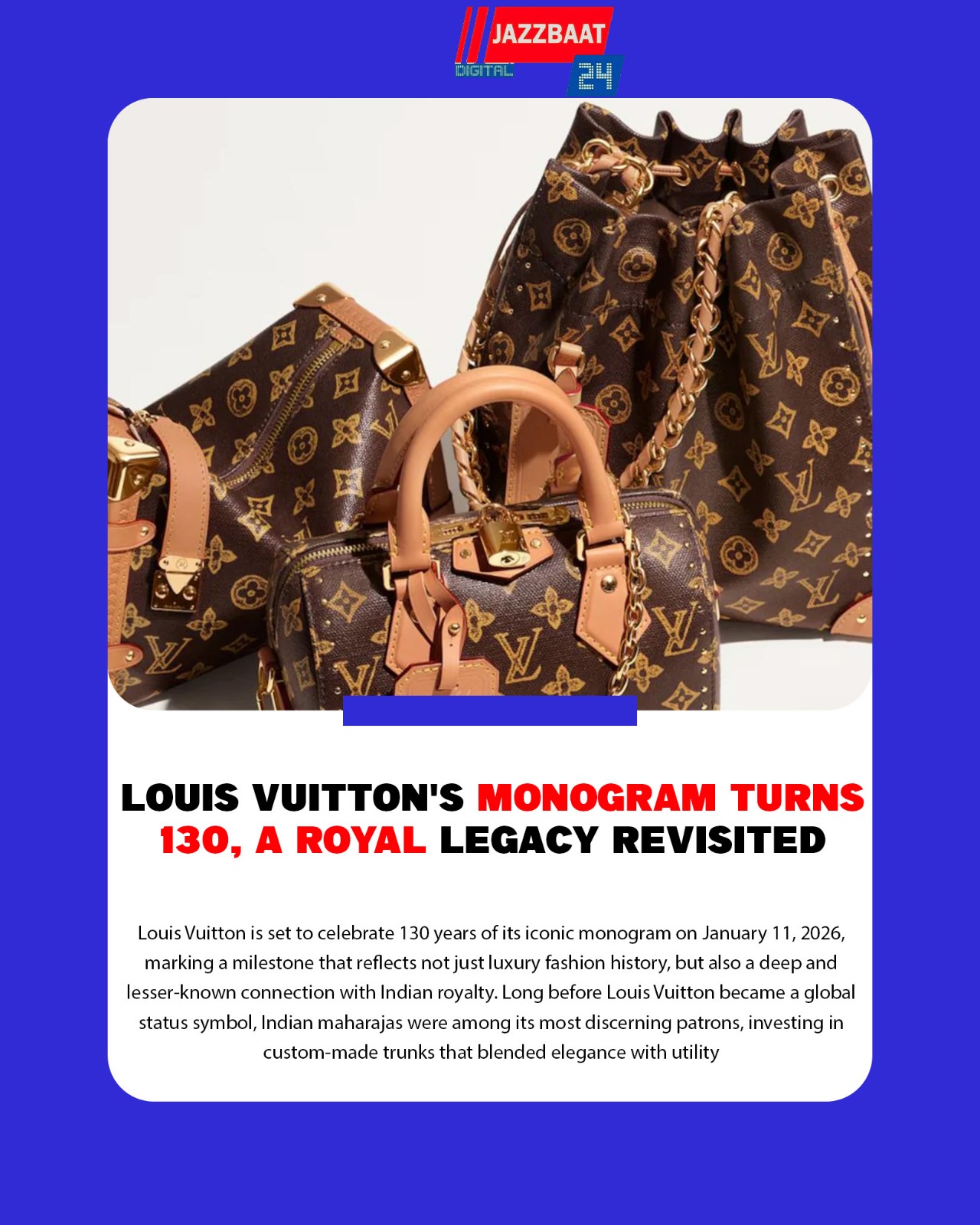
Louis Vuitton is set to celebrate 130 years of its iconic monogram on January 11, 2026, marking a milestone that reflects not just luxury fashion history, but also a deep and lesser-known connection with Indian royalty. Long before Louis Vuitton became a global status symbol, Indian maharajas were among its most discerning patrons, investing in custom-made trunks that blended elegance with utility.
In the late 19th and early 20th centuries, Louis Vuitton revolutionised travel with its flat-topped trunks, replacing the curved designs that made stacking impossible. This practical innovation quickly became popular among royals who travelled extensively and demanded luggage that was secure, organised and tailored to their lifestyles.
Maharaja Jagatjit Singh of Kapurthala, known for his love for French culture, reportedly owned more than 60 Louis Vuitton trunks by the early 1900s. Each was customised to store fine garments, accessories and personal essentials. Similarly, Sayajirao Gaekwad III of Baroda was a loyal client in the 1920s, commissioning specialised trunks for shoes, toiletries and even tea, underscoring the importance of Indian traditions while travelling abroad.
The royal family of Jammu and Kashmir also embraced the brand. When Maharaja Hari Singh ascended the throne in 1925, he ordered a bespoke trunk to carry his polo gear, complete with compartments for mallets and sporting attire.
At the heart of this legacy lies the Louis Vuitton monogram, introduced in 1896. Featuring interlocking “LV” initials, floral motifs and a star, the design was created by Georges Vuitton as a tribute to his father, inspired by Parisian art and everyday patterns.
To commemorate 130 years of the monogram, Louis Vuitton has launched special Monogram Anniversary Collections, celebrating a design that continues to define luxury while carrying stories of heritage, craftsmanship and royal patronage across generations.