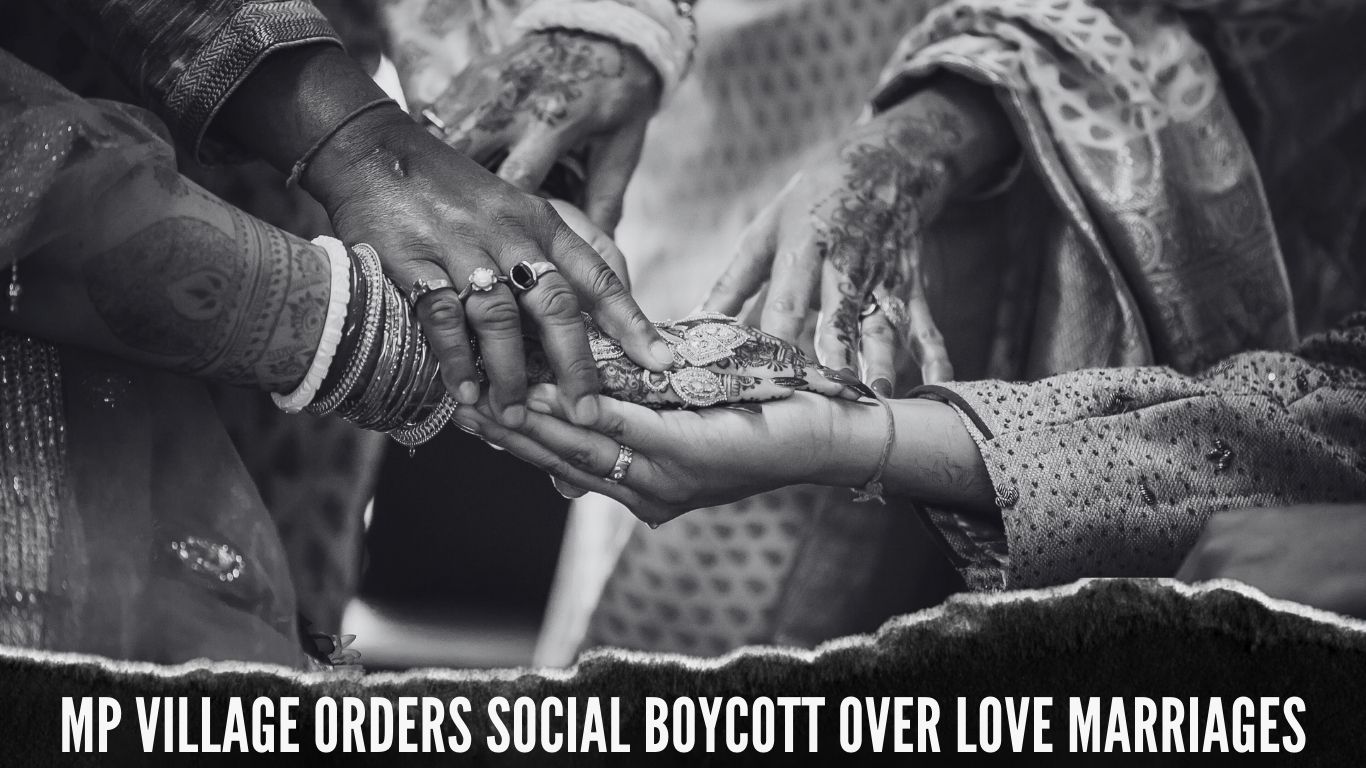
A shocking incident from Madhya Pradesh has sparked nationwide outrage after a village in Ratlam district announced a complete social boycott against families whose children marry by choice. The incident took place in Panchewa village, where a video has gone viral showing villagers publicly declaring punishments that critics say amount to social and economic exile.
In the video, a young man is seen reading out what was described as a “village decree” before a large gathering. According to the announcement, any boy or girl who elopes or marries by choice will face punishment, and their entire family will be ostracised. The decree orders a total social boycott, cutting off affected families from community life and basic daily needs.
As per the announcement, such families will not be invited to social functions, will be denied essentials like milk, and will be barred from hiring or being hired as labourers. Villagers were also instructed not to lease land to these families, and no one is allowed to work in their homes. Anyone who supports or helps a couple marrying by choice including by offering shelter, witnessing the marriage, or providing assistance will also face the same social punishment.
In a particularly alarming move, the video reportedly names the heads of three families, effectively singling them out for punishment. The warning is clear: support a boycotted family, and your own family will be boycotted as well.
After the video surfaced, local administration officials visited the village to intervene. The Janpad CEO and the Patwari informed villagers that social boycotts are illegal and unconstitutional. SDOP Sandeep Malviya said action would be taken as per law if a formal complaint is filed.
Under Indian law, a woman aged 18 and a man aged 21 have the legal right to marry by choice. The Supreme Court has repeatedly ruled that social boycotts and panchayat-style decrees are illegal and has directed states to protect adults who enter into inter-caste or love marriages. The incident has once again raised concerns over the gap between constitutional rights and ground realities in rural areas.