
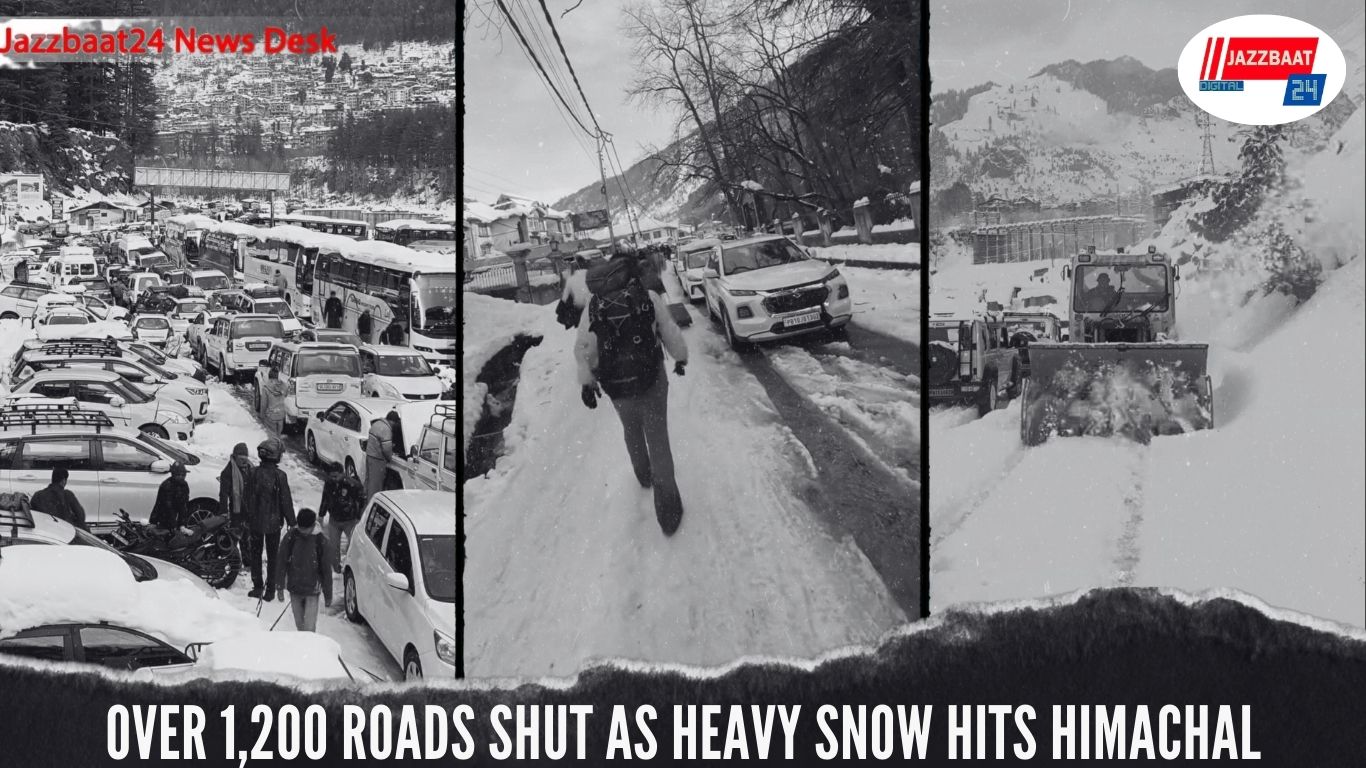
Heavy snowfall and rain across Himachal Pradesh have led to the closure of more than 1,200 roads, causing major disruption to daily life and transport in the hill state. Despite the harsh conditions, tourists continue to arrive in large numbers to experience the winter snowfall, adding to traffic congestion and pressure on local infrastructure.
According to Public Works Department (PWD) Minister Vikramaditya Singh, over 1,250 roads were closed in the past two days due to heavy snow accumulation and landslides. The state government has deployed snow blowers, JCB machines, and other heavy equipment at multiple locations to restore road connectivity on a war footing.
“We are making all efforts to reopen roads as soon as possible. Around 3,500 machines have been deployed across the state, and more will be arranged if needed,” Singh told ANI. He added that district administrations, including Superintendents of Police and Deputy Commissioners, are working in close coordination to assist stranded tourists and ensure public safety.
While the snowfall has caused inconvenience, the minister said it has also brought long-awaited relief to farmers and orchard owners. The fresh snow and rain are expected to improve soil moisture, recharge water sources, and benefit upcoming crops, especially in hilly and apple-growing regions.
Tourists, however, reported mixed experiences. Some visitors said they faced long traffic jams, slippery roads, and shortages of basic facilities like drinking water and tea in certain areas. Despite these challenges, many said they were still enjoying the snowfall and scenic beauty.
The Meteorological Department has issued weather alerts, warning that adverse conditions may continue for the next couple of days. Authorities have advised both residents and tourists to remain cautious, follow official advisories, and avoid unnecessary travel.
Officials also urged tourists to travel responsibly and respect local culture and safety guidelines, stressing that while tourism is vital for Himachal’s economy, safety must remain the top priority during extreme winter weather.