
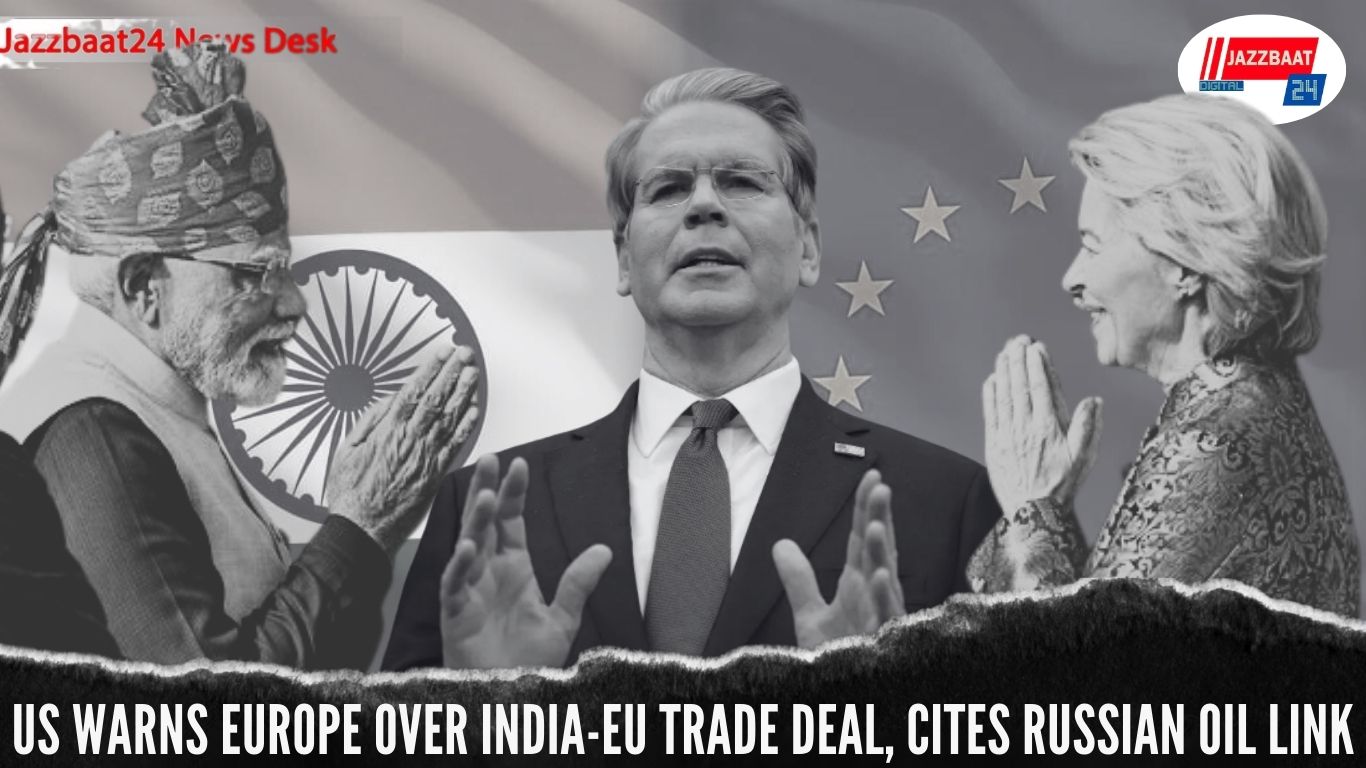
The United States has warned that Europe may be indirectly financing the Russia-Ukraine war through its new trade agreement with India, even as Washington tightens pressure on Moscow’s energy trade. The remarks came from US Treasury Secretary Scott Bessent, who criticised what he called a loophole in global oil flows following the conclusion of negotiations on a landmark India-European Union free trade agreement.
Speaking to US media, Bessent said that although Europe has reduced direct purchases of Russian energy, it continues to buy refined petroleum products from India that are made using Russian crude. According to him, this effectively allows Russian oil to reach European markets through a third country, undermining Western efforts to restrict Moscow’s revenue.
The comments come as India and the EU prepare to formally announce the completion of their long-pending free trade agreement, described by European Commission President Ursula von der Leyen as the “mother of all trade deals.” The pact is expected to significantly boost trade, manufacturing, services, and investment flows between the two economies. Negotiations for the agreement began in 2007 and have gained urgency amid disruptions in global trade linked to new US tariffs.
The Trump administration has imposed steep tariffs on India, including penalties tied to New Delhi’s continued purchases of Russian oil. Bessent said the US has made greater economic and political sacrifices than its European allies in pressuring Moscow, arguing that Europe is benefiting from trade arrangements while Washington bears higher costs.
“We have put tariffs on India for buying Russian oil. At the same time, Europe signs a major trade deal with India and continues to buy refined products,” Bessent said, adding that this dynamic means Europe is “financing the war against itself.”
India, for its part, has maintained that its energy purchases are guided by national interest and market conditions. The India-EU trade pact is being positioned by both sides as a strategic step to deepen economic ties, diversify supply chains, and counter growing global protectionism.
The sharp US reaction highlights emerging tensions among Western partners over trade, energy, and the long-term strategy to isolate Russia economically while managing shifting global alliances.