
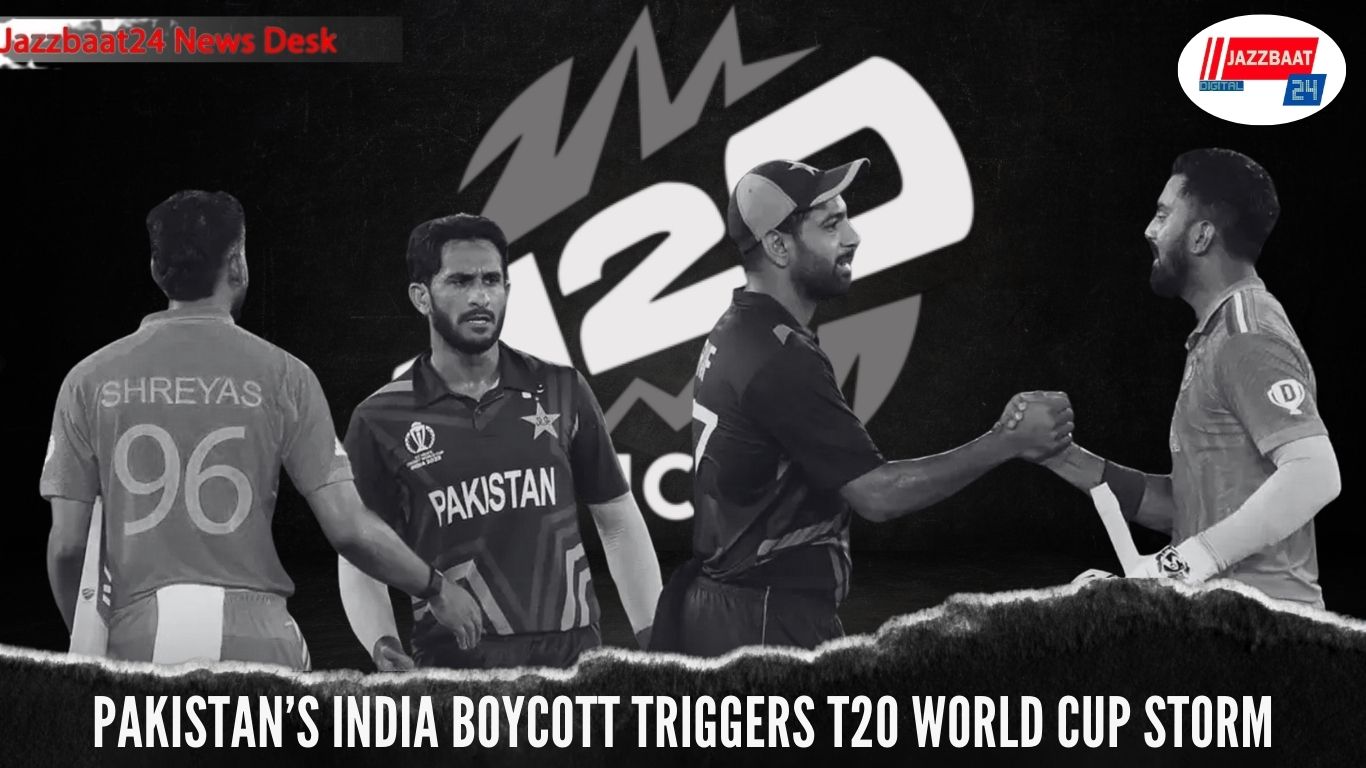
Pakistan’s decision to boycott their high-profile group-stage clash against India at the ICC Men’s T20 World Cup 2026 has sent shockwaves through the cricketing world, triggering political, financial and sporting turmoil just days before the tournament begins.
The Pakistan government announced on Sunday that while the national team will participate in the T20 World Cup, they will not take the field against India in the February 15 match scheduled in Colombo. The move comes in response to the International Cricket Council’s (ICC) decision to remove Bangladesh from the tournament after their request to shift matches citing security concerns was denied.
Reacting to the controversy, Pakistan captain Salman Ali Agha made it clear that the players have no role in the decision-making. “This is not our decision. We have to follow whatever our government and chairman instruct us,” Agha said after Pakistan’s recent T20I against Australia, underlining that the boycott is entirely a government call.
The ICC has taken a strong stance, stating that selective participation undermines the integrity and fairness of global tournaments. While the PCB is yet to formally communicate the decision to the ICC, sources indicate that an emergency meeting will be held within 48 hours to determine punitive action. Possible sanctions range from financial penalties and freezing Pakistan’s ICC revenue share to restrictions on foreign players participating in the Pakistan Super League, and in extreme cases, suspension from international cricket.
The financial implications are massive. Broadcasters and sponsors are expected to take a severe hit, with the India–Pakistan clash alone estimated to be worth nearly USD 500 million when advertising, broadcast rights and commercial activity are combined. Indian broadcasters have reportedly already sought rebates due to the uncertainty.
Meanwhile, BCCI sources confirmed that Team India will travel to Sri Lanka as scheduled and follow ICC protocol, leaving the final call to match officials. As back-channel diplomatic talks continue, the cricketing world waits anxiously to see whether this crisis can be defused, or whether it will permanently alter the landscape of international cricket.