
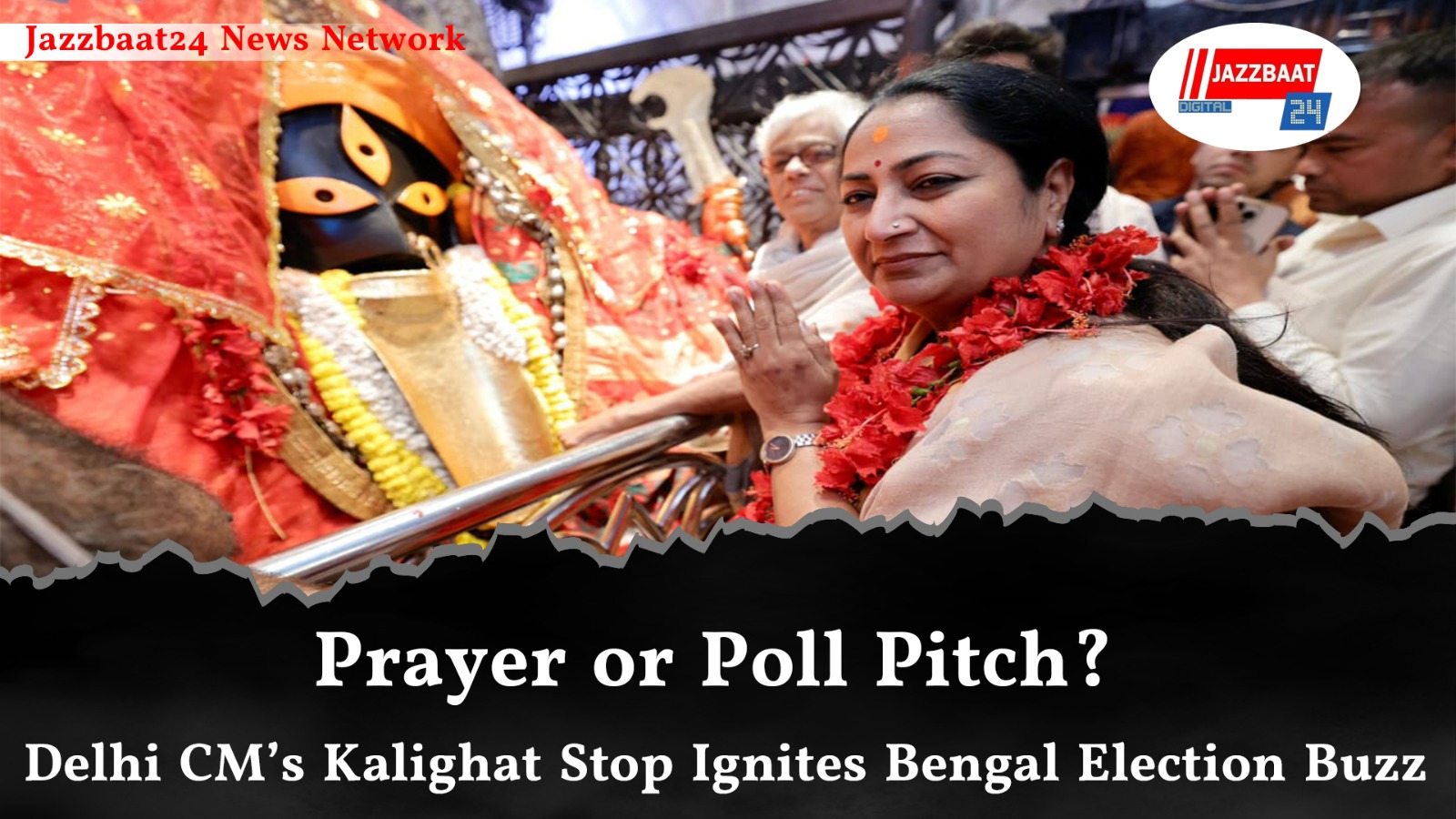
As West Bengal inches closer to a crucial Assembly election, the state’s political temperature continues to rise. Amid this charged atmosphere, Delhi Chief Minister and BJP leader Rekha Gupta made an early morning visit to the famous Kalighat Kali Temple on Sunday, triggering a fresh wave of political speculation.
Her sudden temple visit has quickly become a talking point across political circles in the state, with many questioning whether the move carries a deeper electoral message rather than being merely a spiritual stop. With national leaders increasingly stepping into Bengal ahead of the polls, every public appearance is now being viewed through the lens of strategy and symbolism.
Arriving at the temple in the morning, the Delhi Chief Minister offered prayers at the shrine amid tight security arrangements. She was seen wearing a light pink saree paired with a saffron stole around her neck, a colour combination that some observers believe was politically symbolic in the current climate. Security personnel maintained strict control around the temple premises as she entered and exited the complex.
While temple visits by politicians are not uncommon in India, the timing of this visit just weeks before the Assembly election has inevitably raised eyebrows. Several political observers believe the appearance at one of Bengal’s most revered religious sites could be aimed at sending a subtle political message to voters in the state.
When questioned by journalists outside the temple, Rekha Gupta avoided giving any direct answers about the purpose of her visit. Maintaining a brief smile, she chose not to elaborate on whether the trip was purely religious or connected to the ongoing political campaign in West Bengal. Her silence, however, has only intensified speculation.
According to BJP sources in the state, the Delhi Chief Minister was scheduled to attend a women’s conference organised by the BJP Mahila Morcha later in the day at the Science City Auditorium. The event was aimed at mobilising women voters ahead of the elections, a demographic increasingly seen as decisive in recent electoral battles.
Several prominent leaders were present at the conference alongside Rekha Gupta, including Union Minister Annapurna Devi and former Union Minister Debasree Chaudhuri. Party insiders say the meeting focused on strengthening grassroots outreach and building momentum among women supporters in the state.
Political analysts argue that the increasing presence of national-level leaders in West Bengal signals that the upcoming election is likely to witness an intense and high-stakes contest. Temple visits, symbolic gestures, and targeted outreach programmes are all becoming part of a broader political narrative as parties attempt to connect with voters on emotional as well as ideological grounds.
Critics from rival camps, however, have already begun questioning whether religious spaces are being strategically used to influence public sentiment during election season. Some believe such appearances blur the line between faith and electoral messaging, particularly when they coincide with political gatherings and campaign events.
For now, the visit to the Kalighat temple remains officially described as a routine act of worship. Yet in Bengal’s highly polarised political environment, few believe any high-profile appearance during election season is ever entirely apolitical. As the countdown to the Assembly polls continues, every move by national leaders is likely to be scrutinised, debated and interpreted as part of the larger political chessboard unfolding in the state.