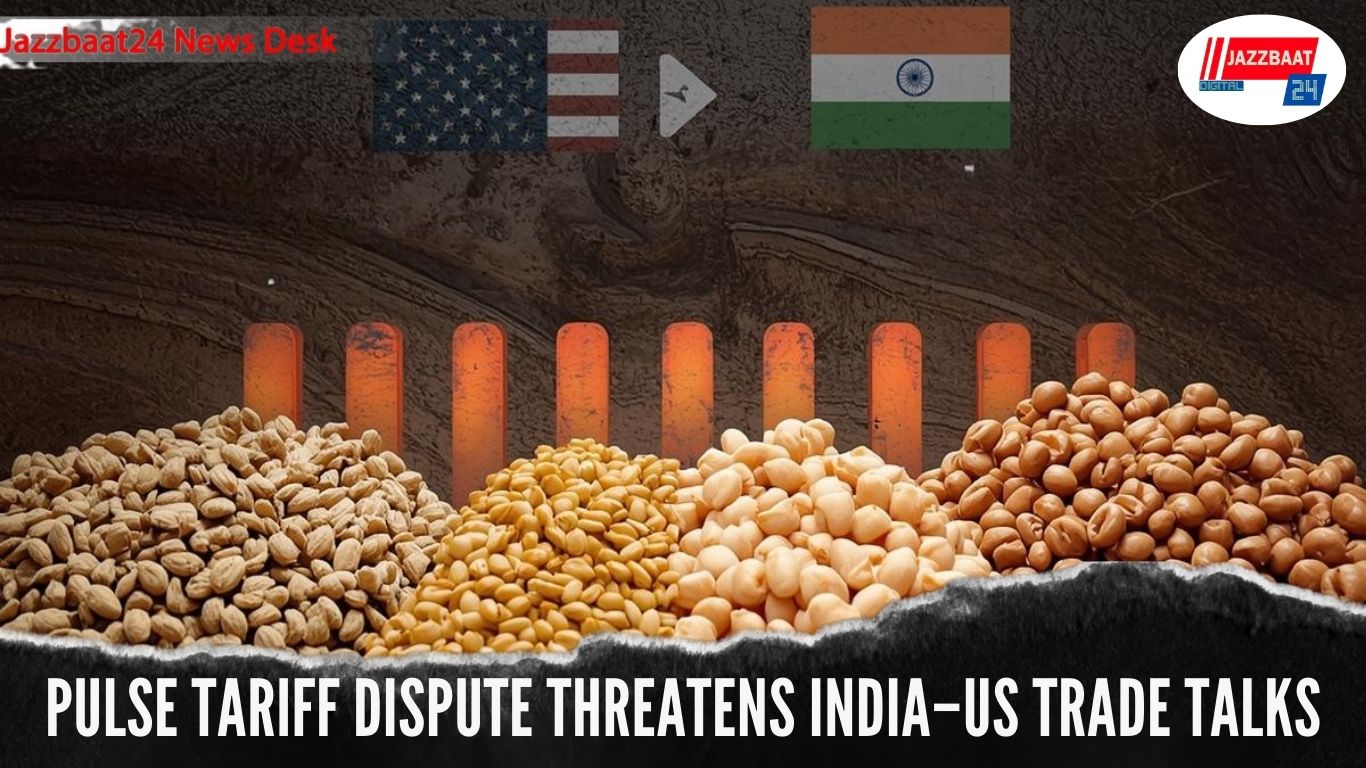
Talks on a long-pending India–US trade agreement have hit another potential roadblock, this time over pulses. Two senior US lawmakers have written to President Donald Trump urging him to push India to withdraw a 30% import tariff on American pulse crops, warning that the duty is hurting US farmers and could derail broader trade negotiations.
In their letter, Republican Senators Steve Daines of Montana and Kevin Cramer of North Dakota said Indian tariffs on pulses such as yellow peas, lentils, chickpeas and dried beans have placed American producers at a “significant competitive disadvantage.” Montana and North Dakota are the top pulse-producing states in the US, while India is the world’s largest consumer, accounting for nearly 27% of global pulse consumption.
India announced the 30% tariff on yellow peas on October 30 last year, with the duty coming into effect on November 1, 2025. The move followed the Trump administration’s decision to impose steep tariffs reportedly up to 50% on certain Indian exports, escalating trade tensions between the two countries.
The senators argued that reducing or removing India’s pulse tariffs would be “mutually beneficial,” helping American farmers gain access to a massive market while offering Indian consumers more affordable food options. They urged President Trump to raise the issue directly with Prime Minister Narendra Modi as part of ongoing trade discussions.
Recalling past efforts, the lawmakers said they had raised similar concerns during Trump’s first term, ahead of the 2020 India visit. At that time, Trump personally delivered their letter to PM Modi, a move they claim helped bring US pulse producers into negotiations.
The dispute also revives memories of 2019, when India was removed from the US Generalised System of Preferences (GSP), leading to additional duties and strained trade relations.
With both sides hardening their positions on tariffs, pulses have now emerged as a fresh flashpoint one that could complicate efforts to finalise a comprehensive India–US trade deal.