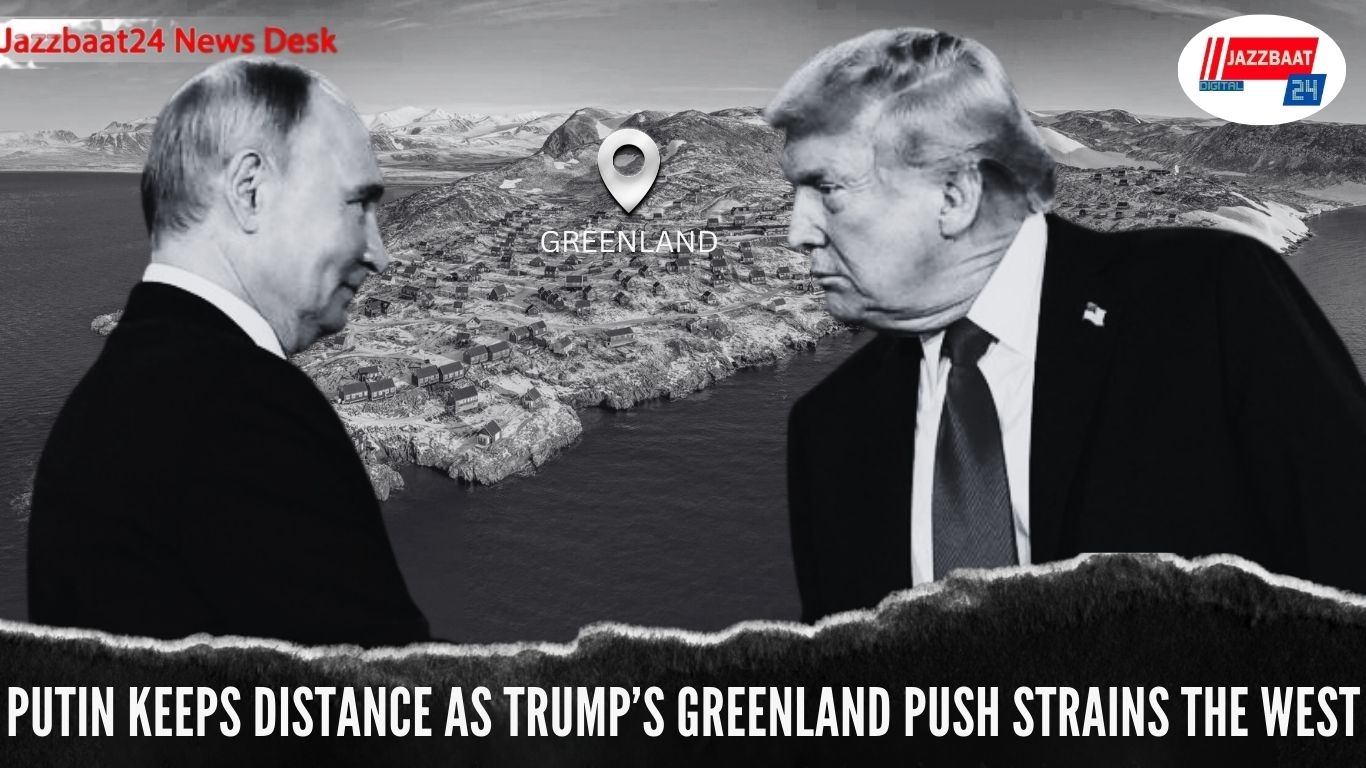
Russian President Vladimir Putin has publicly distanced Moscow from former US President Donald Trump’s renewed push to bring Greenland under American control, signalling that Russia sees the issue as an internal matter for the United States and its NATO allies. Speaking at a televised meeting of Russia’s National Security Council, Putin said what happens to Greenland is “not Russia’s business” and expressed confidence that Washington and Europe would “sort it out among themselves”.
Putin’s remarks come at a time when Trump’s Greenland ambition has triggered sharp tensions between the US and European allies, particularly Denmark, which governs the self-ruled Arctic island. While Trump has repeatedly cited security threats from Russia and China as justification for expanding US influence in Greenland, the Kremlin has carefully avoided criticism, choosing instead a tone of detached approval.
The Russian leader even recalled historical precedents, noting that Denmark sold the Virgin Islands to the US in 1917 and that Russia itself sold Alaska to the United States in 1867. He also criticised Denmark’s past treatment of Greenland, calling it “harsh, if not cruel”, while stressing that the issue does not concern Moscow.
Analysts say Russia’s restrained response reflects a calculated strategy. By standing aside, Moscow benefits from growing friction within the Western alliance, as the Greenland dispute weakens unity between the US, the European Union and NATO. Russian officials and state-linked commentators have openly suggested that Trump’s move distracts the West from the war in Ukraine and undermines European cohesion.
At the same time, Russia remains cautious. Greenland’s strategic location and mineral wealth matter to Moscow, which has expanded its military footprint in the Arctic in recent years. The Kremlin has therefore neither fully endorsed nor opposed Trump’s plan, keeping its options open.
As Trump continues to defend his Greenland ambitions on the global stage, including at the Davos forum, Russia appears content to watch from the sidelines, allowing Western divisions to deepen while publicly insisting it has no stake in the outcome.