
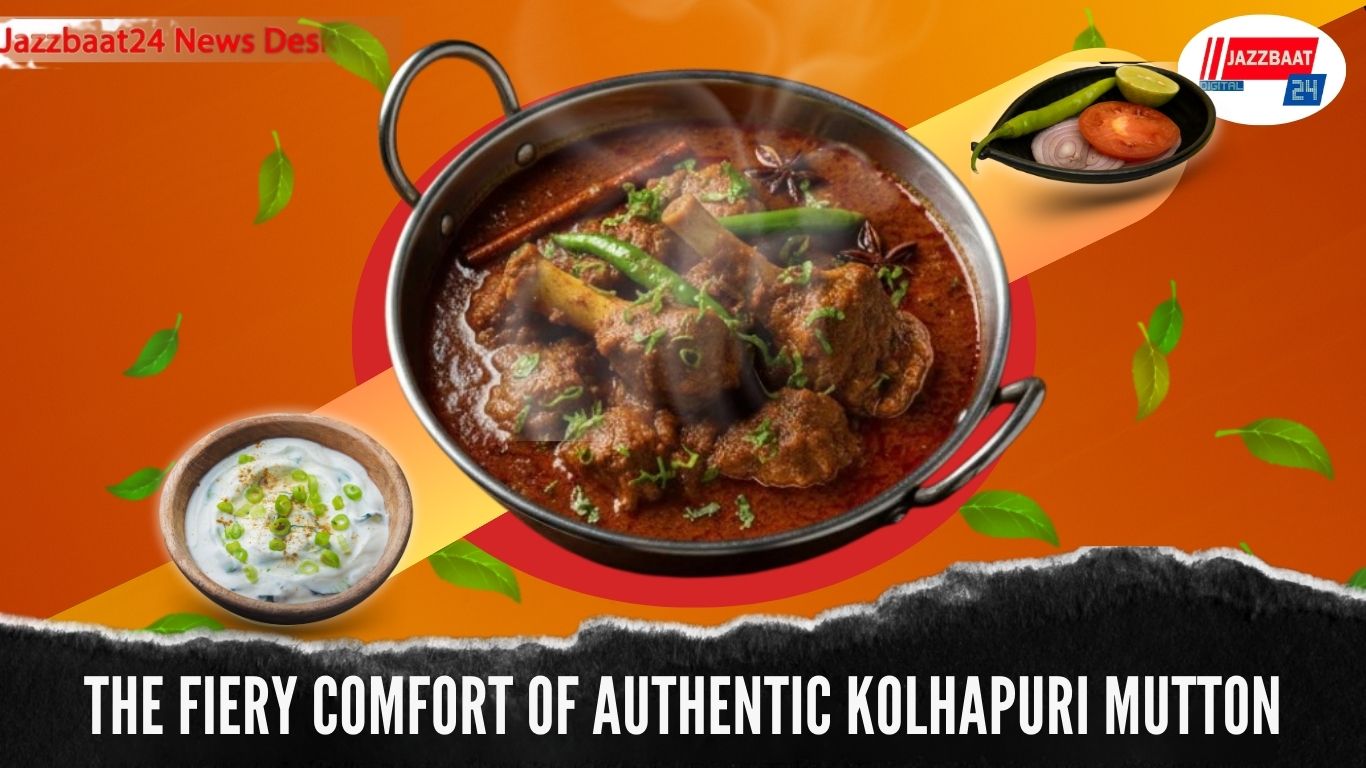
As the monsoon deepens and the sacred month of Shravan approaches, food habits across Maharashtra quietly change. For many families, this transition is marked by Gatari Amavasya the last celebratory feast before weeks of abstinence from non-vegetarian food. And when Gatari arrives, one dish reigns supreme: authentic Kolhapuri mutton, bold, spicy, and unapologetically fiery.
Kolhapur’s food culture is famous for its fearless use of spices, and this classic mutton preparation reflects that spirit perfectly. Rich gravies, slow-cooked meat, and the unmistakable aroma of freshly ground masalas make it a must-have on Gatari menus. The dish is not just about taste; it’s about tradition, togetherness, and indulging without guilt before a period of restraint.
The preparation begins with good-quality mutton, thoroughly cleaned and patiently cooked. Onions are sautéed until deep brown, releasing a natural sweetness that balances the heat of the spices. Ginger-garlic paste follows, filling the kitchen with a comforting aroma. Tomatoes add body to the gravy, while turmeric, red chilli powder, coriander, and cumin create layers of warmth and depth.
What truly defines Kolhapuri mutton is its signature masala. A robust blend of dry coconut, sesame seeds, whole spices like cloves, cinnamon, cardamom, and black pepper is roasted and ground into a coarse powder. This masala gives the dish its intense colour and unforgettable punch.
Once the mutton is coated in spices, water is added and the curry is allowed to simmer slowly. Over 30–40 minutes, the meat turns tender, soaking up every note of heat and flavour. Finished with fresh coriander, the dish is best enjoyed with bhakri, chapati, or steamed rice.
Spicy, soulful, and steeped in culture, Kolhapuri mutton is more than a recipe, it’s a Gatari tradition served on a plate.