

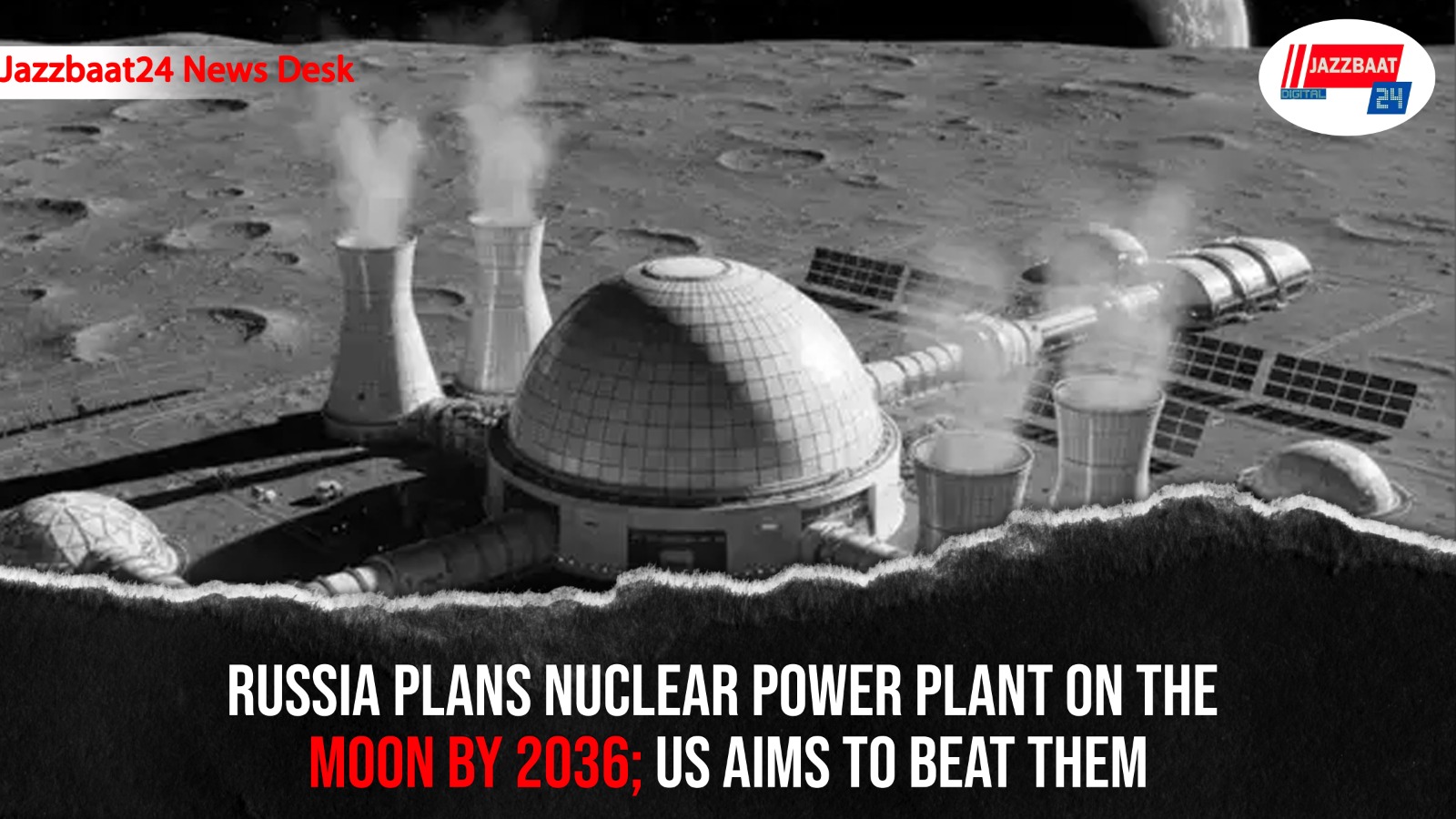
Russia has announced ambitious plans to build a nuclear power plant on the moon by 2036, aiming to support its lunar exploration program and a joint Russian-Chinese research station. The announcement, made by Roscosmos the Russian state space agency comes as global powers intensify efforts to expand their presence on Earth’s only natural satellite.
Roscosmos signed a contract with the Lavochkin Association aerospace company, with participation from Russia’s leading nuclear research institutes, including Rosatom and the Kurchatov Institute. While officials did not explicitly confirm the reactor’s nuclear nature, experts assume it will harness nuclear energy to power lunar rovers, observatories, and the infrastructure of the planned International Lunar Research Station. Dmitry Bakanov, head of Roscosmos, highlighted that the project marks a shift from one-time missions to a sustained, long-term lunar exploration program.
Russia’s lunar ambitions follow setbacks, including the 2023 Luna-25 mission crash, and increased competition from private players like Elon Musk’s SpaceX, which has transformed space launches.
The United States, meanwhile, is not far behind. NASA has revealed plans to deploy a nuclear reactor on the moon by the first quarter of fiscal year 2030. US Transport Secretary Sean Duffy emphasized that energy is essential not only to sustain life on the moon but also to support future missions to Mars.
International treaties prohibit nuclear weapons in space but allow nuclear energy sources under strict safety guidelines. Analysts predict that lunar exploration could trigger a “moon rush,” with vast reserves of Helium-3, rare earth metals, and other valuable resources attracting global interest.
As Russia and the US race to establish a permanent lunar presence, the coming decade could redefine space exploration, shifting focus from fleeting visits to long-term scientific and technological bases beyond Earth.