
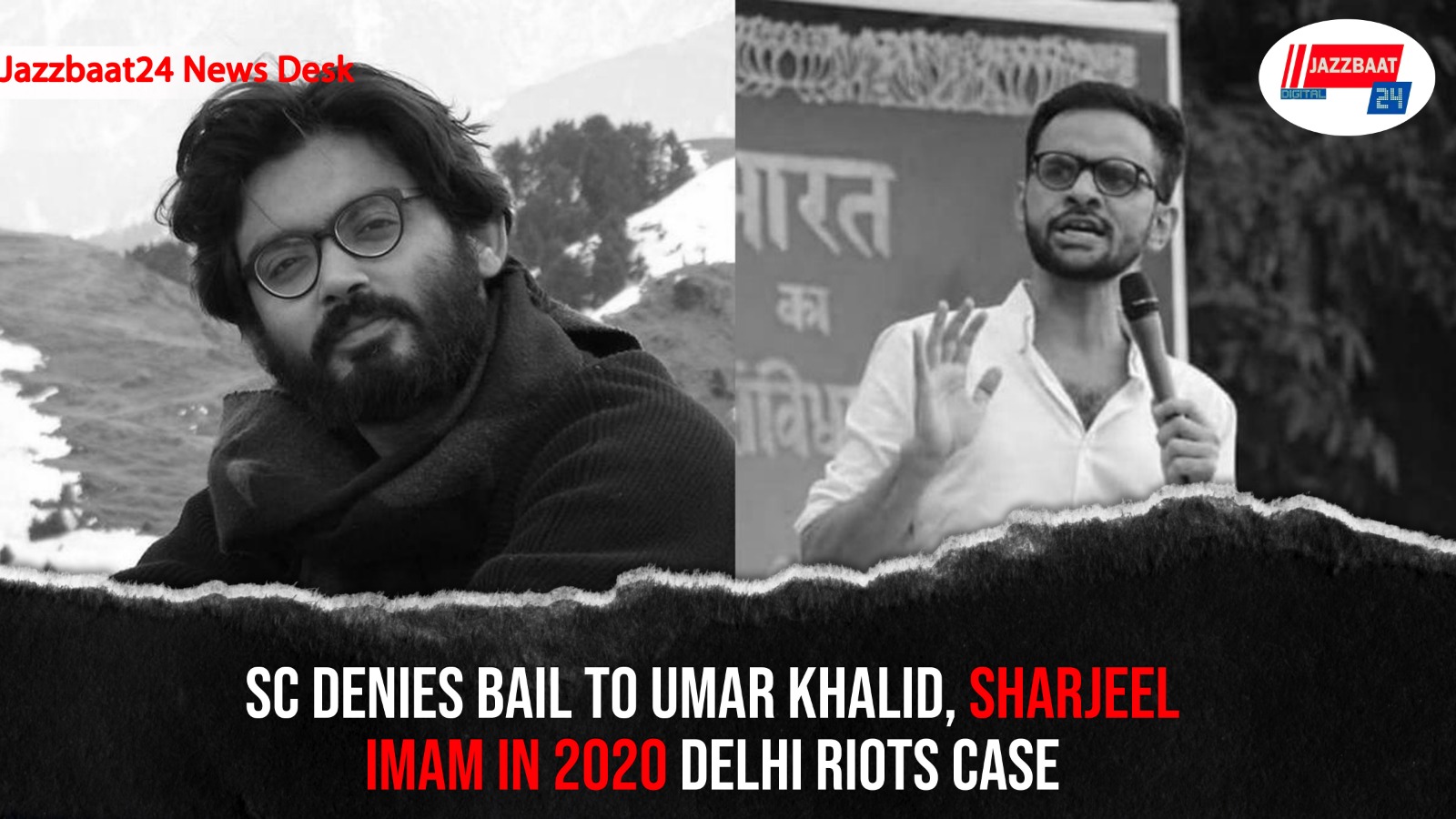
The Supreme Court on Monday denied bail to student activists Umar Khalid and Sharjeel Imam in the high-profile “larger conspiracy” case linked to the 2020 Delhi riots. The bench, comprising Justices Aravind Kumar and Prasanna B Varale, said the prosecution had presented a prima facie case under the stringent Unlawful Activities (Prevention) Act (UAPA), preventing their release.
The court noted that evidence suggested Khalid and Imam played a key role in planning, mobilising, and issuing strategic directions during the unrest. “Umar Khalid and Sharjeel Imam stand on a qualitatively different footing compared to other accused,” the bench said, stressing the need to assess each bail application individually.
While rejecting their applications, the Supreme Court granted bail to five other accused: Gulfisha Fatima, Meeran Haider, Shifa Ur Rehman, Mohd Saleem Khan, and Shadab Ahmed. The bench clarified that bail is not a forum to evaluate defences but requires examining whether the role of the accused has a reasonable nexus to the alleged offences.
The Delhi Police argued that the riots were not spontaneous protests but part of a well-planned conspiracy aimed at destabilising the state and targeting regime change. Investigators claimed the unrest coincided with the official visit of then-US President Donald Trump to India, intending to draw international attention to the Citizenship Amendment Act (CAA).
Rights groups, including Amnesty International, have criticised the prolonged detention of Khalid and Imam, now over five years, calling it an example of justice being delayed. The 2020 Delhi riots claimed 53 lives and injured more than 700 people amid protests against the CAA and National Register of Citizens (NRC).
Both Khalid and Imam were initially arrested in 2020, Imam surrendered in January, while Khalid was taken into custody in September during the COVID-19 pandemic. The Supreme Court’s ruling highlights the differentiated treatment of accused in cases involving allegations of organised criminal conspiracy under UAPA.