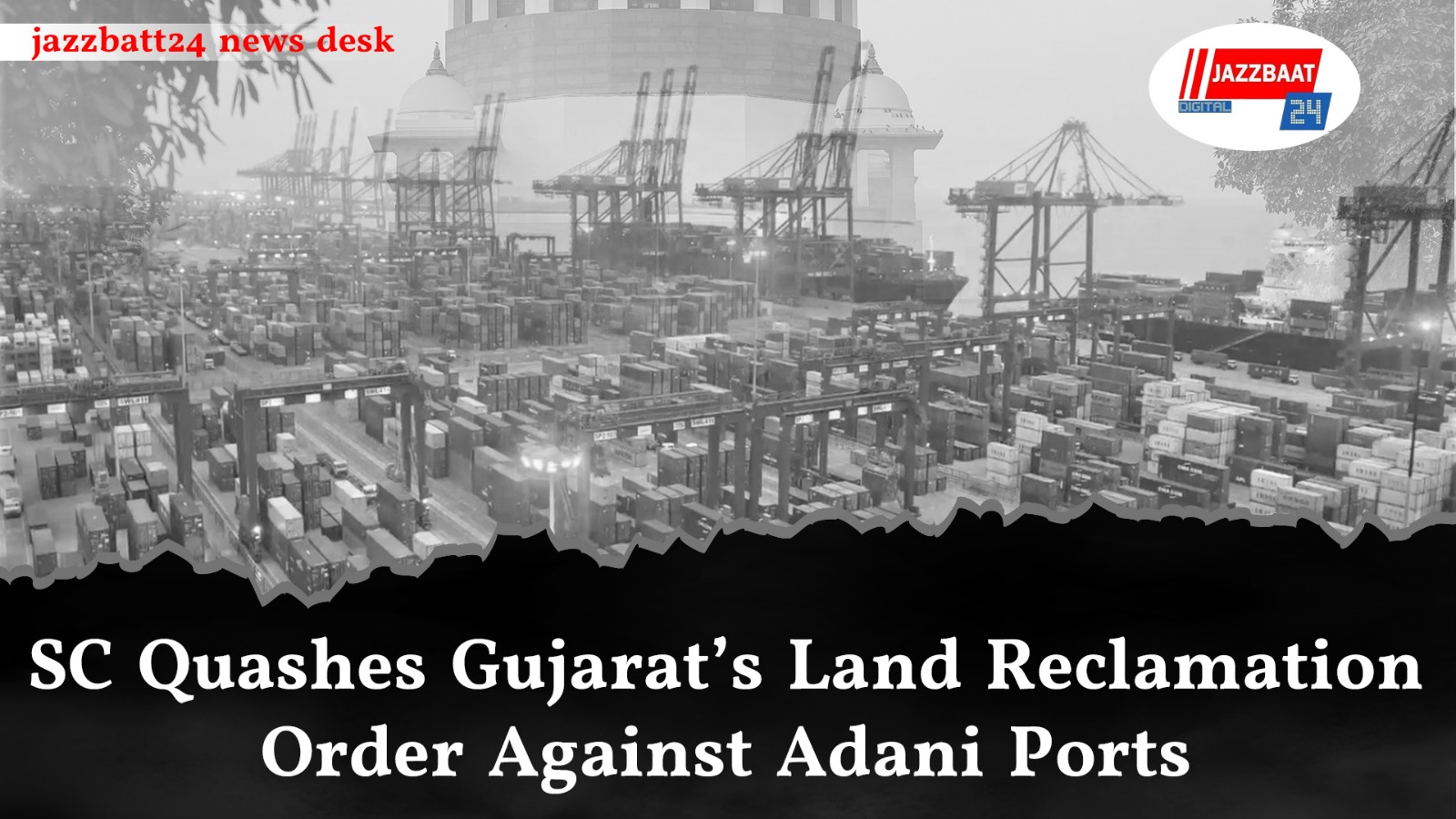
The Supreme Court on February 18, 2026, struck down the Gujarat government’s 2024 order directing the recovery of 108 hectares of grazing land (gauchar) from Adani Ports and Special Economic Zone Ltd in Mundra, Kutch, citing a clear violation of natural justice. The court held that neither the state government nor the Gujarat High Court had provided Adani Ports a proper opportunity to be heard before issuing the resumption order.
The controversy dates back to a 2011 public interest litigation (PIL) challenging the allocation of approximately 231 acres of gauchar land in Navinal village to private entities linked to the Mundra Port project. The PIL sought to quash the original 2005 allocation and restore the land to the local gram panchayat or provide alternative grazing land. It also called for restraining developmental activities such as creek filling, dredging, and mangrove removal pending environmental clearance.
While the Gujarat High Court initially disposed of the PIL in 2014 with directions for demarcation, a recall application by the state led to the restoration of proceedings. In July 2024, the government ordered the resumption of 108 hectares from Adani Ports, purportedly based on oral directions during the high court proceedings. The Supreme Court found this action procedurally flawed, emphasizing that the company was not heard and the high court had effectively implemented the state’s order without adjudicating the PIL on merits.
Adani Ports highlighted its long-term investments of over ₹23,586 crore, employing thousands at the SEZ, and argued that its statutory and vested rights could not be summarily disturbed. The Supreme Court quashed the 2024 order but allowed the state to pass a fresh decision following due process, directing that objections and pleadings be exchanged within six weeks. The 2011 PIL is treated as disposed of, while parties may pursue remedies once a new order is issued.
This ruling reinforces the judiciary’s insistence on adherence to procedural fairness and the principles of natural justice, especially in high-stakes land disputes involving major industrial investments.