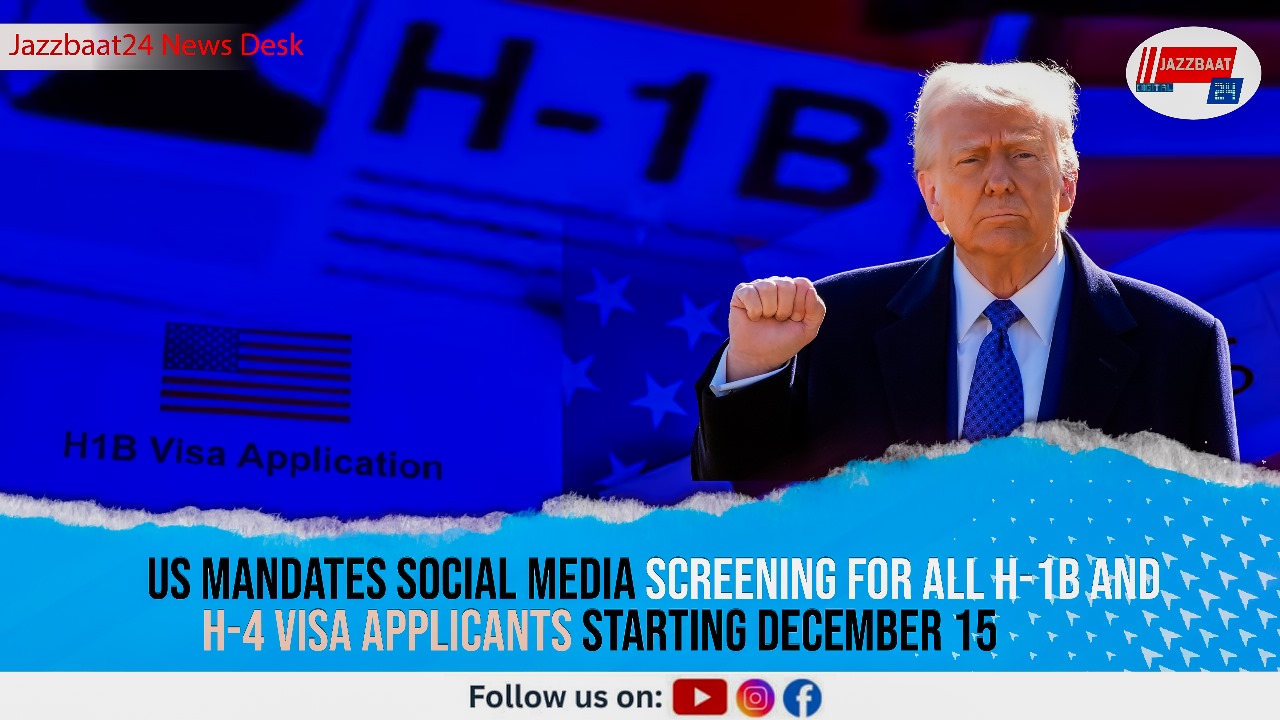
The United States State Department announced a major expansion of its visa-vetting procedures, requiring mandatory social media screening for all H-1B workers and their H-4 dependents beginning December 15. Applicants must set their social media accounts to "public" to enable government scrutiny, marking a significant tightening of America's immigration policy.
Immigration experts describe this as a substantial broadening of digital oversight. Mitch Wexler of Fragomen law firm noted that while similar reviews have applied to student visas since June 2025, extending this to H-1B categories represents the first major expansion. Applicants should anticipate intensive examination of their posts, interactions, and overall online activity.
Consular officers will review social media profiles, public posts, and information across online platforms and databases. The State Department emphasized that "every visa adjudication is a national security decision," stressing that US visas are "a privilege, not a right."
According to internal guidance, officers may draw negative conclusions if applicants keep accounts private or lack online presence entirely. Content reflecting hostility toward US citizens or institutions, support for designated terror groups, attempts to access sensitive technology, or patterns of political activism could trigger additional interviews, prolonged background checks, or visa denial.
The expanded checks will significantly burden consulates and likely delay visa processing. This particularly affects Indian IT professionals, who constitute the largest H-1B group—securing approximately 80,500 new visas in fiscal 2024, compared to China's 19,600.
A December 2 internal cable also directs officers to review LinkedIn profiles and resumes of H-1B applicants for work involving misinformation, content moderation, fact-checking, or online safety activities. Applicants found "responsible for or complicit in censorship" of protected expression in the US may face visa ineligibility.
Immigration attorneys have criticized the policy as hypocritical, noting contradictions in punishing tech sector employees for certain content moderation activities while the administration itself suppresses viewpoints it opposes.