
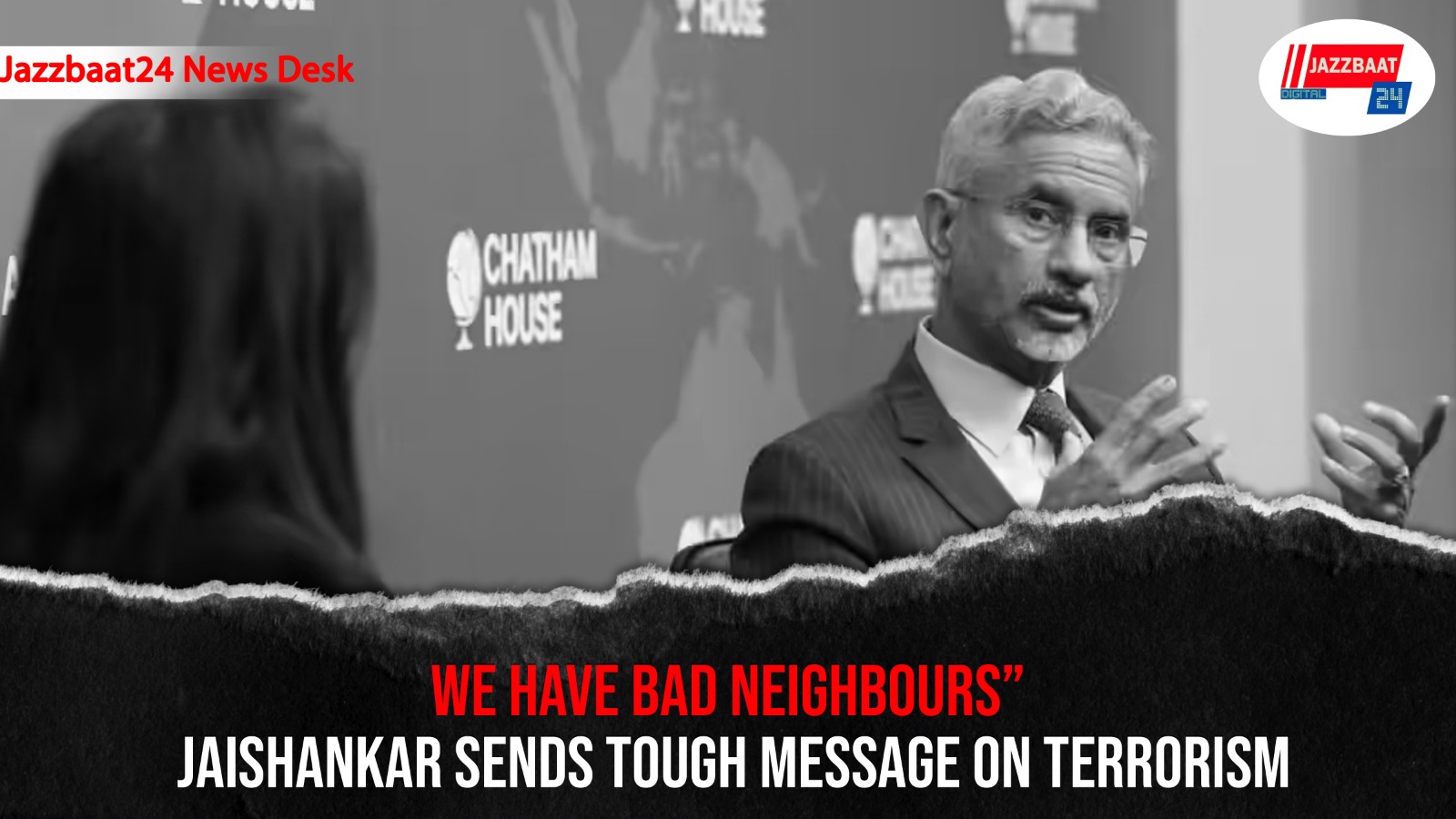
India has the right to defend its people against terrorism, and no external power can dictate how the country should act, External Affairs Minister S. Jaishankar said on Friday, delivering a stern message aimed squarely at Pakistan.
Speaking at the Indian Institute of Technology (IIT) Madras, Mr. Jaishankar described Pakistan as a “bad neighbour” and accused it of deliberately and persistently using terrorism as an instrument of state policy. “Nobody can tell us what we should or should not do. We will do whatever we have to do to defend ourselves,” he said, underlining India’s resolve to respond firmly to terror threats.
The minister’s remarks were seen as a reference to Operation Sindoor, under which India last year targeted terror infrastructure in Pakistan and Pakistan-occupied Kashmir. The operation was launched in the aftermath of the April terror attack in Pahalgam, Jammu and Kashmir, which killed several civilians. The attack was carried out by The Resistance Front, a proxy outfit of Pakistan-based terror group Lashkar-e-Taiba.
Mr. Jaishankar said that while countries may aspire to good neighbourly relations, such expectations collapse when one side continues to sponsor violence. “If a country decides that it will deliberately, persistently, and unrepentantly continue with terrorism, we have a right to defend our people,” he said.
The External Affairs Minister also spoke about the Indus Waters Treaty (IWT) of 1960, which India suspended following the Pahalgam attack. He argued that cooperation cannot exist in an environment poisoned by terrorism. “You can’t say, ‘Please share water with me, but I will continue terrorism with you.’ That’s not reconcilable,” he noted.
Reiterating his earlier criticism of Pakistan’s establishment, Mr. Jaishankar said that many of India’s challenges stem from the Pakistani military leadership, suggesting that instability in the region is driven by choices made across the western border.
His comments signal that India’s stance on cross-border terrorism remains uncompromising, with national security taking precedence over diplomatic sensitivities.