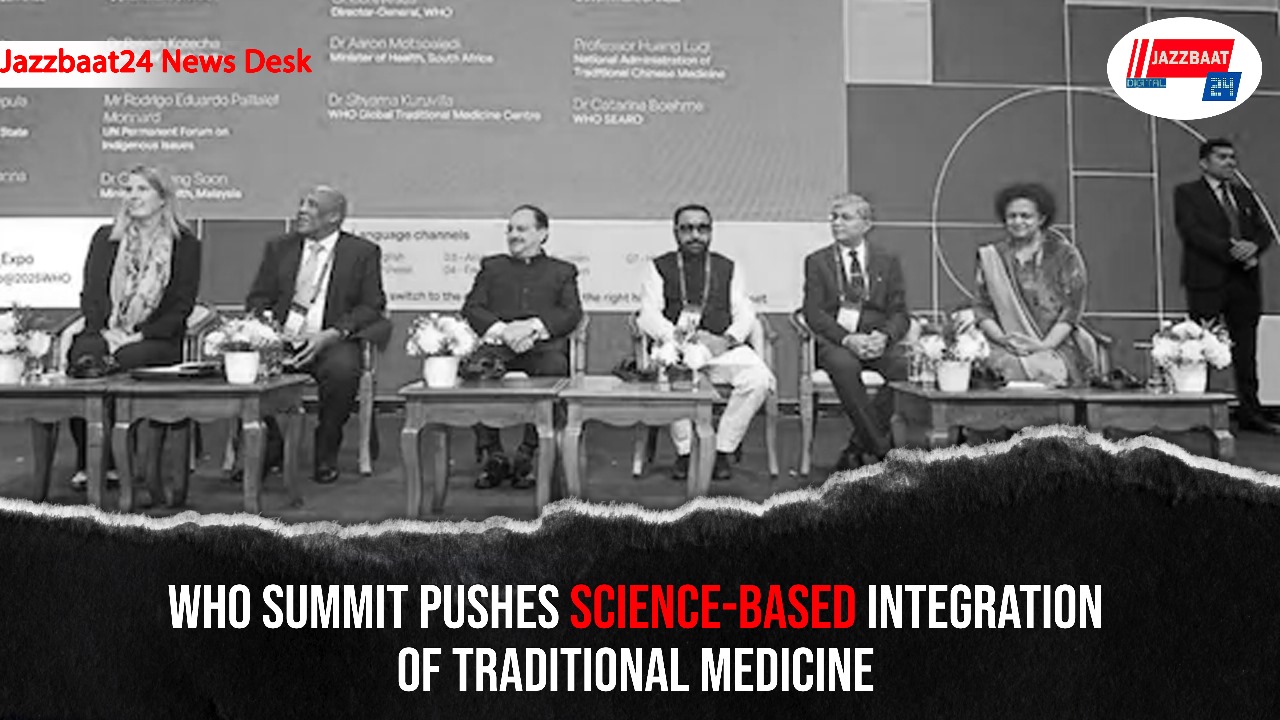
The World Health Organization’s Global Summit on Traditional Medicine, held in New Delhi, marked a significant step toward integrating traditional healthcare systems with modern science to build more resilient and people-centred health systems. Guided by the theme “Restoring Balance: The Science and Practice of Health and Well-Being,” the summit focused on strengthening evidence, safety, regulation and innovation in traditional medicine worldwide.
Union Minister of State for Ayush and Health & Family Welfare, Prataprao Jadhav, met WHO Director-General Dr Tedros Adhanom Ghebreyesus and expressed India’s appreciation for WHO’s leadership in advancing Traditional, Complementary and Integrative Medicine globally. The summit aligns with the newly adopted WHO Global Traditional Medicine Strategy 2025–2034, which aims to translate vision into practical action across countries.
High-level plenary and parallel sessions highlighted the importance of sustained scientific research, international collaboration and methodological innovation. Experts discussed whole-systems clinical trials, indigenous research approaches and evidence supporting traditional medicine’s role in mental health, pain management, cancer care, self-care and healthy ageing. Special focus was placed on meditation, with sessions reviewing neuroscientific and public health evidence and exploring its integration into education, workplaces and community programmes.
On the sidelines, the Ministry of Ayush held 16 bilateral meetings with countries including Brazil, Sri Lanka, UAE, Ghana and Cuba to strengthen global cooperation. An existing memorandum of understanding between India and Cuba, involving the All India Institute of Ayurveda, was extended, and a joint working group was formed to collaborate on curriculum development, public health integration and regulatory alignment.
Sessions on governance and regulation addressed quality standards, patient safety, practitioner education and ethical practice. Discussions also covered cross-border trade, digital health applications and protection of traditional knowledge.
Prime Minister Narendra Modi is set to attend the summit’s closing ceremony. The second day concluded with a shared global commitment to science-based validation, robust governance and equitable integration of traditional medicine, laying the foundation for future policy dialogue and collective action.