

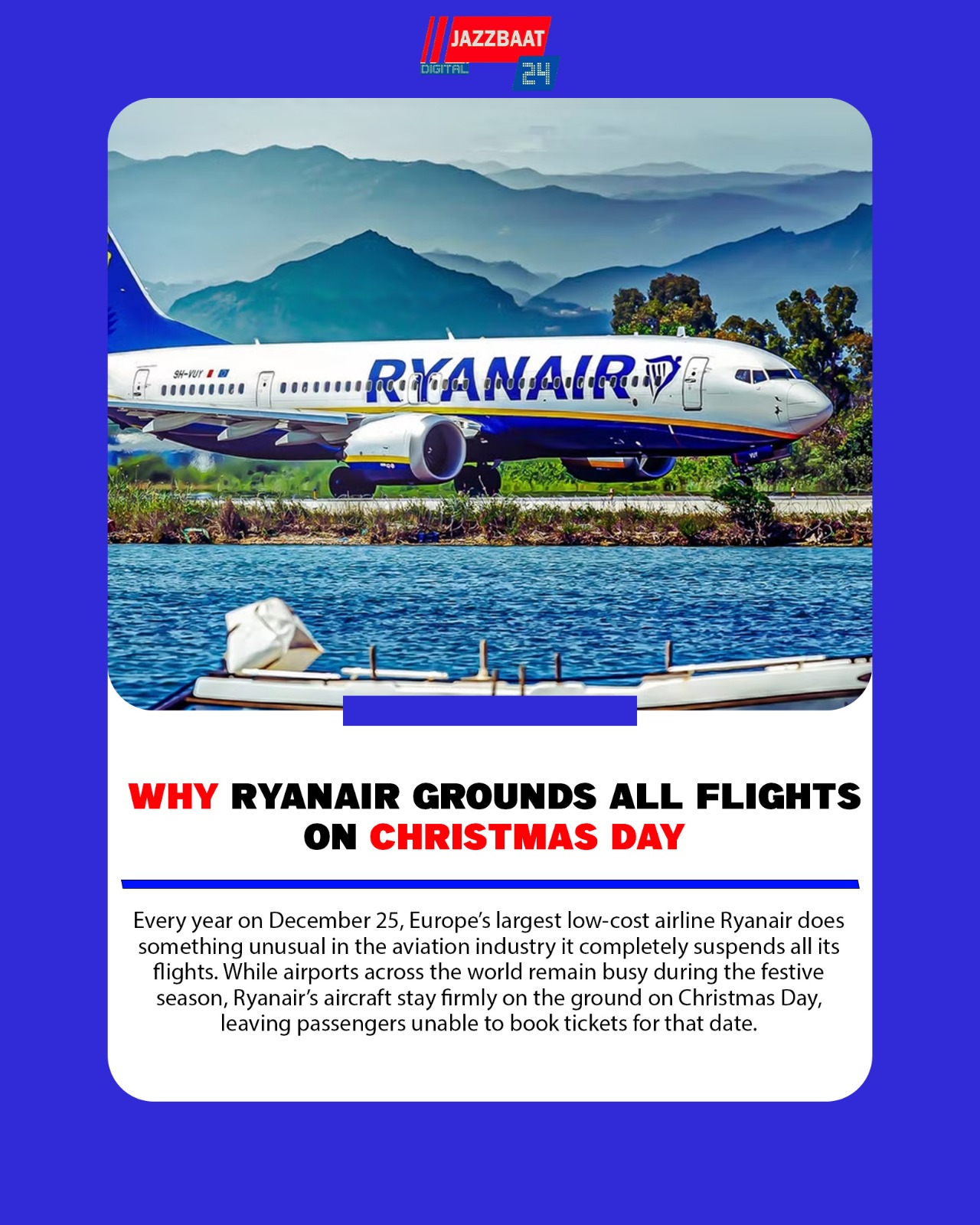
Every year on December 25, Europe’s largest low-cost airline Ryanair does something unusual in the aviation industry it completely suspends all its flights. While airports across the world remain busy during the festive season, Ryanair’s aircraft stay firmly on the ground on Christmas Day, leaving passengers unable to book tickets for that date.
Ryanair’s decision is rooted in a mix of tradition, culture, and business logic. Based in Ireland, a country with strong Christian and Catholic traditions, Christmas is considered a deeply important family holiday. By grounding its entire fleet, the airline allows all its employees pilots, cabin crew, ground staff, and office workers to spend the day at home with their families. Over the years, this has become a long-standing annual practice for the airline.
From a commercial standpoint, the move also makes sense. Demand for air travel on Christmas Day is generally lower compared to the days before and after the holiday. Operating flights with fewer passengers would not be cost-effective, especially for a budget airline that relies heavily on high aircraft utilisation and quick turnarounds. Instead, Ryanair chooses to concentrate its resources when demand rebounds.
In 2025, the airline operated an intense schedule on Christmas Eve, with around 1,720 flights across its European network. The final flight of the day departed from Kerry to Dublin at 6:30 pm. Normal operations resumed on December 26, when Ryanair planned to operate more than 2,600 flights, starting early in the morning.
Because of this policy, tickets for December 25 are not available on Ryanair’s website or on any online travel platforms. Passengers planning holiday travel are advised to schedule their journeys either before Christmas Eve or from December 26 onwards.
In an industry often criticised for demanding work schedules, Ryanair’s Christmas shutdown stands out as a rare example of prioritising employee time off while also aligning with smart business strategy.